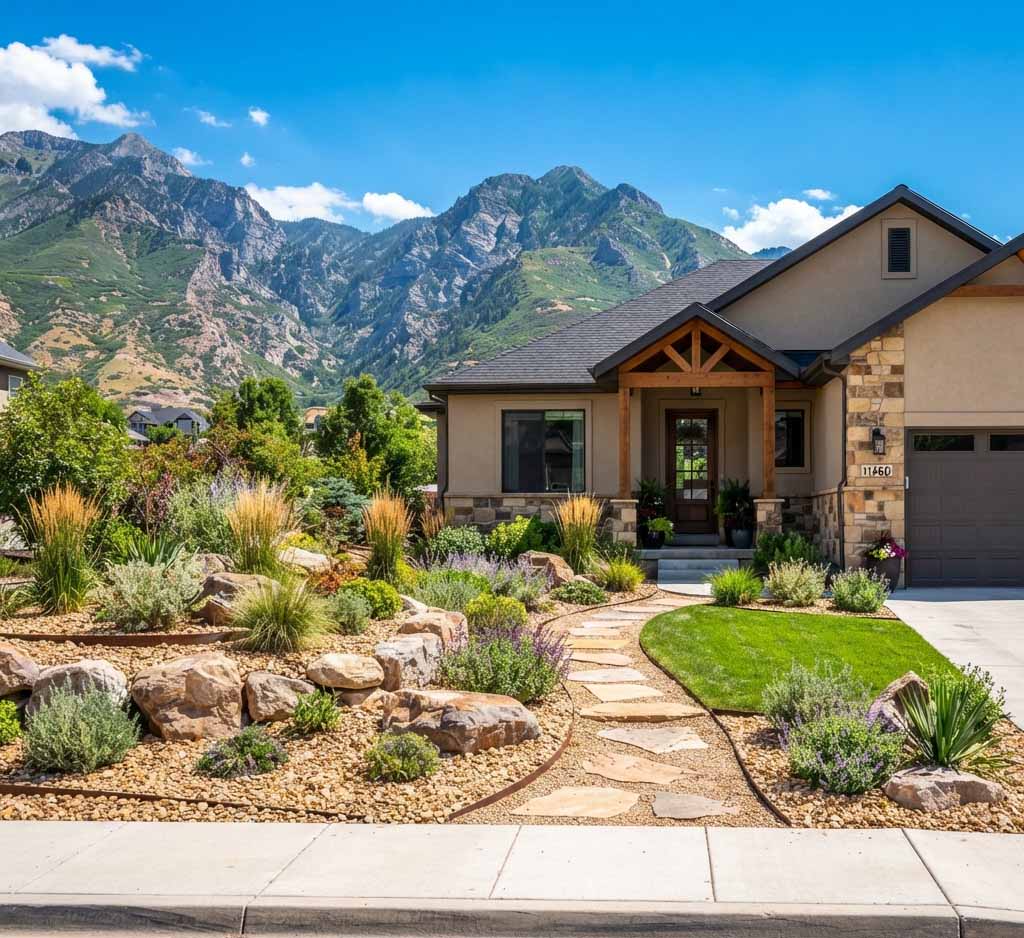
A sloped yard in Salt Lake City is often treated as a limitation, but with the right approach it can become some of the most interesting and usable space on a property — the key is designing around the slope rather than fighting it.
Retaining Walls: Building Usable Level Space
Retaining walls turn a sloped area into a series of level, usable spaces by holding back soil at defined points across the grade change. Material choice depends on budget and the look you’re after — natural stone, block, or timber all work, and walls can be positioned wherever they provide the most balanced support for the property’s specific high and low points.
Leveling for Outdoor Living Features
Larger outdoor living elements — a fire pit, outdoor kitchen, or an expanse of usable turf — generally need a properly leveled area to function well. Leveling a section of a sloped yard, rather than attempting to build these features on an incline, gives you a genuinely usable outdoor living space rather than a compromised version of one.
Paving With Switchbacks for Easier Access
A straight path up a steep slope is difficult to walk and can be a fall hazard. Designing a walkway with switchbacks — a series of angled turns rather than a direct route — manages the grade change while making the path comfortable and safe to use regularly.
Stepped Access With Natural Materials
Flagstone or natural stone stair treads provide an attractive, functional way to move between different elevations on a sloped property, giving the yard a distinctive look while solving the practical problem of navigating the grade change on foot.
Planting to Stabilize the Slope
Shrubs and trees with strong root systems provide real stability on a hillside, helping prevent erosion while adding visual interest. For steeper sections, shaping a small “bowl” around a plant’s base helps hold water at the roots rather than letting it run off before the plant can absorb it — a meaningful difference on a slope where water naturally moves downhill fast.
Rock as a Lower-Cost Alternative to Solid Walls
Rip-rap or cobble rock can level out a slope at a lower cost than a full retaining wall system, while still providing meaningful erosion control and structure — a good option for less heavily trafficked areas of a sloped property.
Water Features That Work With the Slope
A sloped property’s existing grade change is a natural fit for a cascading water feature — the elevation change that makes flat-yard landscaping harder is exactly what a waterfall or cascading fountain needs to function, turning what could be a design obstacle into a genuine asset.
Choosing Plants for Utah’s Sloped Terrain
Plant selection on a slope should prioritize deep root systems, drought resistance, and erosion control — species well-suited to Utah’s climate and soil conditions perform far more reliably than plants chosen without regard for the region’s dry summers and cold winters. Native and regionally adapted species generally handle Utah’s specific conditions, including erosion-prone slopes, better than non-native alternatives. Erosion control netting is worth using when seeding grass on a slope, holding soil and seed in place while roots establish, and drip irrigation is generally the right choice for any trees, shrubs, or plantings on the slope itself.
Frequently Asked Questions
What’s the most affordable way to landscape a sloped yard?
Rip-rap or cobble rock leveling is typically less expensive than a full retaining wall system while still providing meaningful erosion control, though it offers less structural support for heavy use areas.
Do I need a retaining wall for every sloped yard?
Not necessarily — the right approach depends on the slope’s steepness and how you plan to use the space. Gentle slopes may only need plantings for stabilization, while steeper grades often benefit from retaining walls or terracing.
What plants work best for erosion control on a Utah slope?
Deep-rooted, drought-resistant species suited to Utah’s climate perform best — regionally native and adapted plants are generally more effective at erosion control than species chosen without regard for local conditions.
Millburn Lawn & Landscape can transform your sloping Salt Lake City yard into usable, beautiful outdoor space. Get in touch with us today to arrange your consultation.