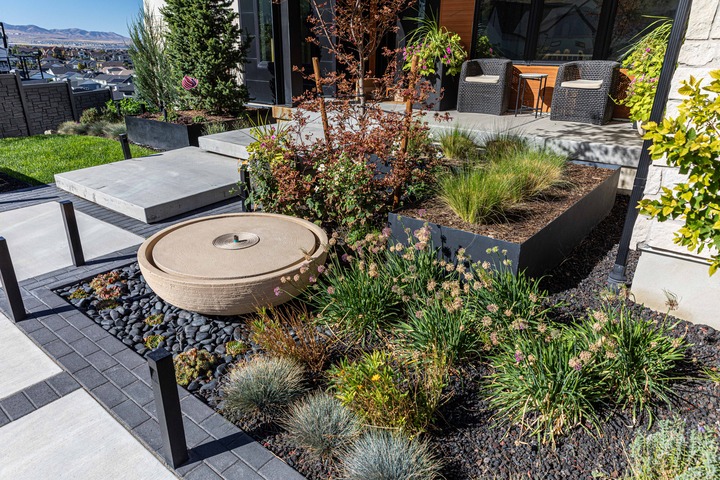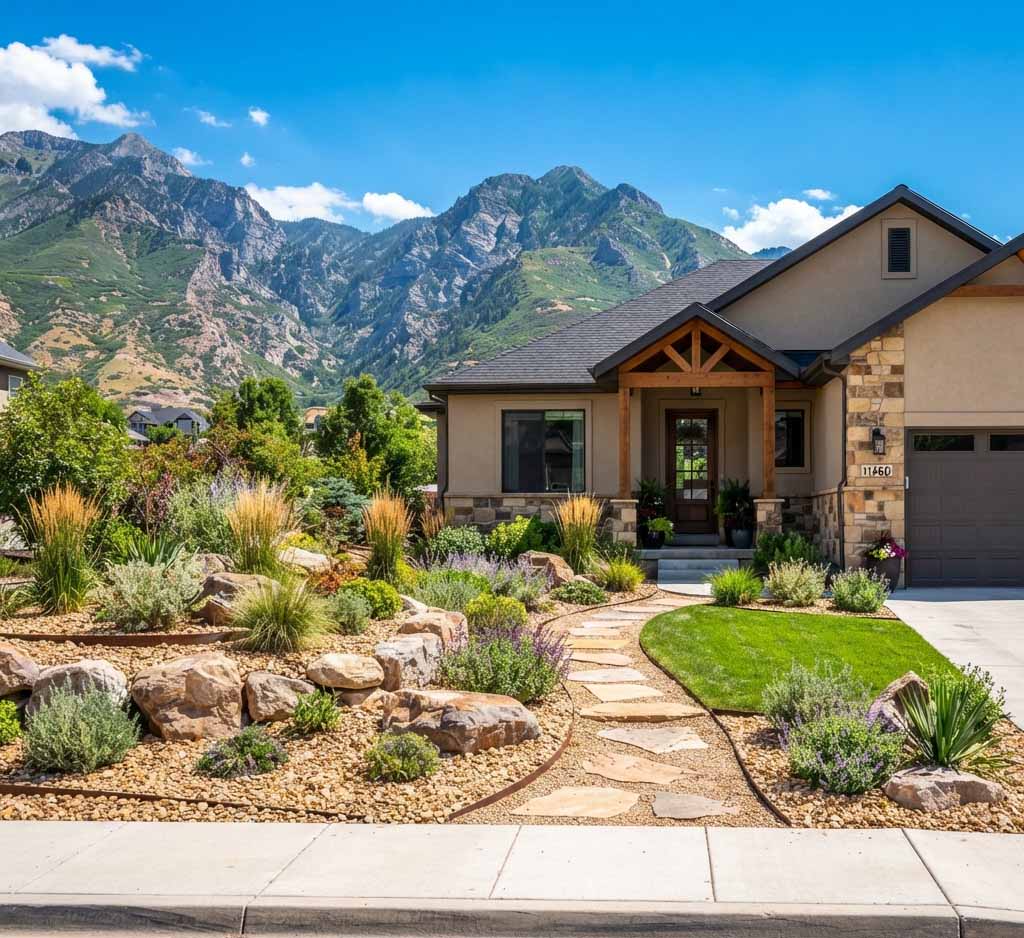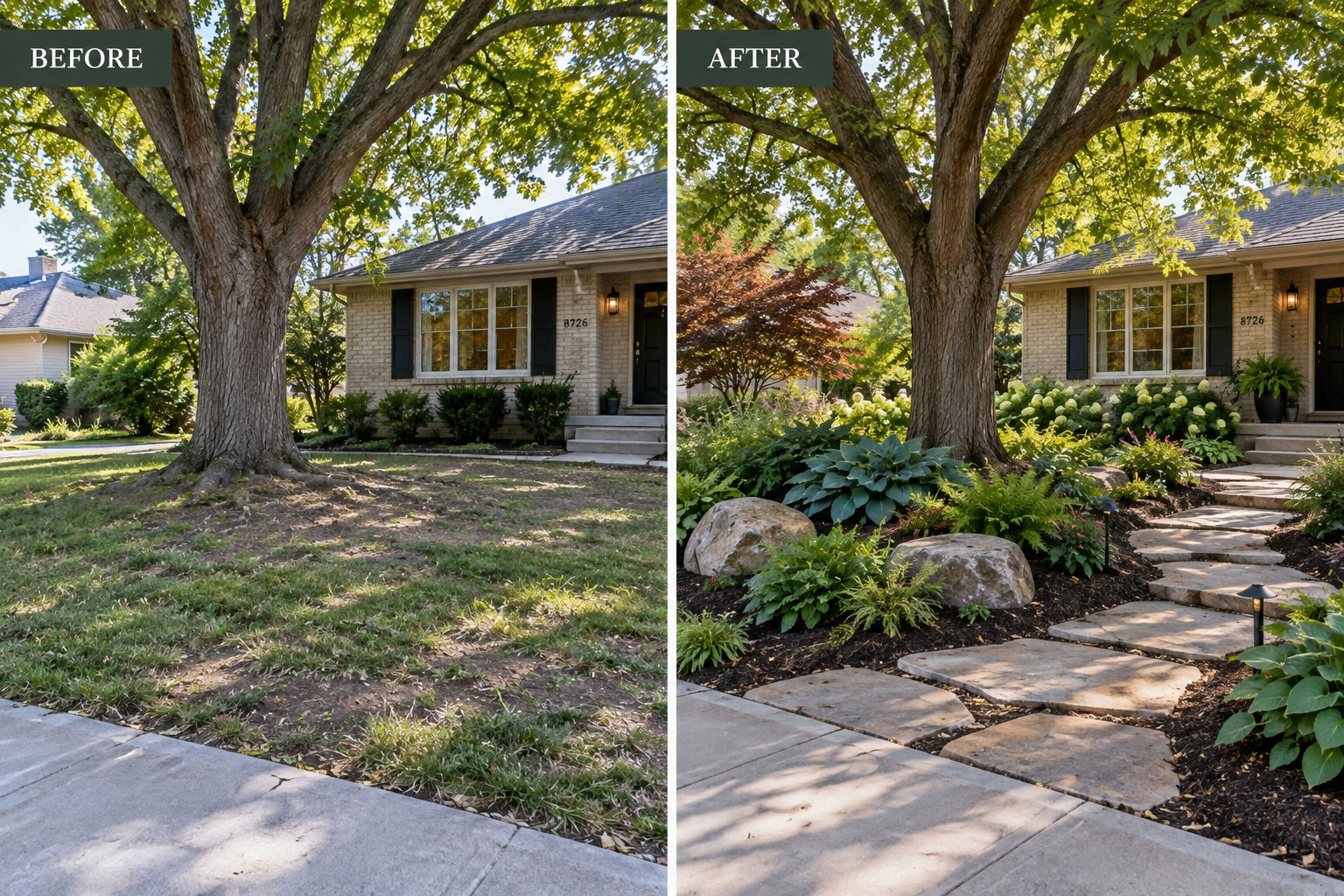
To modernize a mature Sandy yard without cutting down established 40-year-old trees, you must protect the critical root zone by avoiding deep trenching, replace patchy grass under dense canopies with shade-tolerant perennials and permeable hardscapes, and thin the tree canopy selectively to improve light penetration. Using shallow-depth edging, elevated patio bases, and soil-building organic mulch allows homeowners across established Sandy neighborhoods to achieve sleek, contemporary curb appeal while preserving valuable shade and character.
Those massive maples, elms, and pines in older Sandy neighborhoods like Crescent or historic Sandy took decades to grow. They provide natural cooling, high privacy, and character that new subdivisions simply cannot recreate. However, outdated brick curbing, cracked concrete, and thin, patchy lawn underneath can make your property look tired.
Updating your outdoor space does not require clear-cutting the trees you love. Understanding how to work around established root systems transforms an overgrown yard into a modern outdoor retreat.
Why Mature Sandy Landscapes Struggle (and How to Fix Them)
Over 30 to 50 years, trees grow massively above and below ground. As root networks expand, they draw tremendous amounts of water and nutrients from the topsoil while blocking direct sunlight.
Common Issues in Older Sandy Yards:
- Root Competition: Tree roots out-compete lawn grasses for soil nutrients and moisture, resulting in bare, muddy patches.
- Shallow Root Uplift: Surface roots lift old concrete walkways, push over brick edgers, and shatter sprinkler lines.
- Dense Shade Strips: Mature canopies block 80% or more of natural sunlight, causing traditional turfgrass varieties to fail over time.
Instead of fighting the tree, modern landscape design adapts to these conditions by shifting away from traditional turf lawns toward shade-tolerant plantings and structural hardscaping.
Protecting the Critical Root Zone During Construction
The biggest mistake homeowners make during a yard remodel is damaging tree roots with heavy machinery or deep digging. A tree’s most vital feeder roots sit within the top 12 to 18 inches of soil and extend out to the tree’s canopy drip line.
Key Soil Protection Rules for Landscape Renovations:
- Zero Heavy Excavation Near the Trunk: Avoid deep tilling or skid-steer scraping within the tree’s drip line.
- Keep Grade Level Constant: Adding more than two inches of heavy soil over established roots can suffocate them by cutting off oxygen exchange.
- Use Permeable Base Layers: Allow water and air to reach root networks by installing gravel or paver bases that allow moisture penetration.
Modern Design Strategies for Shade & Root Zones
Updating an older yard requires choosing materials and plant layouts designed for shade and surface roots.
| Landscape Challenge | Outdated / Destructive Approach | Modern Tree-Safe Solution | Long-Term Benefit |
| Patchy Shade Lawn | Reseeding traditional turf yearly | Installing Hostas, Coral Bells, Ferns, & Japanese Forest Grass | Eliminates mud, cuts irrigation needs, adds multi-colored leaf texture. |
| Uplifted Walkways | Pouring rigid concrete over roots | Setting flagstone, gravel paths, or floating timber decks | Adjusts easily to root movement without cracking or buckling. |
| Broken Brick Borders | Digging deep trench lines for metal edgers | Laying shallow, curved stone borders set on sand bases | Defines beds cleanly without cutting through critical feeder roots. |
| Bare Soil Under Canopy | Covering roots in heavy topsoil | Applying 2-3 inches of dark organic bark or woodchip mulch | Retains moisture, insulates roots, and gives garden beds a clean, sleek look. |
Illuminating Shade Zones with Modern Hardscaping & Lighting
Because shade limits color options for flowering plants, modern landscape design relies heavily on texture, stone contrasts, and strategic lighting to add visual interest.
- High-Contrast Stone & Gravel: Light-colored crushed quartzite, granite boulders, or dark basalt gravel create clean structural lines that pop against deep green shade foliage.
- Low-Voltage Up-Lighting: Mounting low-voltage LED lights pointing upward into the canopy highlights branching structures at night, turning 40-year-old trees into dramatic landscape features.
- Elevated Seating Areas: Placing flagstone patios or floating benches just outside the root crown turns shady, unused corners into comfortable outdoor living nooks.
Pruning & Irrigation Adjustments for Established Trees
Modernizing your landscape also means updating the infrastructure beneath it.
Start by hiring a certified arborist to perform selective canopy thinning. Removing deadwood and thinning dense branch clusters lets filtered sunlight reach underlying plant beds without stressing the tree.
Next, convert spray sprinkler heads near mature trees to low-pressure drip irrigation. Drip emitters deliver water directly to plant root zones without spraying trunks or soaking shade foliage, preventing fungal growth and conserving water across Sandy’s warm summer months.
Modernize Your Established Sandy Property Today
You don’t have to choose between a modern, functional yard and the historic trees that give your property value and character. By combining root-safe hardscaping, shade-adapted plantings, and clean lighting design, you can enjoy the best of both worlds.
Ready to update your mature landscape? Contact Millburn Lawn & Landscape today at (801) 810-5452 to schedule a local landscape consultation in Sandy and surrounding Salt Lake County neighborhoods!
Frequently Asked Questions
Can you lay pavers over large tree roots in Sandy?
Laying pavers directly over large surface roots can damage the tree if roots are cut or choked. Instead, raise the patio grade slightly using a permeable gravel base, or build a low floating timber deck over the root zone to protect the tree.
What plants grow best in dense shade under trees in Sandy, Utah?
Hostas, Coral Bells (Heuchera), Bleeding Heart, Japanese Forest Grass, Hellebores, and Solomon’s Seal thrive in shady Wasatch Front yards with minimal direct sunlight.
How much can I thin a mature tree canopy without hurting it?
A certified arborist should never remove more than 15% to 20% of a mature tree’s foliage canopy in a single season. Over-pruning stresses the tree and encourages weak “sucker” growth.
Will changing my lawn to gravel or mulch hurt my established tree?
No, as long as you use breathable, organic mulches or porous gravels. Organic wood mulch actually improves root health by retaining soil moisture and insulating against heat. Avoid impermeable plastic weed barriers beneath tree canopies.
How close to a mature tree trunk can I install landscape edging?
Keep hard edgers at least 3 to 5 feet away from the main trunk flare. Near root zones, use flexible, shallow-set edging or dry-stacked natural stone rather than deep-dug metal or concrete footings.