The Silent Threat Above Every Utah Business
In Salt Lake City, winter doesn’t just cover the ground — it piles up on rooftops, too. While property owners often focus on clearing parking lots and sidewalks, the real danger may be happening overhead.
Heavy snow accumulation and ice dams can quietly turn a safe commercial property into a structural hazard. Without proper commercial roof snow removal in Utah, buildings face serious risks — from leaks and insulation damage to full roof collapse.
At Millburn Lawn & Landscape, we help property managers protect their buildings from these invisible threats through proactive roof snow and ice management.
Let’s break down how these problems form, the warning signs to look for, and how professional care keeps your property — and everyone inside — safe all winter long.
Understanding Roof Snow Load: The Weight That Can’t Be Ignored
Every roof in Utah is designed to hold a certain amount of weight, known as its snow load capacity. However, snow isn’t uniform — it varies in density, moisture, and compaction.
For example:
- Fresh, powdery snow: ~5 lbs per cubic foot
- Packed or wet snow: 15–20 lbs per cubic foot
- Ice: Up to 57 lbs per cubic foot
That means just 12 inches of wet snow on a 10,000-square-foot commercial roof can weigh over 150,000 pounds — more than enough to strain structural supports.
Why Salt Lake City Properties Are Especially Vulnerable
Utah’s winter pattern of warm days and freezing nights creates frequent freeze-thaw cycles, which compact snow and increase its weight. Flat or low-slope commercial roofs are especially at risk because snow doesn’t slide off naturally — it accumulates.
If snow isn’t removed regularly, the pressure can cause:
- Structural deflection or sagging.
- Cracked roofing membranes.
- Water pooling during thaws.
- Complete structural failure during major storms.
Ice Dams: The Hidden Enemy of Roof Integrity
While heavy snow is visible, ice dams form quietly — and can cause just as much damage.
An ice dam occurs when rising heat from a building melts snow on the roof. As that water flows down to the colder roof edge, it refreezes, creating a ridge of ice that traps water behind it.
The Results?
- Interior leaks: Meltwater seeps beneath roofing materials, entering walls and ceilings.
- Damaged insulation: Wet insulation loses R-value, raising heating costs.
- Exterior damage: Gutters, flashing, and eaves can break under the weight of frozen ice.
These issues are especially common in commercial properties with large, flat roofs — the kind found in retail centers, offices, and warehouses across Salt Lake City.
The Warning Signs of Roof Snow and Ice Problems
Property managers should watch for these early indicators before the damage escalates:
- Ceiling stains or drips after thaw periods.
- Roof edges or gutters coated with thick ice.
- Unusual popping or cracking sounds in the structure.
- Sagging or visibly deflected roof lines.
- Water pooling near roof drains or HVAC units.
If you notice any of these, it’s critical to contact a professional ice dam prevention team in Salt Lake City immediately. Waiting even a few days can lead to permanent damage and costly repairs.
How Professional Roof Snow Removal Works
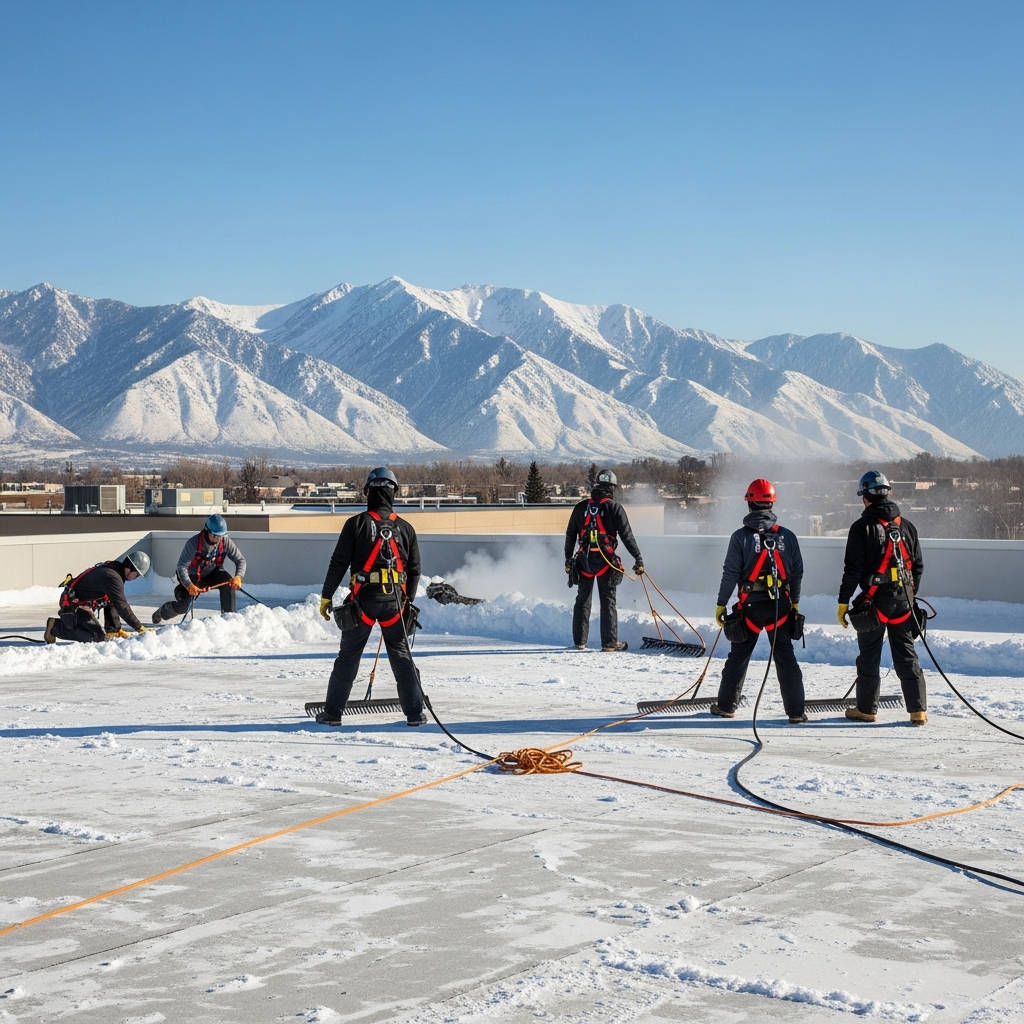
Removing snow from a commercial roof is not a simple job — it requires training, safety gear, and precise techniques to protect both workers and the structure itself.
Step 1: Inspection and Risk Assessment
Millburn’s team starts by evaluating roof conditions, identifying stress points, drainage areas, and safe access routes. This ensures removal happens without damaging roofing membranes or disrupting business operations.
Step 2: Controlled Snow Removal
Crews use specialized non-abrasive tools to gently clear snow layer by layer, maintaining even weight distribution to avoid sudden structural shifts.
Step 3: Ice Dam Mitigation
For properties with existing ice dams, technicians apply steam or heated water systems to safely melt ice without damaging roofing materials.
Step 4: Preventive Treatment
We finish with professional de-icing products and drainage checks to reduce refreeze and improve water flow during future storms.
Step 5: Documentation and Reporting Each visit includes time-stamped reports and photos for compliance and insurance purposes — proving your business took all reasonable safety precautions.
Why Professional Roof Snow Removal Beats DIY Methods
Climbing onto a frozen commercial roof with a shovel may sound like a quick fix, but it’s one of the most dangerous DIY tasks imaginable.
Here’s why:
- Fall hazards: Roof snow hides skylights and edges. One misstep can result in serious injury.
- Roof damage: Metal tools and uneven clearing can tear membranes or puncture insulation layers.
- Incomplete removal: DIY efforts often leave ice and compacted snow that continues melting and refreezing.
- Liability exposure: OSHA requires trained, insured personnel for commercial roof work.
By hiring a licensed, insured provider like Millburn Lawn & Landscape, you eliminate risk while ensuring the job is done safely and correctly.
The Cost of Ignoring Roof Snow and Ice Dams
Failing to address roof snow or ice buildup can lead to long-term consequences, including:
- Water infiltration causing mold and electrical hazards.
- Structural collapse costing hundreds of thousands in repairs.
- Business interruption during critical winter months.
- Denied insurance claims due to negligence.
Preventive maintenance costs far less than post-collapse repairs — and preserves the lifespan of your roof system.
Proactive Prevention Tips for Utah Property Managers
- Schedule Pre-Winter Inspections: Have your roof evaluated in early fall for weak spots or drainage issues.
- Install Heated Cables: Targeted heating along eaves and gutters prevents ice dam formation.
- Maintain Proper Insulation and Ventilation: Balanced airflow reduces rooftop melting and refreeze.
- Partner with a 24/7 Snow Team: Contract professionals who monitor storms and respond before accumulation becomes dangerous.
Millburn’s ongoing maintenance plans include automatic roof snow monitoring, ensuring your property stays compliant, safe, and operational all season long.
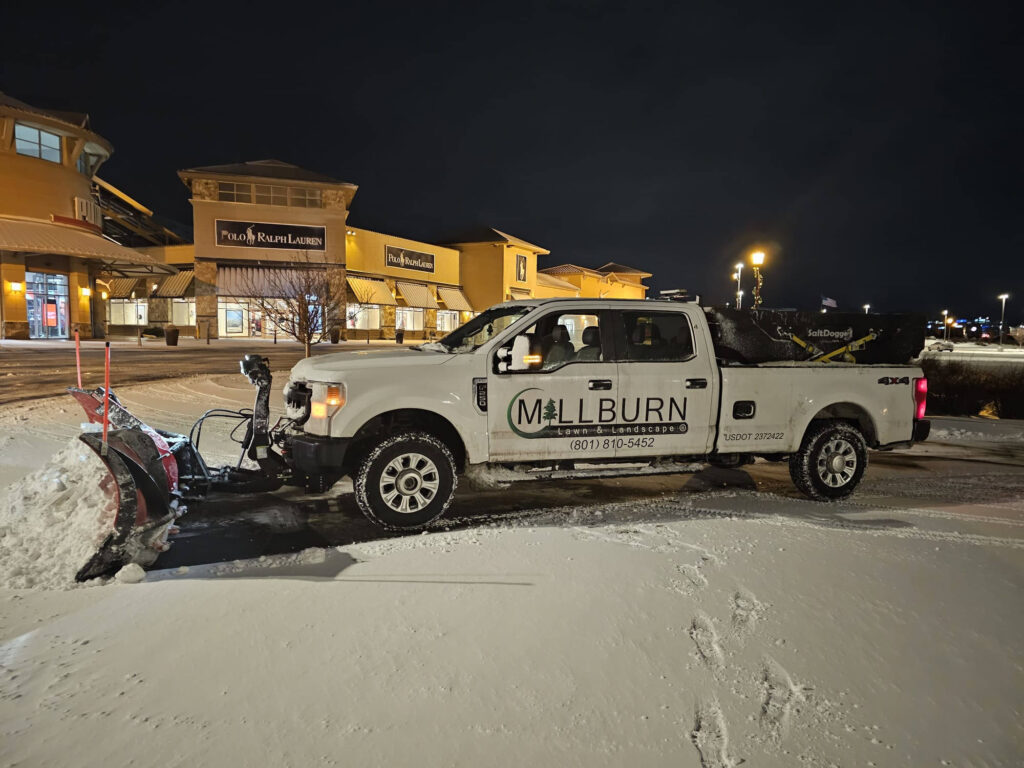
Don’t wait until your roof starts leaking — act before the storm hits.
Millburn Lawn & Landscape provides trusted commercial roof snow removal in Utah and ice dam prevention services in Salt Lake City for businesses of every size. Our expert crews operate 24/7 during the winter season to protect your property, employees, and customers.
📞 Call (801) 810-5452 or visit Millburn Lawn & Landscape’s Winter Services to schedule your roof inspection and snow removal plan today.
Frequently Asked Questions
Q: How much snow is too much for a commercial roof?
A: In Utah, more than 12–18 inches of packed snow can exceed design limits, depending on roof type and age. If you’re unsure, it’s safer to remove it early.
Q: How do ice dams form on flat roofs?
A: Heat escaping from the building melts snow unevenly. Meltwater refreezes at roof edges or around drains, creating ice ridges that block runoff.
Q: Can removing snow damage my roof?
A: Not when done professionally. Millburn uses non-abrasive equipment and distributes weight evenly to prevent structural stress or membrane damage.
Q: What’s the best long-term prevention for ice dams?
A: Insulate attics properly, improve ventilation, and schedule regular de-icing maintenance during storm cycles.Q: How often should commercial roofs be cleared in winter?
A: After every significant snowfall (typically 6 inches or more), or whenever temperatures fluctuate between freezing and thawing.