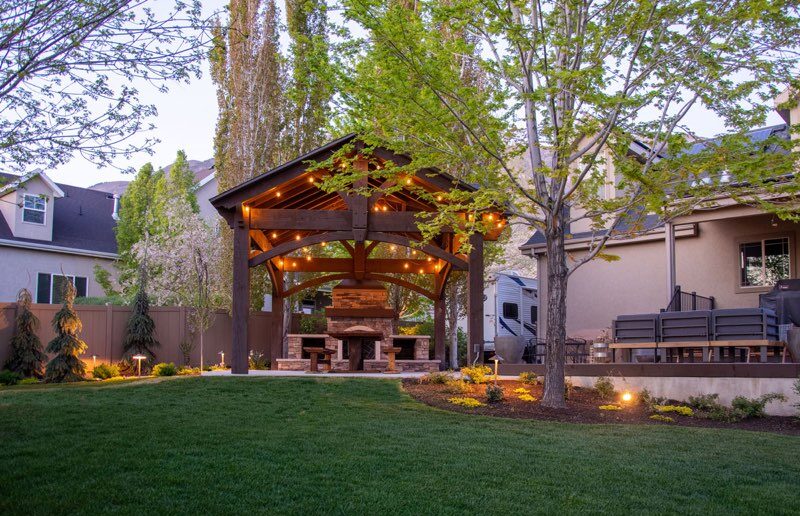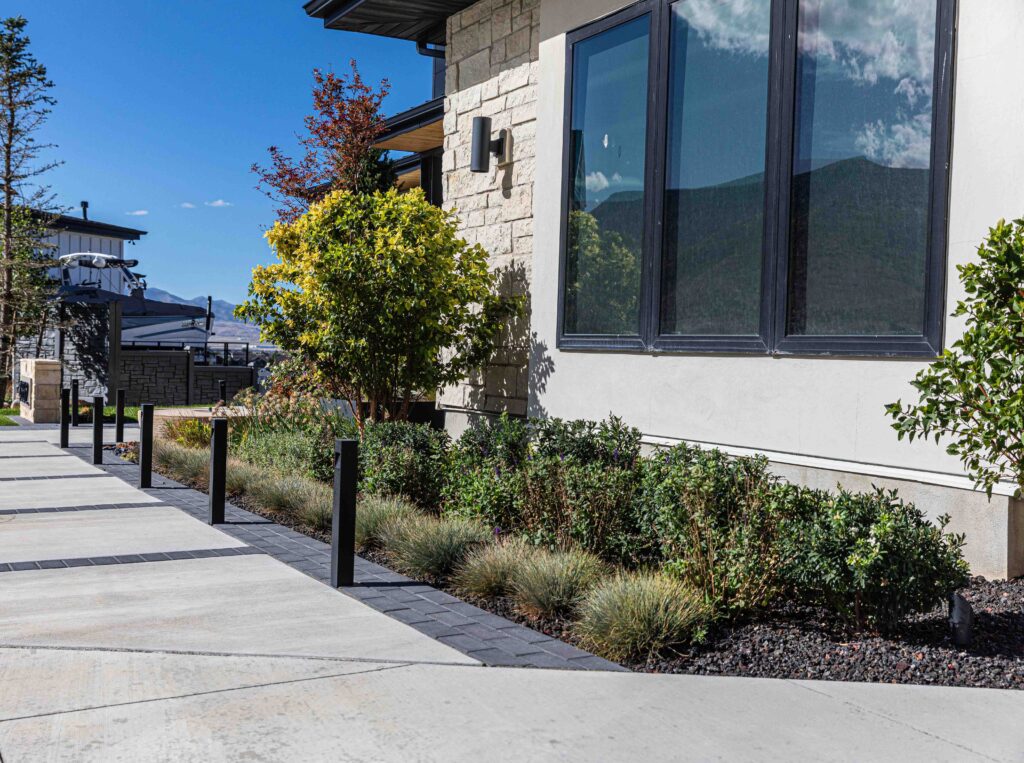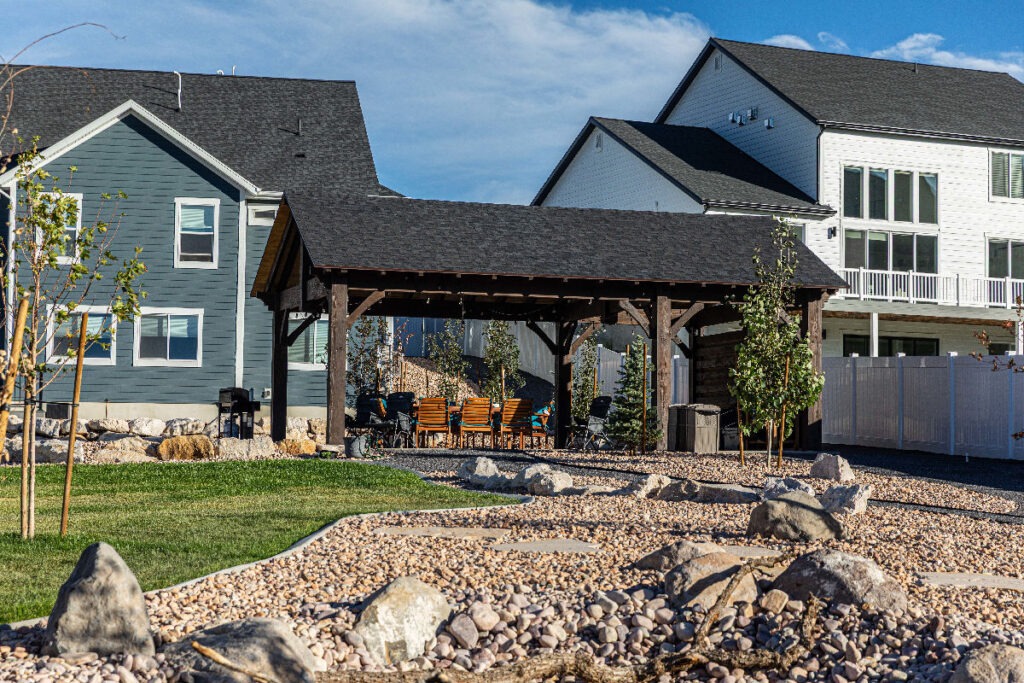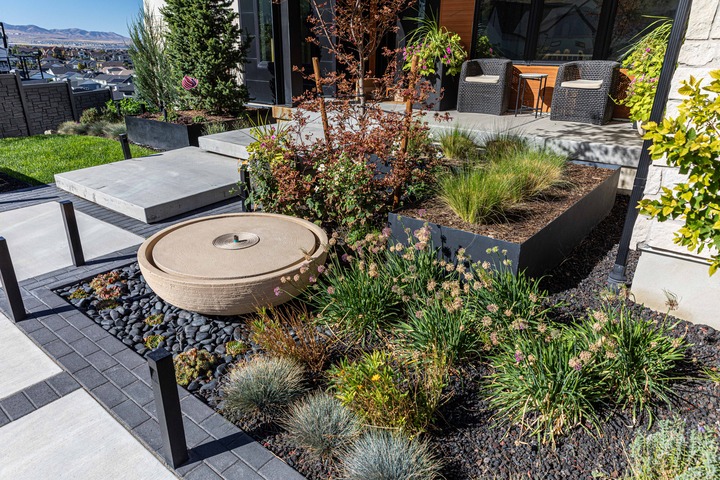
The best xeriscape plants for Sandy, UT are those adapted to exactly what this city delivers: alkaline soil, 4,400 feet of elevation, UV intensity that exceeds most of the country, and about 16 inches of annual precipitation. That means Utah natives and proven Intermountain West adaptive varieties — not plants chosen from a national drought-tolerant list assembled for Phoenix or Denver. This guide covers the specific ground covers, ornamental grasses, flowering perennials, shrubs, and small trees that establish well in Sandy’s conditions and result in a yard that looks designed, not just low-water.
What Makes a Plant Xeriscape-Ready for Sandy Specifically
The term ‘drought-tolerant’ covers a broad range. For a Sandy xeriscape to actually work — establish well, survive winters, look good year-round, and perform with minimal supplemental irrigation after year one — the plants need to handle several specific conditions that not every drought-tolerant species manages.
Alkaline soil.
Sandy’s soil runs high in pH, above 7.5 in many areas, which restricts nutrient availability for plants that evolved in more acidic conditions. Utah natives and Great Basin adaptive varieties are built for this. Kentucky bluegrass and many national ‘low-water’ perennials aren’t, which is why they require constant amendment to stay healthy here.
Elevation and UV intensity.
At 4,400 feet, Sandy receives more intense UV radiation than lower-elevation cities across the country. This accelerates evaporation from both soil and leaf surfaces. Plants with silver, gray, or fine-textured foliage are adapted for exactly this — they reflect heat rather than absorbing it. Blue Oat Grass and Russian Sage are good examples of plants whose appearance signals the adaptation.
Canyon winds.
Sandy’s position near the mouths of Big and Little Cottonwood Canyons means persistent winds that lower-elevation Salt Lake Valley neighborhoods don’t experience at the same intensity. Compact, low-growing plants and established shrubs handle this better than tall, top-heavy varieties that blow out or lodge.
Genuine winters.
Sandy winters are cold — well below freezing — but the growing season is long enough for a full range of flowering plants. Every plant in this guide is rated for USDA zones 4–6, which covers Sandy’s range. The freeze-thaw cycle is actually harder on some plants than a consistent deep freeze, and native plants that evolved in this exact pattern handle it best.
Ground Covers and Low-Growing Perennials
Ground covers replace turf in the zones where grass struggles most in Sandy — along driveways, between boulders, at the perimeter of planting beds, and anywhere foot traffic is light.
Creeping Thyme (Thymus serpyllum and varieties)
One of the most reliable ground cover choices for Sandy xeriscape. It handles moderate foot traffic, blooms purple in late spring, and stays low enough to work between stepping stones or along path edges. Once established, it survives on rainfall alone through most of Sandy’s spring and fall without supplemental irrigation.
Woolly Thyme (Thymus pseudolanuginosus)
Finer-textured with soft silver-gray foliage that reads beautifully against warm river rock. Even lower-growing than creeping thyme, its color and texture contrast well with the warm tan and cream tones common in Sandy xeriscape designs.
Hardy Ice Plant (Delosperma cooperi)
Produces intense magenta-pink flowers in summer and stays semi-evergreen through mild winters. It handles alkaline soil, drains fast — important in Sandy’s clay-mineral soil mix — and spreads slowly to fill gaps between larger shrubs and boulders.
Autumn Joy Sedum (Hylotelephium ‘Herbstfreude’)
Works as both a textural filler and a seasonal interest plant. The fleshy foliage stays attractive from spring through the persistent seed heads of late fall, which birds pick at through winter. It handles full sun and alkaline conditions without supplemental fertilizer.
Ornamental Grasses
Grasses are the structural backbone of a well-designed Sandy xeriscape. They move in wind — an asset near the canyon mouths — provide winter structure when most perennials go dormant, and handle Sandy’s soil pH and UV conditions better than most flowering plants.
Blue Oat Grass (Helictotrichon sempervirens)
The most consistently performing ornamental grass for Sandy xeriscape. Its blue-silver color works with the warm tones of river rock and Utah sandstone, it forms a tight clump that doesn’t sprawl or flop, and it holds color and structure through winter. Few plants are more dependable at this elevation.
Karl Foerster Feather Reed Grass (Calamagrostis × acutiflora ‘Karl Foerster’)
Grows 4–5 feet with an upright, vertical habit — useful for defining edges, adding height behind boulder clusters, or providing screening between zones. The feathery plumes appear in summer and persist well into winter.
Prairie Dropseed (Sporobolus heterolepis)
A North American native with finely textured arching foliage that turns golden-orange in fall. Smaller and more subtle than Karl Foerster, it works well in transition zones between larger shrubs and ground covers and adds graceful, soft texture that balances structural elements.
Switchgrass (Panicum virgatum)
Adds vertical accent and wildlife value — a host plant that provides seed for birds through fall and winter. Varieties like ‘Shenandoah’ develop red-tinged fall color that pairs well with Rabbitbrush’s golden yellow.
Flowering Shrubs and Native Perennials
This is the category that provides bloom color and the four-season interest that distinguishes a well-designed Sandy xeriscape from a gravel lot.
Apache Plume (Fallugia paradoxa)
A true Utah native — found growing naturally in the Wasatch foothills above Sandy — with white, rose-like flowers in late spring followed by feathery, pinkish-silver seed heads that persist through summer. It handles alkaline soil, canyon wind, and full sun without support. If there’s one plant that defines a Wasatch-appropriate xeriscape design, this is it.
Russian Sage (Perovskia atriplicifolia)
Not Utah-native but one of the best performing flowering plants for the entire Wasatch Front. Silver-gray stems and lavender-blue flower spikes bloom from July through September — a longer bloom window than almost any other perennial in Sandy’s climate. It handles alkaline soil and full UV with essentially no maintenance after establishment.
Rabbitbrush (Ericameria nauseosa)
A Great Basin native that covers itself in bright golden-yellow in September and October, exactly when most other plants are winding down. It’s common in the natural landscape immediately surrounding Sandy and performs without supplemental water after establishment. The late-season bloom is one of the most distinctive features a Sandy xeriscape can have.
Native Penstemon (Penstemon eatonii, P. palmeri, P. strictus)
Some of the most underused flowering perennials for a Sandy xeriscape. Tubular flowers in red, pink, and lavender attract hummingbirds through early summer, the plants are adapted to Sandy’s specific climate conditions, and they’re drought-tough once their root systems develop. Ask specifically for Wasatch Front-adapted varieties from a nursery that stocks Intermountain West natives.
Purple Coneflower (Echinacea purpurea)
A prairie native that thrives at Sandy’s elevation. The classic daisy-form purple flowers appear midsummer, seed heads persist through fall for bird foraging, and plants increase in size and flower production year over year. Pairs well with ornamental grasses for a naturalistic planting composition.
Yarrow (Achillea millefolium and hybrids)
Handles poor alkaline soil well, spreads slowly to fill gaps between shrubs, and provides flat-topped flower clusters in white, yellow, and warm pink from late spring through summer. Once established, it requires almost no supplemental water in Sandy’s climate.
Small Trees for Structure
Every well-designed xeriscape needs at least one small tree to anchor the planting, provide shade at the human scale, and give the yard vertical structure that boulders and shrubs alone can’t replicate.
Serviceberry (Amelanchier alnifolia)
The most versatile option — it can be maintained as a large multi-stemmed shrub or allowed to develop into a 12–15 foot small tree. White flowers in early spring, edible purple berries in early summer, and brilliant orange-red fall color make it a four-season performer. It’s native to the Wasatch foothills and one of the few trees that performs consistently in Sandy’s conditions with minimal supplemental water after establishment.
Amur Maple (Acer tataricum ginnala)
Produces reliable, intense red fall color — more consistent than most maples in Utah’s climate — and stays small enough (10–15 feet) for front yard use even in HOA communities with tree height restrictions.
Gambel Oak (Quercus gambelii)
A true Utah native that grows naturally in the Wasatch foothills above Sandy. In a residential setting it can be managed as a large shrub or allowed to develop as a small tree. It requires no irrigation after establishment and provides one of the most dramatic fall color displays available for a Sandy xeriscape — deep red to orange depending on the season.
Three-Leaf Sumac (Rhus trilobata)
A native shrub-to-small-tree that turns orange-red in fall and handles Sandy’s alkaline soil and dry conditions reliably. Works particularly well in transition zones between the house foundation and the main planting area.
Sandy Xeriscape Plant Reference
| Plant | Type | Water Once Established | Bloom / Interest Season | Sandy-Specific Notes |
| Creeping Thyme | Ground cover | Very low | Late spring bloom | Foot traffic tolerant; works between steppers |
| Woolly Thyme | Ground cover | Very low | Foliage year-round | Silver-gray; pairs well with warm river rock |
| Hardy Ice Plant | Ground cover | Low | Summer bloom | Handles alkaline soil; fast draining |
| Autumn Joy Sedum | Groundcover / perennial | Very low | Fall seed heads | Bird value; fleshy foliage April–November |
| Blue Oat Grass | Ornamental grass | Low | Foliage year-round | Blue-silver; best all-season grass at this elevation |
| Karl Foerster | Ornamental grass | Low | Summer–winter plumes | Vertical; 4–5 ft; good for screening |
| Prairie Dropseed | Ornamental grass | Very low | Golden fall foliage | Fine texture; native prairie grass |
| Switchgrass | Ornamental grass | Low | Fall color + seed heads | Bird habitat; ‘Shenandoah’ for red fall color |
| Apache Plume | Native shrub | Very low | Late spring + feathery seed heads | True Utah native; Wasatch foothill origin |
| Russian Sage | Perennial shrub | Low | July–September | Longest bloom window of any Wasatch perennial |
| Rabbitbrush | Native shrub | Very low | September–October | Late-season gold; Great Basin native |
| Native Penstemon | Perennial | Low | May–July | Hummingbird magnet; source Wasatch-adapted varieties |
| Purple Coneflower | Perennial | Low | July–September | Increases year over year; bird seed heads |
| Yarrow | Perennial | Very low | May–July | Gap filler; handles poor alkaline soil |
| Serviceberry | Small tree / large shrub | Low | Spring bloom + fall color | Four-season; native to Wasatch foothills |
| Amur Maple | Small tree | Low | Fall color | Consistent red; stays under 15 ft |
| Gambel Oak | Native tree / shrub | Very low | Fall color | True Utah native; manageable as shrub |
| Three-Leaf Sumac | Shrub / small tree | Very low | Fall color | Good foundation transition plant |
A Note on Plant Sourcing in Sandy
Not every plant on this list is available at a general garden center or home improvement store. For native varieties — Apache Plume, native Penstemon, Gambel Oak, Rabbitbrush — you’ll have better selection at nurseries that specialize in Intermountain West or native plants. A landscape contractor with established xeriscape experience in Sandy will have nursery sourcing relationships for harder-to-find native varieties that wouldn’t be stocked off the shelf locally.
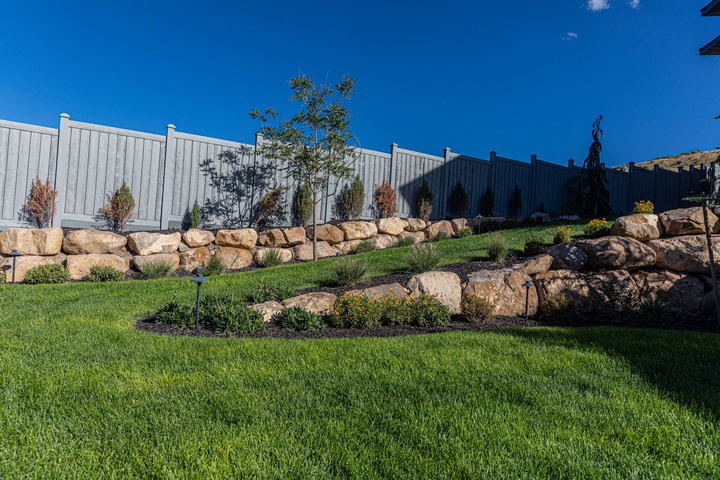
Millburn Lawn & Landscape selects xeriscape plants for Sandy properties based on what actually performs here — the alkaline soil, the elevation, the canyon winds, the HOA requirements in local communities — not a national drought-tolerant species list. We source native and adaptive varieties through established Wasatch Front nursery relationships and install designs built to establish well and look better year over year.
Call (801) 810-5452 to schedule an on-site consultation for your Sandy property. We’ll walk the yard, assess your existing conditions, and build a xeriscape plant plan suited to what grows here.
Frequently Asked Questions
Q: Which xeriscape plants establish fastest in Sandy, UT?
Russian Sage, Creeping Thyme, and Karl Foerster Grass all establish relatively quickly — typically showing significant growth by the end of their first full season with supplemental watering during establishment. Apache Plume and native Penstemon take longer to establish but are nearly self-sufficient after year one.
Q: Can these plants be used in a Sandy HOA neighborhood?
Most Sandy HOAs have updated their covenants to permit xeriscape plantings with approved ornamental plants. The plants on this list are commonly accepted in Wasatch Front HOA communities. Submit a design plan with a plant list to your architectural review committee before installing — the plants are rarely the issue; mulch color, coverage percentages, and bed edging are where most Sandy HOAs have specific standards.
Q: Do Utah native plants need fertilizer in Sandy’s alkaline soil?
Most true Utah natives and adaptive plants on this list don’t benefit from fertilization and can actually be harmed by high-nitrogen products that push vegetative growth at the expense of drought hardiness. Skip fertilizer for Apache Plume, Rabbitbrush, and native Penstemon. Russian Sage and ornamental grasses can accept a light slow-release application in spring if growth is weak, but don’t require it.
Q: What’s the best time of year to plant a Sandy xeriscape?
Spring (April through early June) and early fall (late August through September) offer the best establishment conditions. Summer planting is possible but requires more supplemental irrigation to get plants through peak heat. Fall planting allows root systems to develop through the cooler months before the following summer’s stress period.
Q: How do I keep weeds out of a xeriscape with these plants?
Landscape fabric under river rock or decomposed granite provides the primary weed barrier. A 2–3 inch layer of mulch around the root zone of each plant helps significantly in planting beds. The plants on this list also compete well once established — a dense planting of Creeping Thyme or Russian Sage leaves very little open soil for weeds to colonize.
Q: Do I still need drip irrigation if I’m using drought-tolerant natives?
Yes, during the establishment period — typically the first full growing season. Even xeriscape plants need supplemental irrigation while root systems develop. A drip system calibrated to each planting zone is the right solution. Once plants establish, the drip system runs at dramatically lower frequency than conventional overhead spray, but it remains useful for Sandy’s dry midsummer periods.
Q: Where can I find native plants for a Sandy xeriscape?
General garden centers stock many of the plants on this list — ornamental grasses, Russian Sage, Sedum, Echinacea — but native varieties like Apache Plume, Rabbitbrush, native Penstemon, and Gambel Oak are better sourced from specialty nurseries focused on Intermountain West natives. A landscape contractor with xeriscape experience in Sandy will have those sourcing relationships already in place.