Most Eagle Mountain backyards get designed for the day the sod goes in — not for the day, ten years later, when the kids finally need real room to play, the trees have grown tall enough to cast shade, or an empty-nest couple wants a low-maintenance retreat instead of a play structure taking up the best corner of the yard.
A backyard design lasts twenty years when four things happen at the planning stage, not the installation stage: it’s built around how large your plants will get at maturity, not how full the yard looks on move-in day; it accounts for how your family’s needs will change over the next two decades; it’s engineered for Eagle Mountain’s clay-over-hardpan soil and wide temperature swings from day one instead of fighting them later; and it’s built in phases that all follow one master plan instead of piecemeal additions that never quite match.
Eagle Mountain led every city in Utah in residential building permits issued in 2024, and the city’s population has grown from roughly 44,500 in 2020 to more than 76,000 as of early 2026. That means most of the backyard design happening right now in The Ranches, SilverLake, Overland, Meadow Ranch, and Firefly isn’t a renovation of an old yard — it’s a blank, graded dirt lot on a builder’s deadline. Whatever gets planted or built in that window is still going to be there in 2046, for better or worse.
Start With Where You’ll Be in 20 Years, Not Where You Are Today
The single biggest planning mistake in a new-construction backyard is designing entirely around the family’s current life stage. A play structure anchored in the best sun-and-shade spot in the yard makes sense when the kids are 4 and 6 — it makes a lot less sense when they’re 16, or when that spot is exactly where a future patio or garden would work best.
Before any plants go in the ground or any hardscape gets poured, walk through the next two decades on paper: toddlers become teenagers who want a hangout space instead of a swing set; pets need durable, low-maintenance turf instead of delicate planting beds; parents eventually want a low-bend, low-mow yard instead of a high-maintenance one. A good design doesn’t try to solve for every stage at once — it leaves room to adapt. That usually means keeping structural, hard-to-move elements (patios, retaining walls, major trees) in locations that work across life stages, and treating anything trend-driven or life-stage-specific (a swing set, a trampoline pad, a dedicated garden bed) as something built into a flexible, easily repurposed zone.
Design for Mature Size, Not Move-In Day
New sod and one-gallon shrubs look sparse. The instinct is to plant tightly so the yard looks finished right away — and it’s one of the most expensive mistakes a homeowner can make, because it guarantees a redo. A tree planted 8 feet from the house because it looked proportional on day one will be pushing against the roofline and foundation within a decade.
Spacing should always be planned around the plant’s size at full maturity, not its size at installation:
| Plant Type | Typical Mature Spread | Recommended Spacing From Structures / Other Plants |
| Large shade tree | 40–60 ft canopy | 20–25 ft from the home, driveway, and other large trees |
| Ornamental / accent tree | 15–25 ft canopy | 10–15 ft from structures and other trees |
| Large shrub (screening/hedge) | 6–10 ft spread | 6–8 ft between plants for a filled-in look at maturity |
| Low hedge / border shrub | 3–5 ft spread | 3–4 ft between plants |
| Perennial bed plants | 1–3 ft spread | 12–24 in. between plants depending on species |
If a yard feels too empty in year one, the right fix is temporary fillers — annuals, mulch, or fast-growing perennials — planted between the permanent, properly spaced trees and shrubs. Those fillers get removed as the permanent plants fill in. It costs a little more patience up front and saves a full replanting later.
Build Around Eagle Mountain’s Soil and Climate From Day One
Eagle Mountain sits in roughly USDA hardiness zone 6a–7a, but hillside lots and elevation differences create real microclimates from one part of a property to another — the north side of a house holds moisture longer than a south-facing slope exposed to full sun and wind. On top of that, most new-construction lots here have had their native topsoil stripped during grading, leaving clay-over-hardpan subsoil that drains poorly and compacts easily.
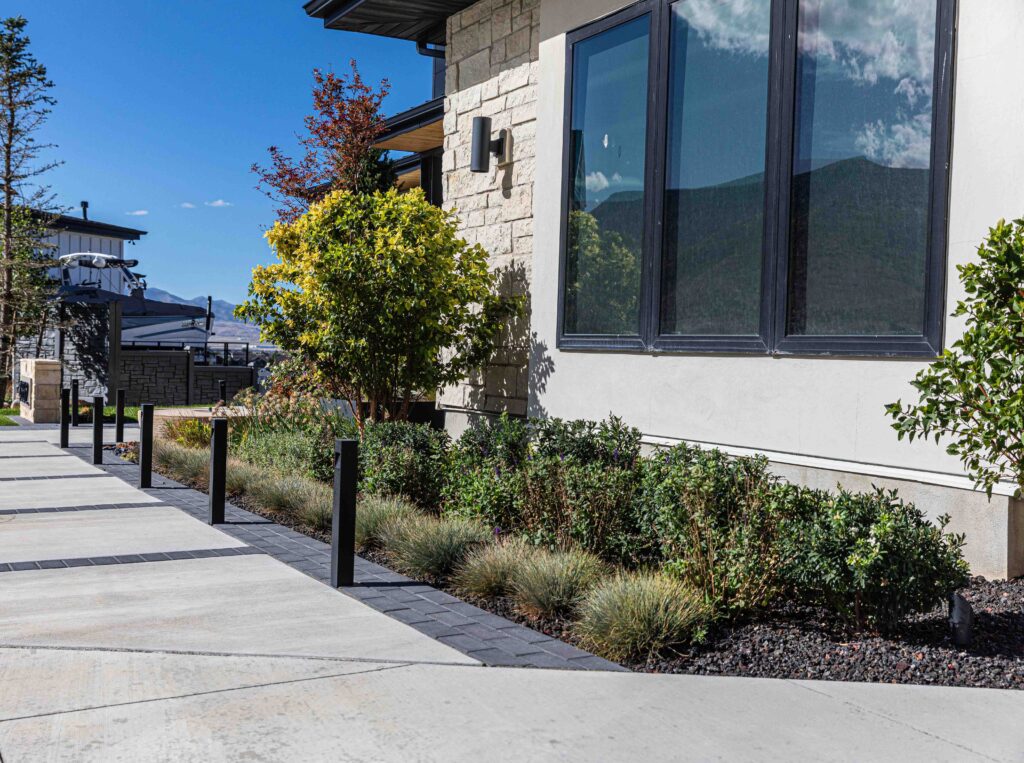
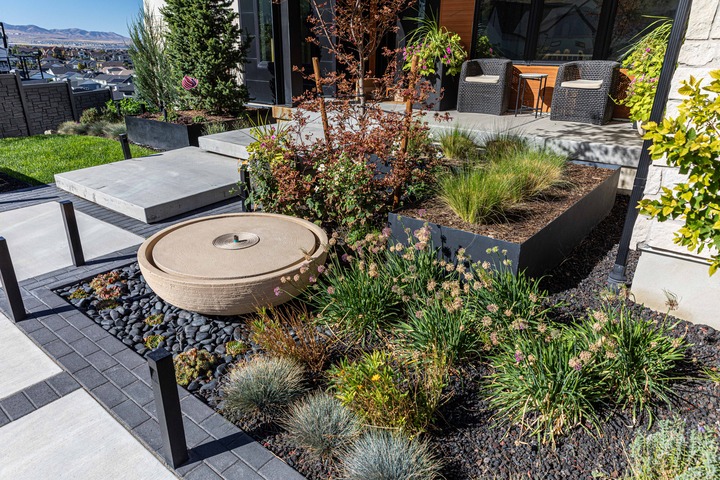
A design that ignores this ends up fighting the site for twenty years: plants that struggle in compacted clay, irrigation that either drowns roots in hardpan pockets or leaves them dry, and unestablished ground cover that lets wind and dust erode the lot before anything takes hold. A design that accounts for it from the start amends soil in planting beds before anything goes in, groups plants by water need (hydrozoning) so irrigation isn’t a single blanket schedule, and anchors the design with native and adapted xeric plants — species like Apache plume, blue grama grass, and drought-tolerant ornamental grasses establish reliably in Eagle Mountain’s semi-arid conditions and don’t need heavy long-term replacement.
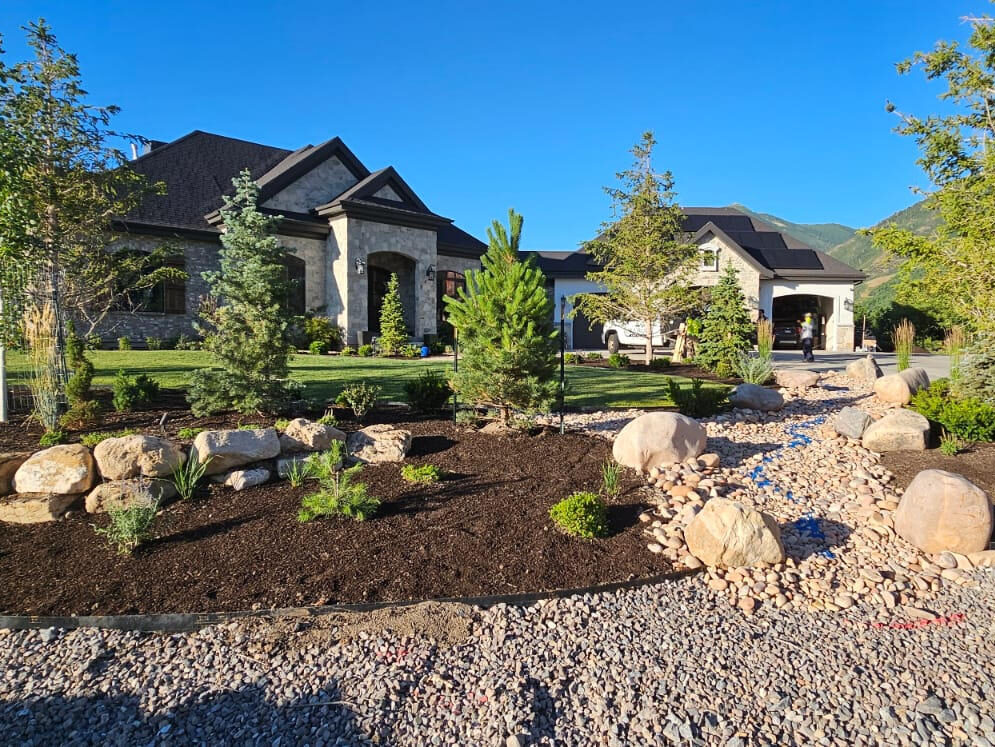
Hillside lots, common across Eagle Mountain’s newer developments, add one more long-term consideration: grading and drainage decisions made at the start determine whether water sheets off in a way that erodes planting beds ten years from now, or moves through the property the way it was designed to.
Choose Materials That Age Well, Not Materials That Are Trending
Hardscape material choice is where a lot of backyard budgets get spent — and where trend-chasing creates the most expensive redo. A material that photographs well today isn’t necessarily one that still looks good, and still holds up structurally, in 2046.
| Material | Typical Lifespan | Long-Term Consideration |
| Natural stone pavers (sandstone, travertine) | 30–50+ years | Higher upfront cost; color and texture don’t fade the way dyed or stamped surfaces do |
| Poured concrete patio | 25–30+ years | Can crack over time on clay soils; needs periodic sealing |
| Stamped / colored concrete | 15–20 years before resurfacing | Coloring fades with UV exposure and needs resealing to keep its finish |
| Engineered retaining wall block | 50+ years | Structural, low-maintenance — the right place to spend on quality |
| Pressure-treated wood structures | 10–20 Years before replacement | Needs refinishing; shorter lifespan in Utah’s UV and temperature swings |
As a rule, the elements that are expensive or disruptive to redo later — retaining walls, primary patios, irrigation lines — are worth the higher-durability material even at a higher upfront cost. Elements that are easy to update later, like furniture, planters, or accent lighting, are reasonable places to follow current trends without long-term risk.
Phase the Build Without Losing the Plan
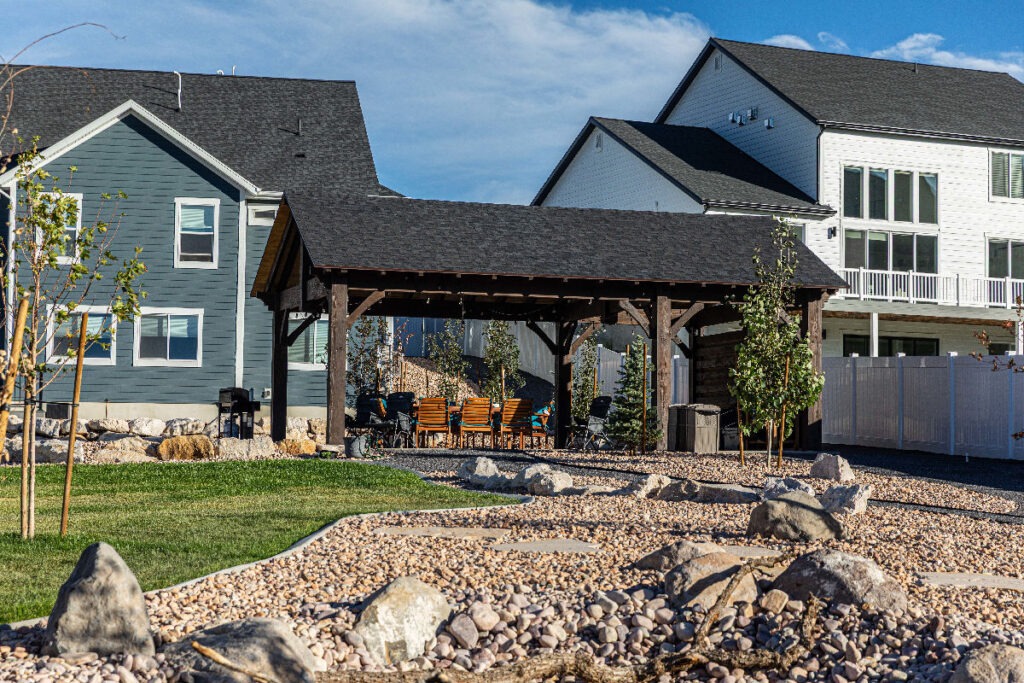
Almost no Eagle Mountain homeowner installs a full backyard the year they move in — and they shouldn’t have to. The mistake isn’t phasing the build; it’s phasing it without a master plan behind it, which is how yards end up with a patio that doesn’t line up with where the fire pit eventually gets added, or a tree planted in the exact spot a future pergola needed to go.
The sequence that holds up best over time starts with a complete design plan up front, even if construction happens over several years. From there: resolve grading and drainage first, since it’s the hardest and most disruptive phase to redo later. Install irrigation infrastructure and any major hardscape (patios, retaining walls) next, since trenching and grading around finished planting beds is expensive. Plant structural trees as early as possible, since they take the longest to reach the size the design is built around — a tree planted in year one is doing real work by year ten. Add secondary features (fire pits, pergolas, outdoor kitchens, planting details) last, once the bones of the design are in place and won’t need to be worked around.
Ready to Design a Backyard for the Next 20 Years?
Call Millburn Lawn & Landscape at (801) 810-5452 — we build landscape designs around Eagle Mountain’s soil, slope, and climate, from The Ranches to SilverLake to Overland. Bring your lot survey and we’ll build a master plan around your next twenty years, not just your first.
Frequently Asked Questions
How much does a backyard design cost in Eagle Mountain, UT?
Landscape design in Eagle Mountain typically runs $700–$3,500, depending on lot size and whether the package includes a full site consultation, a detailed planting plan, or a 3D rendering. Most new-build homeowners land in the $1,200–$2,200 range for a design package. See Millburn’s full Eagle Mountain landscape design pricing guide for a detailed breakdown.
How far apart should trees be planted so they don’t outgrow the space?
As a general rule, large shade trees need 20–25 feet from the home and from each other at maturity, and ornamental trees need 10–15 feet. Exact spacing depends on the species — a designer can confirm mature spread before anything goes in the ground.
Should backyard landscaping be done all at once, or in phases?
Phasing is normal and often makes sense financially, but it should always follow a single master plan created up front. Grading, irrigation, and structural trees should go in earliest; secondary features like fire pits and pergolas can be added later without conflicting with the original design.
What’s the biggest mistake homeowners make designing a new-construction backyard in Eagle Mountain?
Planting too densely for an instant “finished” look. Trees and shrubs planted at their move-in-day spacing routinely outgrow the space within 5–10 years, forcing removal or costly transplanting. Designing for mature size from the start avoids that entirely.
Do I need a permit for retaining walls or major backyard features in Eagle Mountain?
Yes — retaining walls over 4 feet in height require a building permit from Eagle Mountain City, and walls with surcharge loads from driveways or structures above them may need engineering review regardless of height. See Millburn’s retaining wall and hardscape guide for more detail.
How do I make a backyard design low-maintenance for the long term?
Group plants by water need (hydrozoning), lean on native and drought-adapted species suited to Eagle Mountain’s semi-arid climate, and balance planting beds with durable hardscape so less of the yard needs ongoing irrigation and upkeep.
When should backyard design start after moving into a new-build home in Eagle Mountain?
As soon as possible. Freshly graded lots are prone to wind and dust erosion until ground cover is established, and starting the design process early — even if construction is phased — prevents temporary landscaping decisions from working against the long-term plan.