Front Yard Landscape Design for Established Holladay, UT Homes
Good front yard landscape design in Holladay starts with the mature trees already on the lot, gives visitors a clear and well-lit path to the front door, replaces narrow, hard-to-water grass like the park strip with water-wise planting on drip, and keeps fences and plantings within the city’s height and sightline rules. On an established Holladay property, the front yard is less about starting from scratch and more about editing: keeping what makes the street feel mature and fixing what makes the yard hard to use or maintain.
Below we walk through how to approach each piece, what Holladay rules to check, and where a front yard redesign usually gets the most return for the effort.
Why Front Yard Landscape Design in Holladay Is Different
Front yards in newer Wasatch Front subdivisions often start as bare dirt or builder-grade sod. In Holladay, they usually start with decades of history: large shade trees, foundation shrubs that have outgrown the windows, a sprinkler system expanded zone by zone over the years, and a lawn that thins out wherever the canopy got bigger. Many lots also have slopes, older retaining walls or runoff problems, especially closer to the east bench and along roads like Murray-Holladay Road.
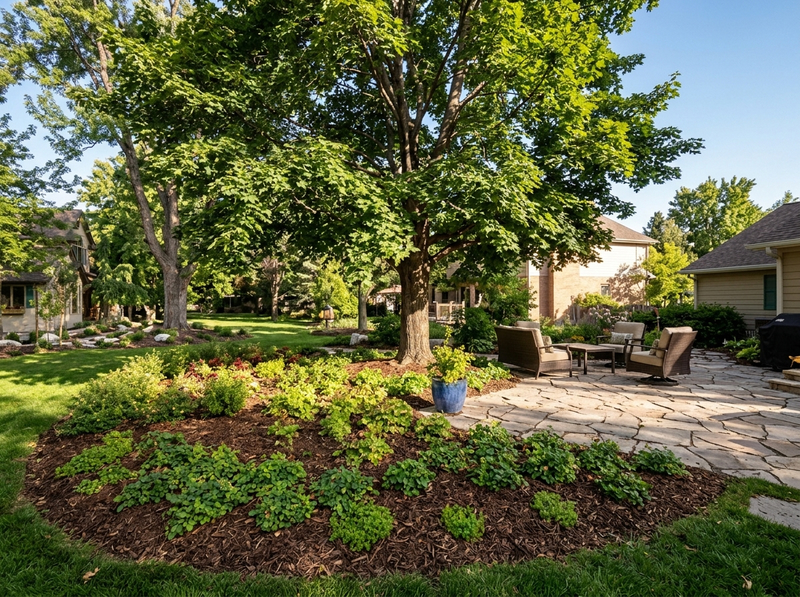
Holladay also takes its trees seriously. The city’s own landscape code talks about preserving Holladay’s unique tree canopy and character, and the front yard is where most of that canopy is visible from the street. A front yard plan that works with the existing trees almost always looks better, and settles in faster, than one that fights them.
That’s why front yard landscape design in Holladay is mostly about decisions: which plants and features to keep, which to remove, and how to make the yard easier to water and maintain without losing the established look.
Start With the Trees in Your Front Yard
Before anything goes on paper, map the trees. A common rule of thumb for the critical root zone is about one foot of radius for every inch of trunk diameter, and most feeder roots sit in the top foot or two of soil. That zone shapes the whole front yard plan.
- Keep heavy hardscape out of root zones. Where a walk or patio has to pass near a tree, use permeable pavers or flagstone on a shallow base instead of deep excavation.
- Don’t change the grade under the canopy. Even a few inches of fill can suffocate roots.
- Don’t till new beds under big trees. Plant small perennials in pockets and use wood mulch as a forest-floor layer instead.
- Keep the water. If a lawn zone has been watering a large tree for years, don’t remove it without giving the tree its own drip or bubbler supply.
For a deeper look at root protection and shade plants, see our guide to landscape design around mature trees in Holladay. In the front yard, the practical takeaway is simple: build the design around the canopy, not under it.
Front Walkway, Entry and Lighting Design for Holladay Homes
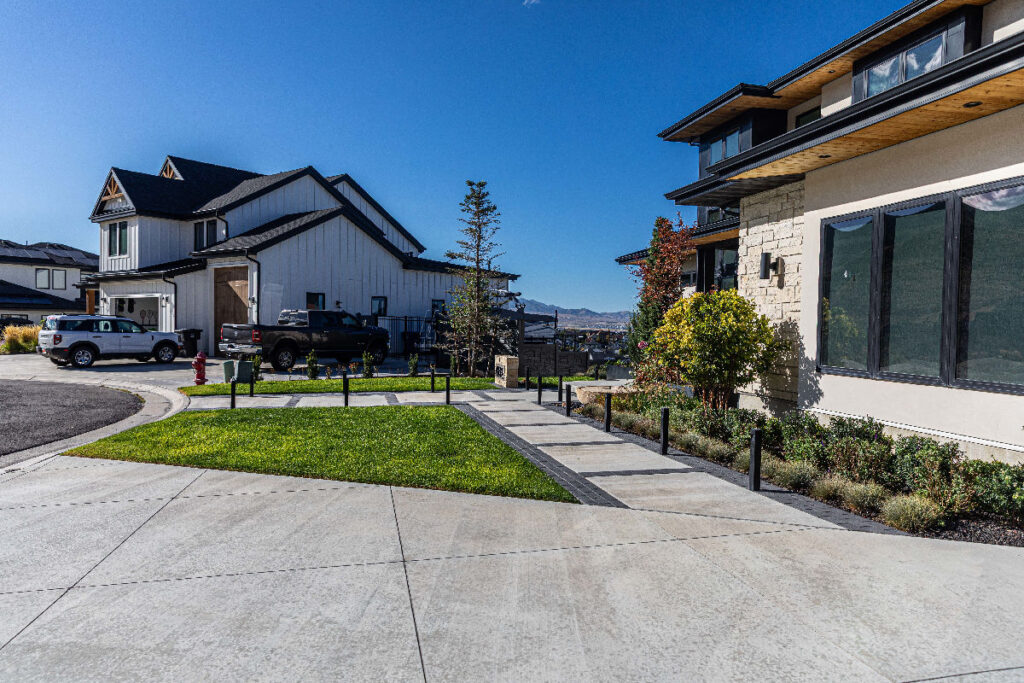
The single biggest improvement in many older front yards is the path to the door. Narrow concrete walks that run straight from the driveway, steps that have settled and shifted, and entries hidden behind overgrown shrubs all make a house feel harder to approach than it is.
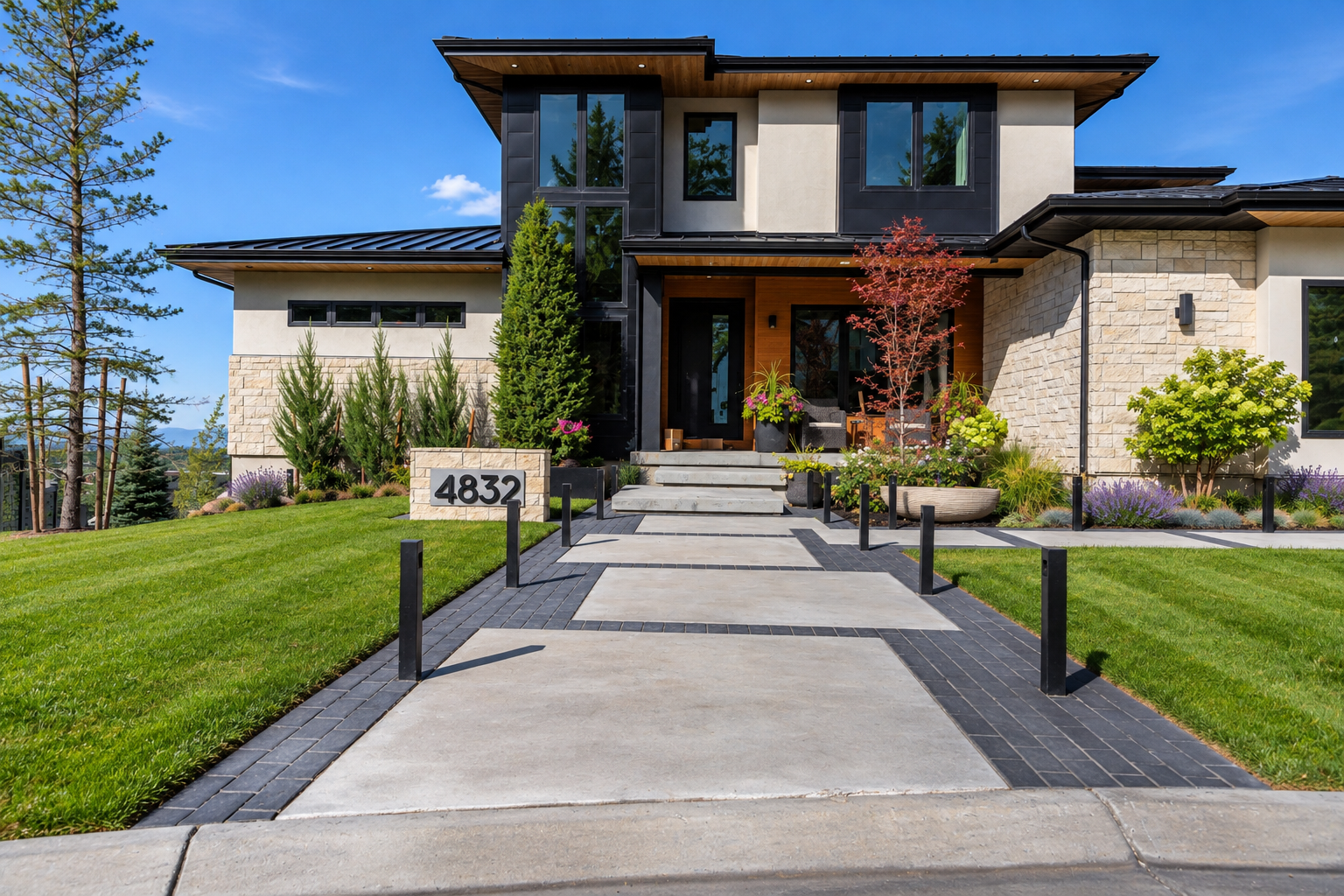
A front yard redesign is the time to widen the walk so two people can use it side by side, give it a gentle curve or a landing where it meets the porch, and pull shrubs back from the entry so the door is visible from the street. Watch where snow and ice linger in winter, too. On north-facing entries and walks under evergreens, ice can sit for days, and a new route with more sun or better drainage can solve a problem that salt never will.
Lighting finishes the job. Path lights or step lights make the walk usable after dark, and soft uplighting on a mature tree or the front of the house gives the yard depth at night. Millburn’s landscape lighting work covers entrances, walkways, trees and architectural features, and it’s far easier to run wiring during a redesign than to add it later. Just route it around root zones instead of trenching through them.
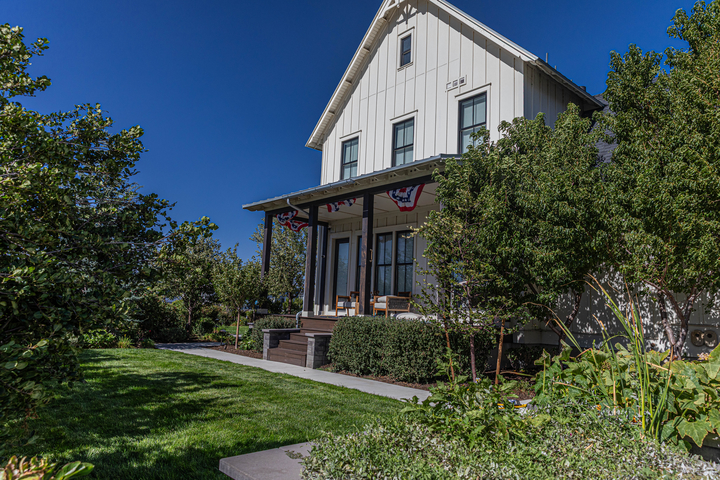
Foundation plantings deserve the same edit. Junipers, yews and other shrubs planted when the house was built often block windows, crowd the walk and hide the foundation line entirely. Rather than replacing everything, a designer will usually keep the healthiest, best-shaped plants as anchors, remove what’s overgrown or declining, and fill in with lower, slower-growing shrubs and perennials that won’t need constant shearing. The result looks intentional instead of overgrown, and it lets the architecture of an older Holladay home show again.
Rethinking the Park Strip and Narrow Front Lawn Areas
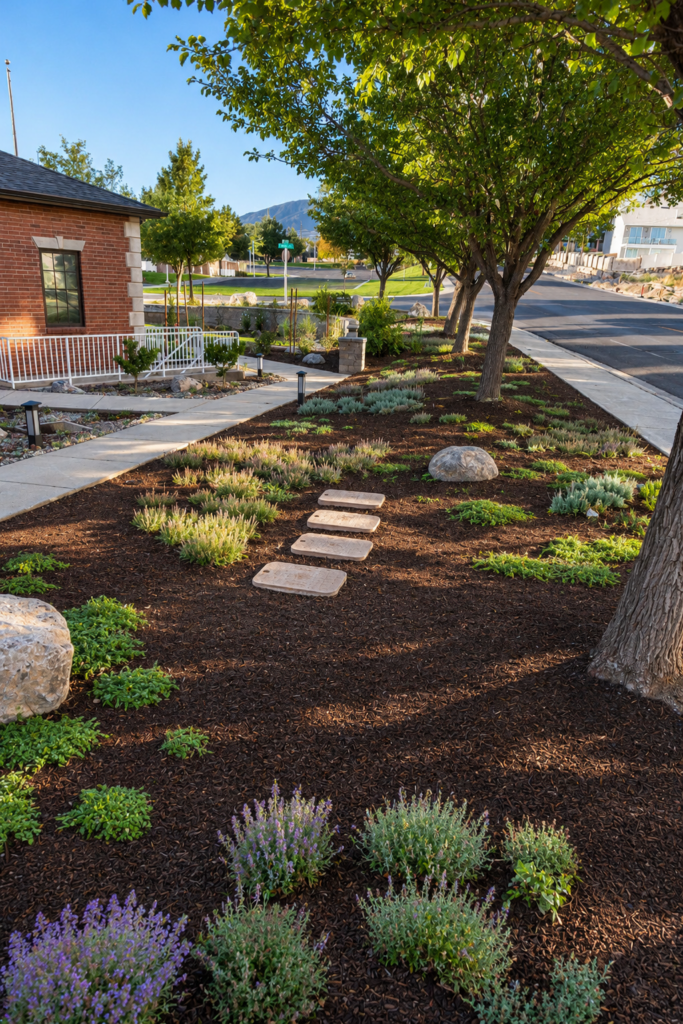
If there’s one piece of lawn in a Holladay front yard that isn’t earning its keep, it’s usually the park strip. Overhead spray in a narrow strip wets the sidewalk and street more than the grass, and Utah Water Savers estimates that removing irrigated turf from a park strip saves about 5,000 to 8,000 gallons of water a year.
Salt Lake County’s park strip design guide recommends drip irrigation for planted areas, 3 to 4 inches of organic mulch in planting beds, plants that cover most of the area at maturity, and keeping plantings low so they don’t block sight lines. Rock and boulders work as accents between plantings, and a stepping-stone path across the strip makes life easier for anyone parking on the street.
The same thinking applies to other narrow strips of grass along driveways and side yards. Areas under 8 feet wide are hard to water efficiently, and the water-efficient landscape ordinances Utah requires for incentive eligibility don’t allow lawn there in new development. A front yard that keeps a usable, well-shaped lawn area and converts the slivers around it to planting beds usually uses less water and looks more finished.
If you plan to replace lawn, check the incentive first. Holladay is listed as an eligible community for Utah’s Landscape Incentive Program, and the program requires approval and a site visit before any grass is removed or killed. Removing it first disqualifies you, so plan the front yard design and the application together.
Irrigation changes with the plan. Converting spray zones in beds and strips to drip, keeping spray only on the lawn that remains, and giving mature trees a dedicated water supply usually means reworking an older system rather than patching it. Millburn’s irrigation work in Holladay includes sprinkler repair, drip conversions and coverage adjustments, so it can be designed alongside the front yard plan.
Front Yard Fences, Hedges and Sightlines in Holladay
A front yard is public-facing, and Holladay’s code reflects that. The city’s fence rules set a maximum height of 4 feet for fences in the front yard area abutting a public street, with limited exceptions. Holladay also requires that driveways entering a public street keep a clear view for drivers. That affects hedges, ornamental grasses and shrubs near the driveway and the street as much as fences.
In practice, that means designing front yard privacy with layers rather than walls: a low fence or hedge, a planting bed with height set back from the street, and a tree or two placed where they screen a window without blocking the driveway view. If you have an HOA, check its guidelines as well, and confirm current requirements with Holladay City before building any fence or wall.
Getting these rules into the plan early is one of the advantages of working with a design-build team. Millburn handles front yard landscape design in Holladay from the first site visit through installation, so the plan that’s approved is the plan that gets built.
Plan Your Holladay Front Yard With Millburn
Ready to rethink your front yard? Call Millburn Lawn & Landscape at (801) 810-5452 to book a design consultation. We’ll walk your Holladay property, map the trees and problem spots, and develop a front yard plan our own crews install, from the walkway and lighting to planting and drip irrigation. Millburn is a licensed and insured design-build landscape contractor that has served Salt Lake County for more than 20 years. Our office is open Monday through Friday, 8:00 to 4:30.
Frequently Asked Questions
How tall can a front yard fence be in Holladay?
Holladay’s code sets a 4-foot maximum for fences in the front yard area abutting a public street, with limited exceptions such as certain large lots. Confirm current requirements with Holladay City before you build.
Can I remove the grass in my park strip?
Yes, and it’s one of the easiest water savings in a front yard. Utah Water Savers estimates 5,000 to 8,000 gallons saved per year. If you want the state incentive, apply and get approval before removing the grass.
Can I add planting beds under the big trees in my front yard?
Yes, but don’t till under the canopy, since that cuts the feeder roots. Plant small perennials in pockets, add wood mulch, and avoid raising or lowering the grade.
Should I keep any lawn in my front yard?
A common approach is to keep one well-shaped lawn area and convert the narrow strips and park strip around it. Lawn is easiest to water efficiently in larger, open areas, not in strips under 8 feet wide.
Can a front yard redesign be done in phases?
Yes. A complete front yard plan lets you build in stages, for example the walkway and lighting first and planting later, without redoing earlier work.
Does Millburn design and install front yards in Holladay?
Yes. Millburn is a design-build company, so the same team designs and installs walkways, planting, lighting, irrigation and other front yard work in Holladay