Why Material Selection Makes or Breaks an Outdoor Project in Herriman
Material selection is one of the most consequential decisions in any outdoor design project — and for Herriman homeowners, it is also one of the most climate-specific. The materials that perform beautifully in coastal California or humid Georgia may fade, crack, heave, or rot within a few seasons under Herriman’s high-altitude sun, dramatic temperature swings, and alkaline water conditions.
Herriman sits at approximately 4,900 to 5,400 feet in elevation — higher than most Salt Lake Valley communities — at the foot of the Oquirrh Mountains. That elevation means more intense UV radiation, colder overnight winter temperatures, harder freeze-thaw cycles, and a drier climate than many national design guides account for. Add in the region’s characteristically alkaline water, which accelerates staining and mineral buildup on porous surfaces, and you have a set of material selection criteria that genuinely require local expertise.
The good news is that excellent materials exist for every application, every budget, and every aesthetic in Herriman’s outdoor design landscape. This guide walks you through the key categories, top performers, and questions to ask when choosing materials and finishes for your next outdoor project.
Understanding Herriman’s Climate Demands on Outdoor Materials
Before diving into specific materials, it helps to understand the specific ways Herriman’s environment stresses outdoor surfaces and structures — because every material selection decision should be filtered through these conditions.
- UV intensity: At nearly a mile above sea level, UV radiation in Herriman is approximately 25% more intense than at sea level. This accelerates fading, degradation, and surface breakdown in materials not rated for high-UV environments. Color fastness and UV-stabilized finishes are essential considerations.
- Freeze-thaw cycling: Herriman typically experiences 100 or more freeze-thaw cycles per year. Any porous material — concrete, natural stone, certain pavers — that absorbs water and then freezes will experience expansion-driven cracking and surface degradation over time. Freeze-thaw resistance is non-negotiable for Herriman hardscape.
- Alkaline water and soil: Herriman’s water supply and soils are alkaline, which causes mineral deposits and staining on porous surfaces and accelerates corrosion on some metals. Materials with sealed or non-porous surfaces handle these conditions far better than untreated options.
- Temperature extremes: Summer highs can reach 100 degrees Fahrenheit while winter lows regularly drop below 10 degrees. Materials must perform across a temperature range of nearly 90 degrees — a demanding spec that eliminates several otherwise attractive options.
Hardscape Materials: Patios, Pathways, and Driveways
Hardscape materials form the foundation of your outdoor space — and in Herriman’s climate, choosing wrong means costly repairs or full replacement within a few years. Here is how the most popular options stack up.
Concrete Pavers
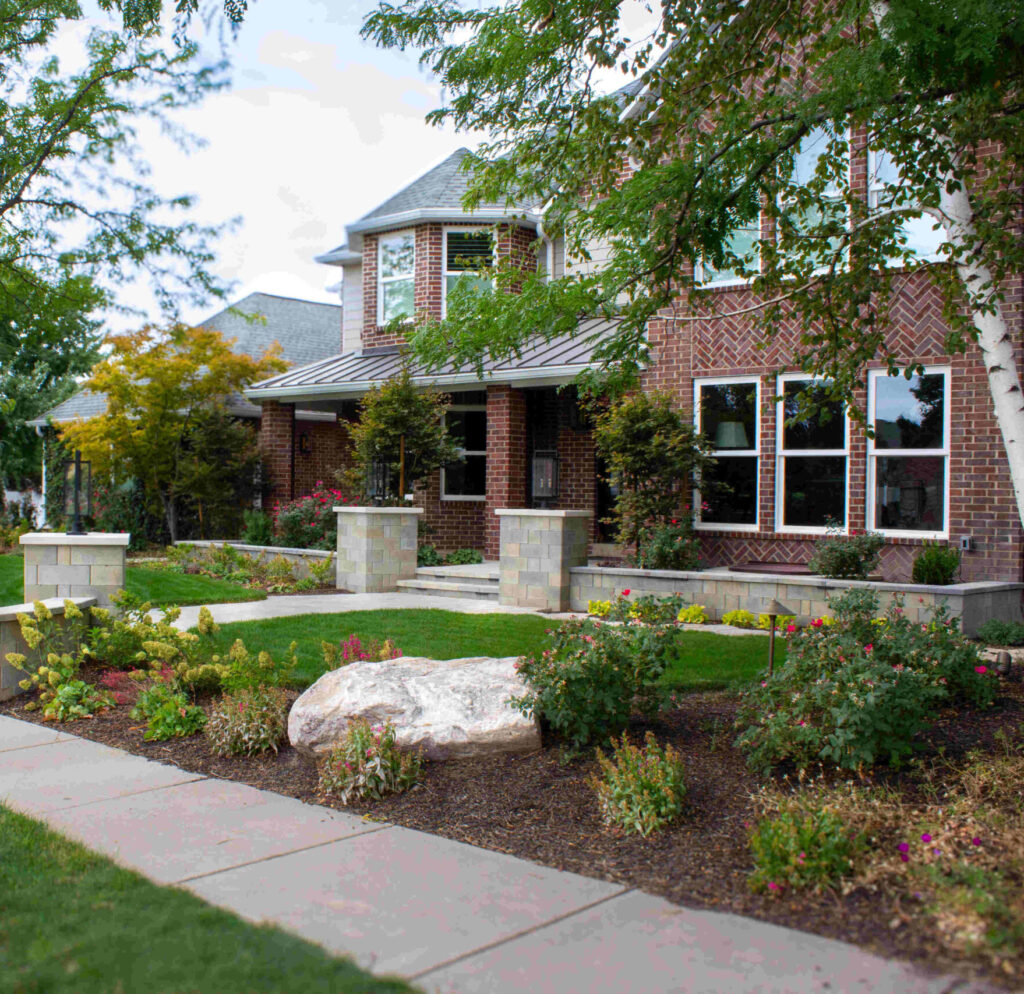
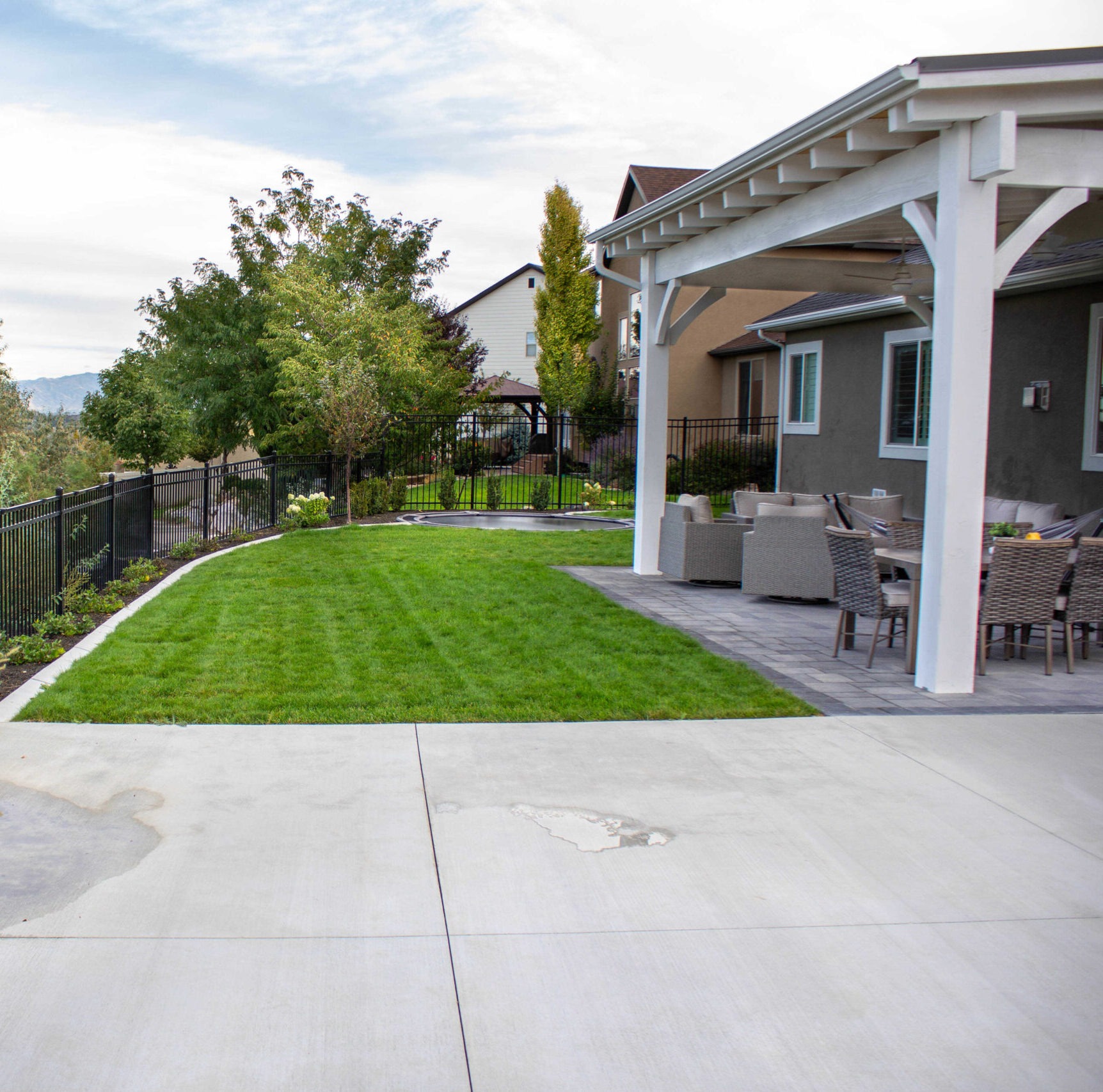
Concrete pavers are the most versatile and consistently reliable hardscape material for Herriman outdoor projects. High-quality pavers manufactured to meet ASTM C936 standards offer excellent freeze-thaw resistance, come in an enormous range of colors, sizes, and textures, and are repairable unit by unit if damage occurs. Unlike poured concrete, which can develop wide cracks that require full-section replacement, a shifted or cracked paver can simply be lifted and reset.
For Herriman’s UV conditions, choose pavers with integral color rather than surface-applied pigments. Integral color goes all the way through the unit and cannot fade off the surface. Lighter color palettes also stay cooler underfoot during Herriman’s hot summers — a practical consideration for families with barefoot children or pets.
Natural Stone
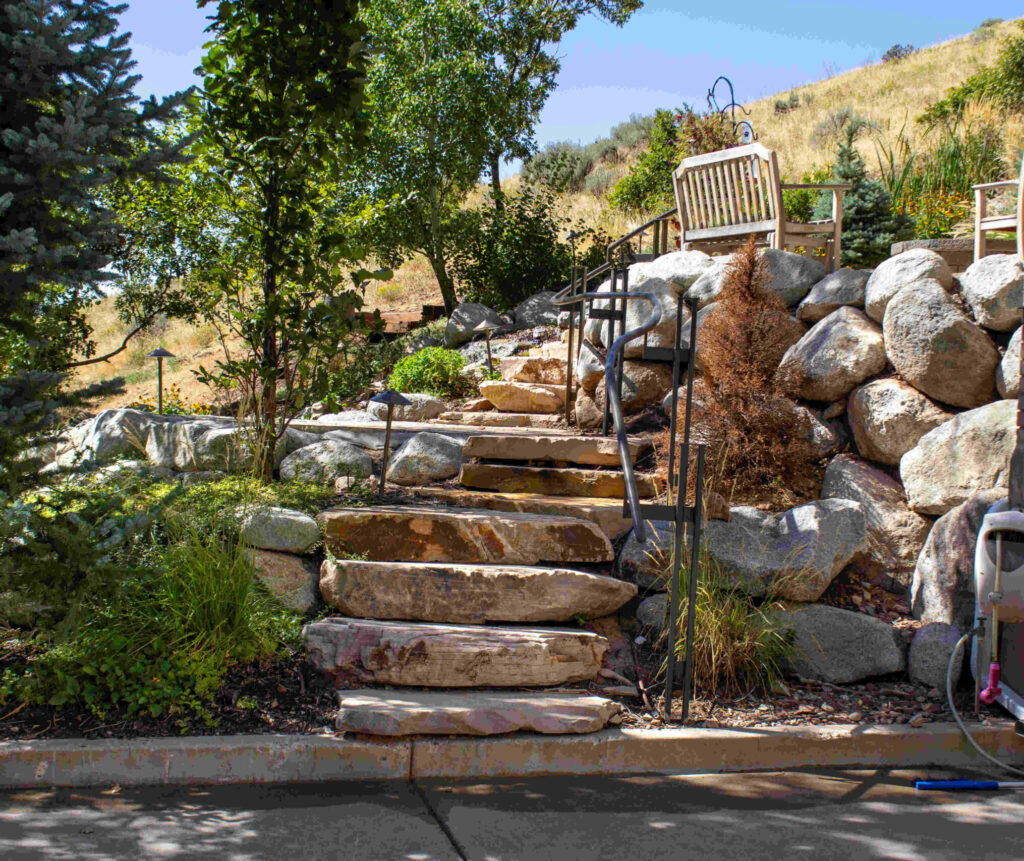
Natural stone — travertine, flagstone, slate, and quartzite — brings unmatched visual character to Herriman outdoor spaces. However, not all natural stone is equally suited to the local climate. Travertine, while beautiful, is porous and requires sealing every one to two years to resist Herriman’s alkaline water staining and freeze-thaw damage. Quartzite is denser and more durable, handling Utah’s conditions better than travertine with less maintenance. Flagstone in dry-stack applications on slopes can shift with Herriman’s freeze-thaw cycles if not set in a properly compacted base.
When specifying natural stone for Herriman projects, always ask for the stone’s water absorption rate. Lower absorption means better freeze-thaw performance. Anything above 3% absorption should be sealed and monitored carefully in Herriman’s climate.
Porcelain Tile and Pavers
Porcelain pavers have emerged as one of the top-performing hardscape materials for high-end Herriman outdoor projects in recent years. Fired at extreme temperatures, porcelain is essentially non-porous — it absorbs virtually no water, resists staining from Herriman’s alkaline water, and handles freeze-thaw cycling without degradation. It is available in large-format sizes and convincing wood-grain, stone, and concrete finishes that look stunning in modern Herriman outdoor designs.
The key specification for outdoor porcelain in Herriman is the slip resistance rating. Specify a minimum COF (coefficient of friction) of 0.60 for wet conditions — particularly important on pool decks and areas that receive irrigation overspray.
Wood, Composite, and Decking Materials
Vertical structures — pergolas, fences, deck framing, and privacy screens — face different material challenges than horizontal hardscape in Herriman. UV degradation, moisture cycling, and wood-destroying insects are the primary concerns.
Natural Wood
Cedar and redwood are the traditional choices for Herriman outdoor structures, and both perform reasonably well when properly finished and maintained. However, Herriman’s UV intensity means that any untreated or neglected wood will gray, check, and degrade significantly faster than in lower-elevation environments. A high-quality UV-blocking exterior stain or sealant, reapplied every two to three years, is the minimum maintenance commitment for natural wood in Herriman.
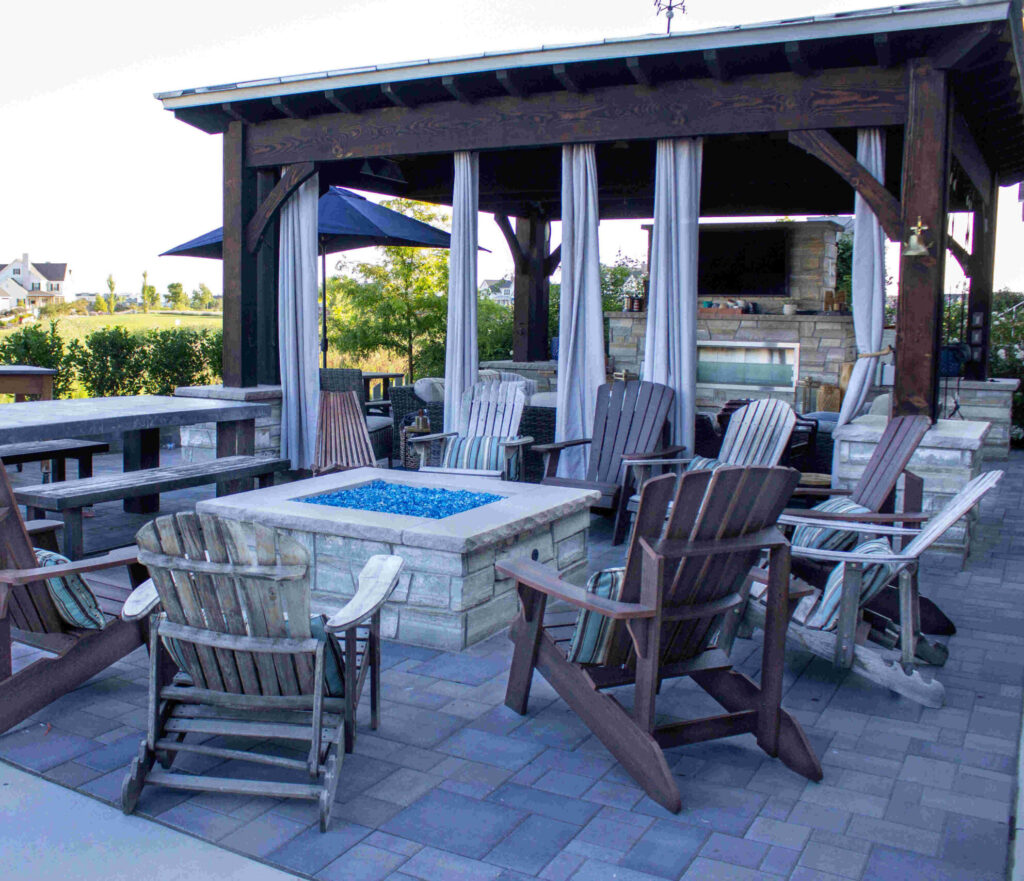
For pergola and structure framing, rough-sawn cedar with a penetrating oil finish has a warm, authentic aesthetic that suits Herriman’s mountain-adjacent character beautifully. The maintenance commitment is real, but for homeowners who value natural material authenticity, it is worth it.
Composite and PVC Decking
Composite decking has matured dramatically in the past decade, with premium products from brands like Trex, TimberTech, and Fiberon offering genuinely wood-like appearances and dramatically reduced maintenance requirements compared to natural wood. For Herriman homeowners who want the look of wood without the ongoing staining and sealing commitment, a capped composite product — in which a protective polymer shell encases the composite core — is an excellent choice.
Specify capped composite for Herriman applications rather than uncapped composite. The polymer cap provides critical UV protection and prevents moisture absorption, both of which are particularly important at Herriman’s elevation. Surface temperatures on dark composite decking can run high on summer afternoons — lighter color selections stay meaningfully cooler underfoot.
Powder-Coated Aluminum Structures
For pergola framing, fence posts, and outdoor structure components where low maintenance is the priority, powder-coated aluminum is an outstanding performer in Herriman’s climate. It never rusts, never needs painting, resists UV fading when quality powder coat finishes are specified, and handles temperature extremes without the expansion-contraction issues that affect some composite products. Modern aluminum pergola systems offer clean, architectural aesthetics that photograph beautifully and hold their appearance for decades with minimal care.
Material Quick Reference for Herriman, Utah
Use this table when comparing material options for your Herriman outdoor project.
| Material | Best Use | Durability in Utah | Maintenance Level |
| Concrete Pavers | Patios, pathways, driveways | Excellent freeze-thaw resistance | Low — occasional sealing |
| Porcelain Pavers | Premium patios, pool decks | Outstanding — virtually non-porous | Very low — hose clean |
| Quartzite Stone | Accent walls, stepping stones | Good when properly sealed | Moderate — reseal every 2-3 yrs |
| Travertine | Patios (shaded areas) | Fair — requires sealing | High — reseal annually |
| Cedar (natural wood) | Pergolas, fences, screens | Good when maintained | High — stain every 2-3 yrs |
| Capped Composite | Decks, pergola cladding | Very good UV and moisture resistance | Very low — annual cleaning |
| Powder-Coat Aluminum | Pergola framing, gates, fences | Excellent — no rust or fade | Very low — wipe clean |
| Concrete (poured) | Driveways, utility areas | Fair — prone to cracking at elevation | Moderate — seal and monitor |
Choosing Finishes: Color, Texture, and Sheen
Beyond the base material itself, finish decisions — color, surface texture, and sheen level — significantly affect both the aesthetic outcome and the practical performance of your Herriman outdoor project.
For color, Herriman’s dramatic natural setting — red rock ridgelines, sagebrush tones, and blue-sky backdrops — provides a beautiful palette reference. Warm earth tones, sandstone blends, and charcoal-to-slate grays all complement the local landscape while showing less dust and mineral staining than stark white or very light finishes.
For texture, matte and honed finishes outperform high-gloss in Herriman’s outdoor conditions. Gloss finishes show mineral water spots prominently, become slippery when wet, and show UV fading more visibly. A light to medium texture provides better slip resistance, hides everyday wear, and reads as more natural in an outdoor context.
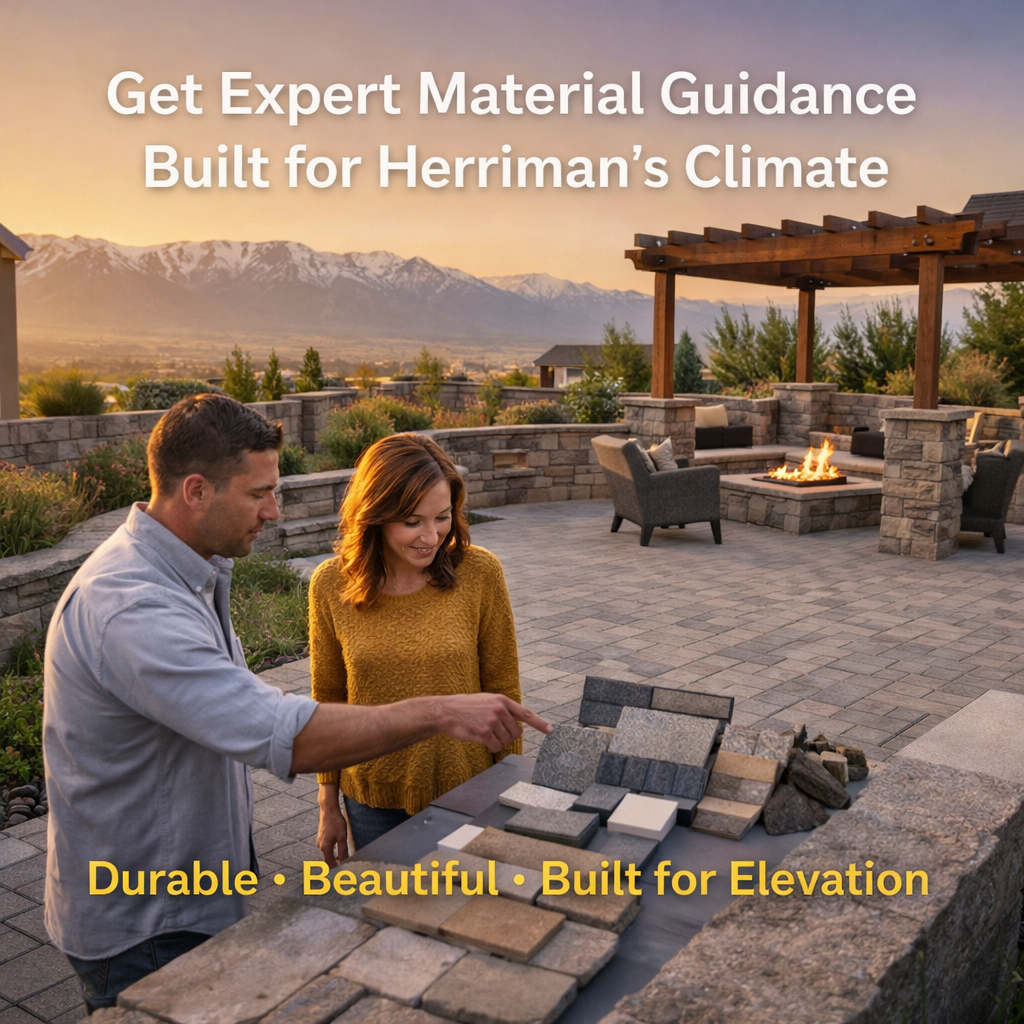
Get Expert Material Guidance Built for Herriman’s Climate
Stop guessing at material specs and finish combinations. Our Herriman outdoor design team has extensive experience selecting and installing materials that perform beautifully at elevation — and look stunning doing it. Let us help you build something that lasts.
Frequently Asked Questions
Q What patio material holds up best in Herriman, Utah’s climate?
Porcelain pavers and high-quality concrete pavers are the top performers for Herriman’s climate. Both offer excellent freeze-thaw resistance, handle UV exposure well, and resist the staining caused by Herriman’s alkaline water. Porcelain has a slight edge in low-maintenance performance; concrete pavers offer more variety in style and price point.
Q Does natural stone work in Herriman’s outdoor spaces?
Yes, but material selection and proper sealing are critical. Dense, low-absorption stones like quartzite and bluestone handle Herriman’s climate well. More porous options like travertine and some flagstones require annual sealing to resist freeze-thaw damage and mineral staining. Always ask for the stone’s water absorption rate before specifying it for a Herriman project.
Q Is composite decking a good choice for Herriman, Utah?
Yes — specifically capped composite decking. The polymer cap provides essential UV protection and moisture resistance at Herriman’s elevation. Specify lighter color options to reduce surface temperatures on hot summer afternoons. Premium capped composite from reputable manufacturers offers a 25 to 30 year warranty and holds up well in Herriman’s conditions with minimal maintenance.
Q How often does wood need to be refinished in Herriman?
At Herriman’s elevation, UV exposure is more intense than lower-elevation areas, which accelerates finish degradation. A quality penetrating oil or UV-blocking stain on cedar or redwood should be reapplied every two to three years. Skipping maintenance cycles leads to checking, graying, and eventual structural degradation. Powder-coated aluminum or capped composite alternatives eliminate this maintenance commitment entirely.
Q What finish color works best for outdoor materials in Herriman?
Warm earth tones — sandstone, charcoal, warm gray, and tan blends — complement Herriman’s natural landscape and show less mineral staining than stark whites or very light neutrals. Matte and honed surface finishes outperform gloss in Herriman’s high-UV environment. Always view material samples in direct outdoor sunlight at your property before finalizing any color decision.