How Landscape Designers Choose Plant Spacing and Layout in Herriman
One of the most common landscape problems we see in Herriman homes isn’t the wrong plants — it’s the right plants in the wrong place. Shrubs planted too close together that now block windows. Trees placed directly under utility lines. Shade-loving perennials dropped into spots that were sunny when the house was first built, before surrounding trees matured.
Plant spacing and layout decisions made at planting time have consequences that play out over years — sometimes decades. Get them right, and your landscape becomes more beautiful and less labor-intensive as it matures. Get them wrong, and you’re either pulling things out in five years or fighting a yard that constantly seems to be working against you.
Here’s how professional landscape designers approach plant spacing and layout — and what Herriman homeowners should understand before breaking ground on any redesign project.
Start With a Site Analysis Before Selecting a Single Plant
Every well-executed landscape design in Herriman begins with a thorough site analysis. This means understanding the lot’s sun exposure patterns throughout the day and across seasons, prevailing wind directions (which in Herriman can be significant coming off the Oquirrh Mountains), existing soil conditions, drainage patterns, and utility line locations both above and below ground.
Utility lines are a particularly common issue in Herriman’s newer subdivisions. Trees planted without checking utility placement often outgrow their space and create safety or maintenance problems within a decade. A proper site analysis prevents these costly mistakes before they happen.
The goal of the site analysis isn’t to choose plants — it’s to define what conditions exist and what constraints must be respected. Plant selection and spacing come after this foundation is established.
Design for Mature Size — Not the Size at Purchase
This is the single most common spacing mistake homeowners make when planting on their own. A plant purchased at a nursery is typically a fraction of its eventual mature size. A 5-gallon Autumn Blaze Maple might look like a manageable small tree at planting. At maturity, it has a 35- to 45-foot canopy spread.
Professional landscape designers in the Herriman and South Jordan area always space plants based on their mature canopy width, not their size at installation. This means a bed that looks sparse for the first two to three years — which requires some patience — but fills in correctly over time without overcrowding.
As a general rule: place the centers of two plants apart by the sum of half each plant’s mature spread. If Plant A matures to 6 feet wide and Plant B matures to 8 feet wide, they should be planted 7 feet apart at center. This gives roots room to develop and prevents the constant pruning that comes from overcrowded planting.
Layer the Landscape for Depth and Visual Interest
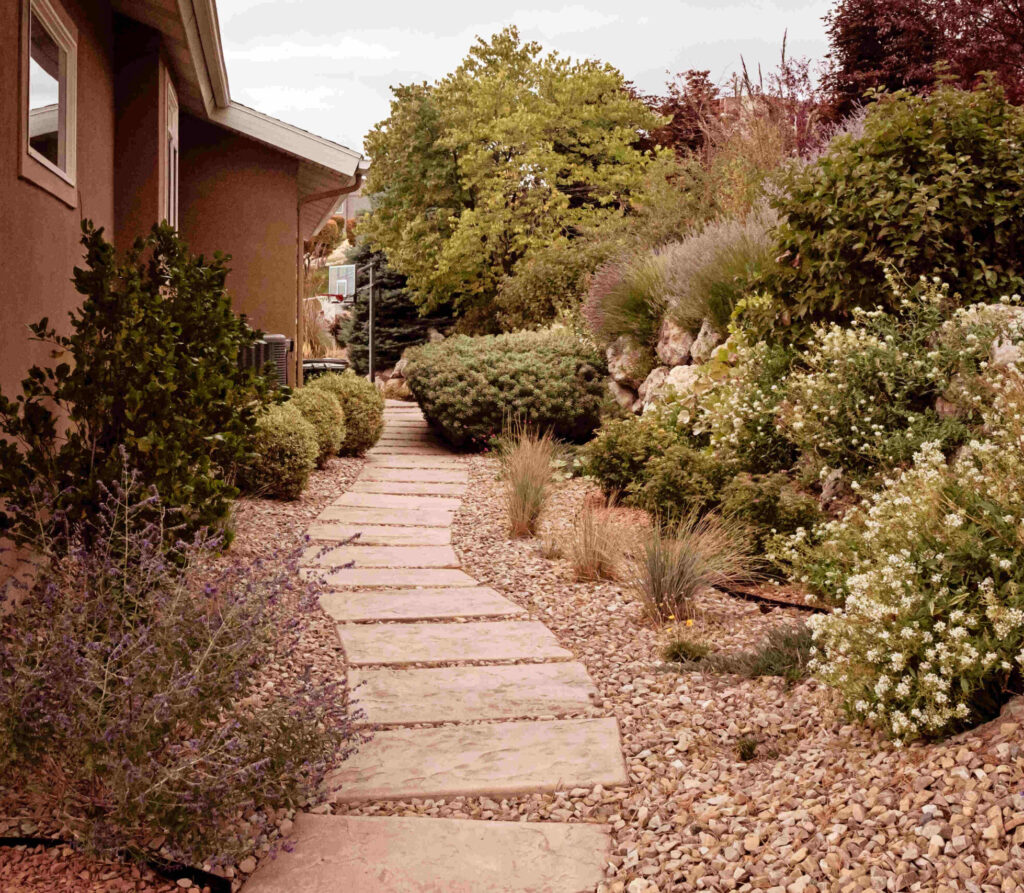
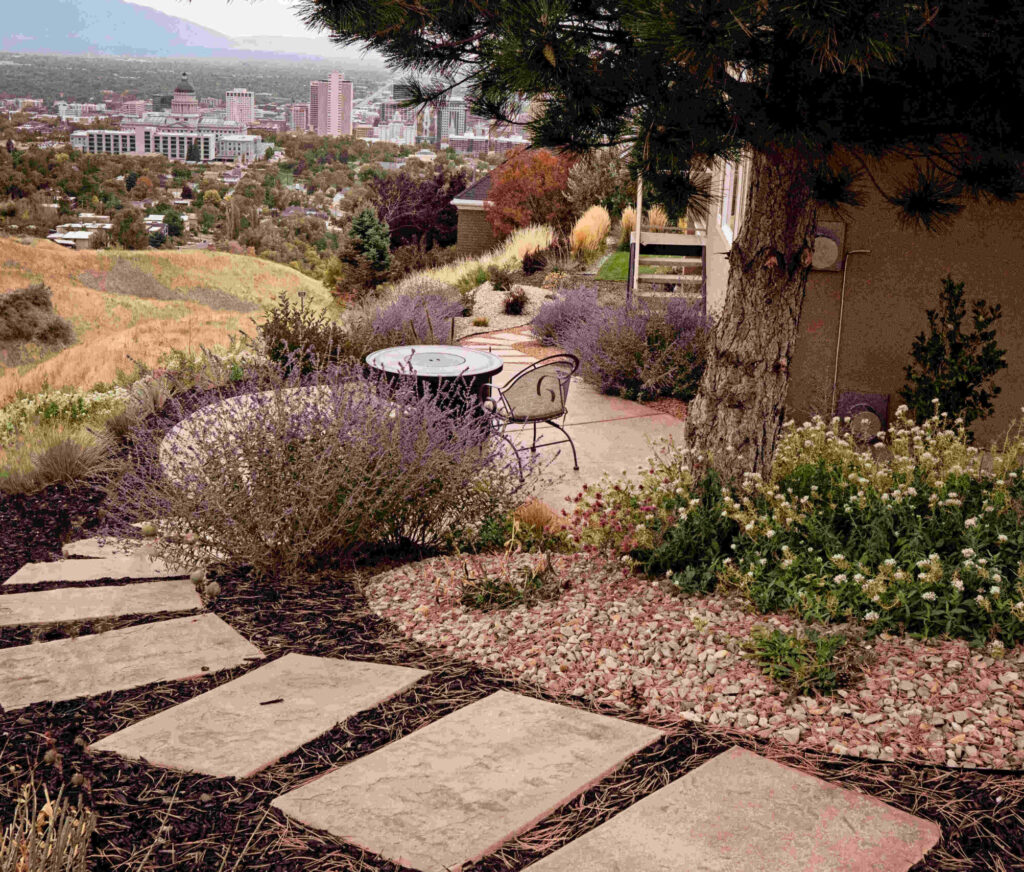
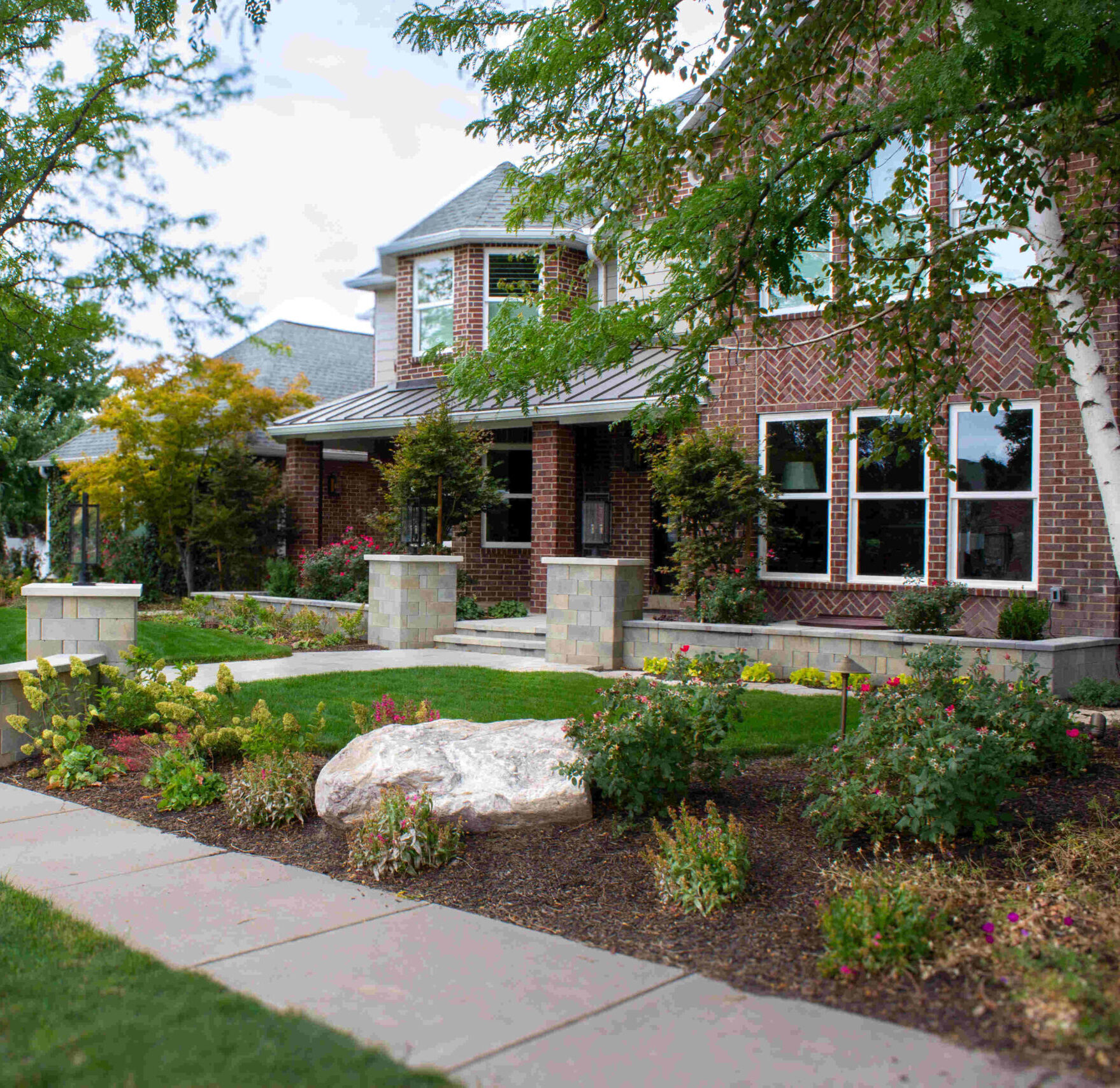
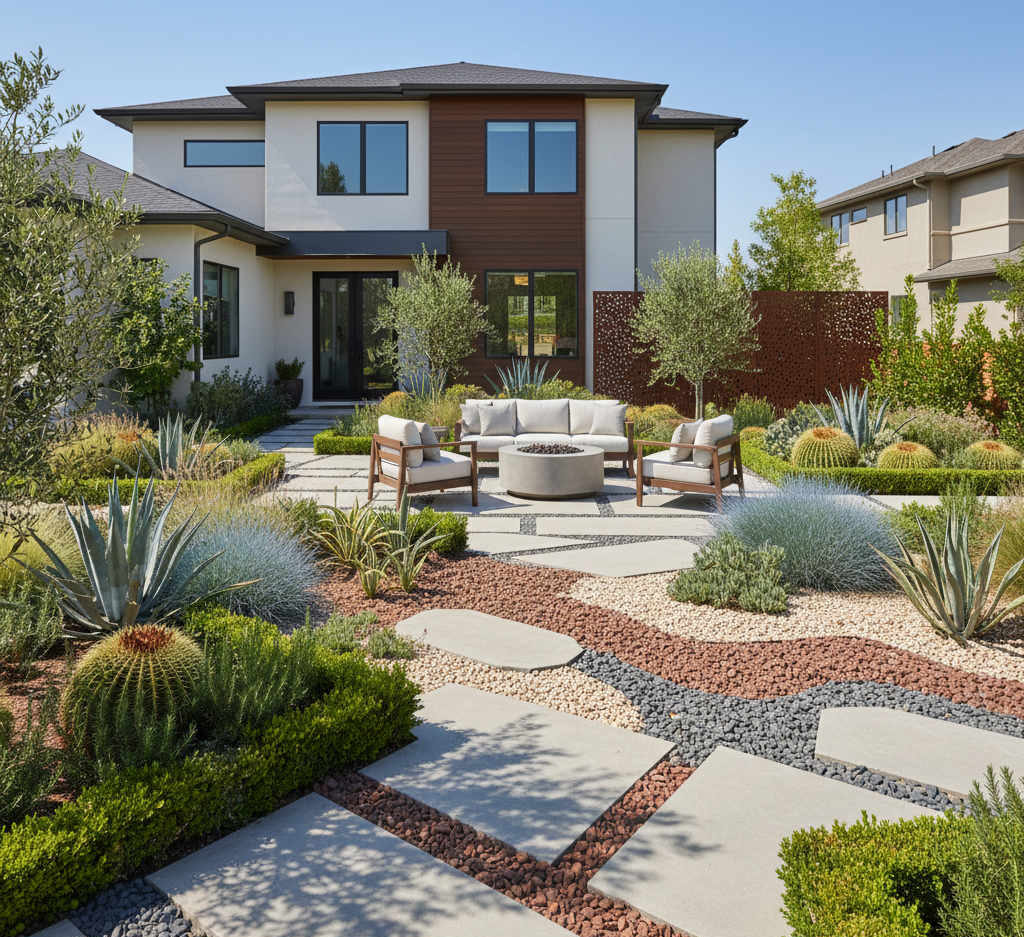
Strong landscape design doesn’t place plants randomly — it layers them by height and scale. A well-layered planting bed in a Herriman yard typically includes: a canopy layer (larger trees), an understory layer (smaller trees and large shrubs), a shrub layer (medium shrubs and ornamental grasses), and a ground layer (perennials, groundcovers, and mulch).
This layering approach isn’t just aesthetic — it mirrors how plant communities grow naturally, which means each layer is competing in a different niche rather than all competing for the same light and moisture. Layered landscapes are more resilient, more drought-tolerant once established, and far more visually interesting than flat beds of uniform-height plants.
Taller plants go toward the back of beds (or toward the house in foundation plantings), with height graduating down toward the front edge. Corner plantings typically use taller specimens to anchor the design, with plants flowing outward in height.
Account for Sun, Shade, and Wind Patterns Specific to Herriman
Herriman’s topography creates microclimates that don’t always match what you’d expect from general Utah planting guidance. South- and west-facing slopes receive intense afternoon sun and dry out faster — they require more drought-tolerant species and may need supplemental drip irrigation even for established plants. North-facing and east-facing areas stay cooler and moister, supporting a wider range of shade-tolerant plants.
Wind is also a significant factor in Herriman landscape design. The area can experience strong canyon winds off the Oquirrh Mountains, particularly in fall and spring. Large canopy trees planted in exposed positions without windbreak support can sustain significant damage. Placement and plant selection both need to account for this.
The USU Extension Service maintains excellent Utah-specific planting guidance that accounts for these regional conditions and is worth consulting for any major Herriman landscape design project.
Spacing Considerations for Specific Plant Types
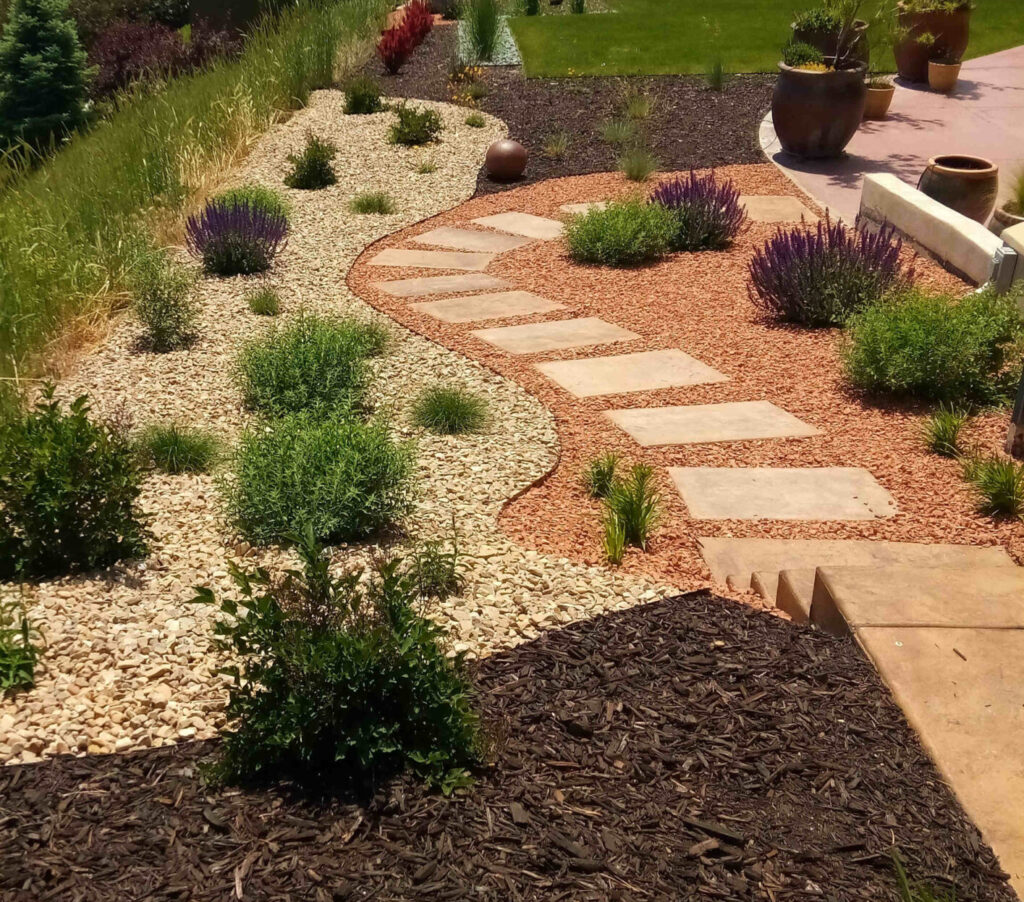
General spacing guidelines vary by plant category. For ornamental trees in a residential Herriman yard, plan for at least 15 to 25 feet between medium-canopy specimens and 30 or more feet for large-canopy trees like oaks or maples. Large shrubs typically need 4 to 8 feet of spacing center-to-center. Medium shrubs and ornamental grasses generally do well at 3 to 4 feet apart. Perennials and groundcovers are usually spaced 12 to 24 inches depending on species.
These are general guides — specific varieties can vary significantly. The Plant Select program provides mature size data for many Intermountain West-appropriate plants, which is a reliable resource for Herriman homeowners planning their own projects.
How Millburn Plans Plant Layout on Every Project
At Millburn Lawn & Landscape, our Herriman landscape design process starts with a consultation and site walk. We measure the space, document sun exposure patterns and existing structures, and discuss how the homeowner actually uses the yard — kids, pets, entertaining, gardening, privacy — because function has to drive layout before aesthetics come into play.
From there we develop a planting plan that works at both Year 1 and Year 10. That sometimes means recommending fewer plants initially than a homeowner expects — because the right layout at maturity is more valuable than a full-looking bed that needs to be torn apart in five years. We also incorporate water zone planning into layout, grouping plants with similar water needs to make irrigation efficient and targeted.
Plant spacing and layout aren’t glamorous topics, but getting them right is the difference between a landscape that works effortlessly for 20 years and one that creates constant problems. It’s one of the most important things we do on every project.
Ready to Plan a Landscape That Works for Your Herriman Yard?
Millburn Lawn & Landscape offers landscape design consultations for homeowners across Herriman, South Jordan, West Jordan, and the greater Salt Lake Valley. Whether you’re starting from scratch or redesigning an existing yard, our team brings 20+ years of local experience to every project.
Call us or visit millburnlawn.com to schedule your free landscape design consultation today.
Frequently Asked Questions
Q: How far apart should I plant shrubs in my Herriman yard?
A: For most medium-sized shrubs, spacing center-to-center should be 3 to 5 feet based on mature spread. Always verify the specific plant’s mature width rather than spacing based on nursery size at purchase.
Q: Can I plant trees close to my house in Herriman?
A: Most landscape designers recommend keeping the trunk of large canopy trees at least 15 to 20 feet from foundations. Smaller ornamental trees can be placed closer, but root spread and canopy interference with rooflines should always be considered.
Q: How do I design a planting layout that doesn’t require constant pruning?
A: The answer is almost always spacing plants correctly at installation based on mature size. Constant pruning is typically the symptom of plants placed too close together. Proper spacing means plants reach their natural shape without crowding.
Q: What plants work best for layered landscape design in Herriman, UT?
A: For the Herriman area, Plant Select-approved varieties work well across all layers. Good choices include Gambel Oak or Autumn Blaze Maple for canopy, serviceberry or native chokecherry for understory, Smokebush or rabbitbrush for the shrub layer, and Blue Grama or Agastache for the ground layer.
Q: How long does it take for a new Herriman landscape to look established?
A: Most professionally designed landscapes in the South Jordan and Herriman area look substantially filled in by Year 2 to 3 when properly spaced and maintained through establishment watering. Full maturity for most plants is 5 to 7 years.
Q: Do I need a professional landscape designer for a small yard in Herriman?
A: Not always — but a single design consultation can save significant money in plant replacement costs and water bills down the road. Even a one-hour site consultation with Millburn Lawn & Landscape can identify spacing and layout issues before planting.