If you’re planning a new landscape installation or a major yard renovation in Bluffdale, Utah, there’s one thing most homeowners underestimate — grading and drainage. It’s not the most glamorous part of the design process, but it’s arguably the most important. Get it wrong, and you’re looking at flooded basements, eroding topsoil, dead plants, and costly repairs down the road. Get it right, and your yard functions beautifully for decades.
Professional landscape designers in Bluffdale, Utah don’t treat grading as an afterthought. They factor it into the very first phase of the design process — before a single plant is selected or a patio slab is poured. This post breaks down exactly how they do it, why it matters, and what you should know before hiring a contractor for your next outdoor project.
Why Grading and Drainage Are the Foundation of Every Bluffdale Landscape Design
Bluffdale sits in a unique geographic position in the Salt Lake Valley — nestled along the western bench of the Wasatch Front, with terrain that varies significantly from one neighborhood to the next. Some lots are relatively flat, while others slope toward the street, toward the rear fence line, or even toward the home’s foundation. Understanding that baseline topography is essential before any design work begins.
Improper landscape grading in Bluffdale, Utah can cause a surprising range of problems: water pooling near your foundation, soggy lawn areas that never dry out, irrigation water running off into the street, and retaining walls that fail under hydrostatic pressure. For newer developments in Bluffdale — especially those in fast-growing areas near the city center on Redwood Road or Mountain Ridge neighborhoods — lots are often rough-graded by the developer but rarely finish-graded to landscape standards. That’s where a qualified landscape designer steps in.
The Site Analysis Phase: Reading the Land Before Designing It
The very first step a professional landscape designer takes is conducting a thorough site analysis. This goes far beyond walking the yard and eyeballing the slope. A detailed site analysis for grading and drainage includes several key assessments.
- Topographic survey: Establishing existing grade elevations across the full property to identify high points, low points, and existing drainage paths.
- Soil composition testing: Bluffdale soils tend toward clay-heavy composition in many areas, which dramatically reduces percolation rates and increases runoff. Designers factor in how well the soil will absorb or shed water.
- Impervious surface inventory: Existing concrete, asphalt, and compacted areas that contribute to runoff load are mapped before any new surfaces are proposed.
- Downspout and utility locations: Where your home’s roof drainage exits, where buried utilities run, and where HOA or municipal drainage easements exist all affect what solutions are viable.
In Bluffdale specifically, proximity to the Jordan River and Bingham Creek watershed means that stormwater management isn’t just a cosmetic concern — it’s a functional one. Designers working in this area are well aware of how quickly water moves during heavy rain events or rapid spring snowmelt from the Oquirrh Mountains and plan accordingly.
Establishing Proper Slope: The 2% Rule and Why It Matters
Once the site analysis is complete, landscape designers in Bluffdale calculate and establish a finish grade plan. The industry standard is a minimum of 2% slope (two feet of drop per 100 feet of horizontal run) moving water away from any structure. For lawns and planting beds in residential settings, 2% to 5% is considered ideal.
Too little slope and water pools. Too much slope on a lawn and you’ll deal with erosion, difficulty mowing, and uneven irrigation coverage. For property grading and drainage solutions in Bluffdale, designers typically create a grading plan with spot elevations — specific points on the site where the finished earth elevation is prescribed — and flow arrows that indicate the intended direction of surface water movement.
On steeper lots, this often involves cut-and-fill work: cutting soil from high areas and redistributing it to lower areas to create a consistent, controlled grade. Retaining walls may be incorporated where grade changes are significant, both to manage soil movement and to create level usable spaces on otherwise challenging terrain.
Drainage System Design: From French Drains to Swales
Surface grading alone isn’t always enough — especially for Bluffdale yards with large turf areas, significant impervious coverage from patios and driveways, or homes that sit in natural low-lying drainage paths. That’s where engineered drainage systems come in.
The most common drainage solutions for residential landscape grading in Bluffdale, Utah include the following options, each selected based on specific site conditions.
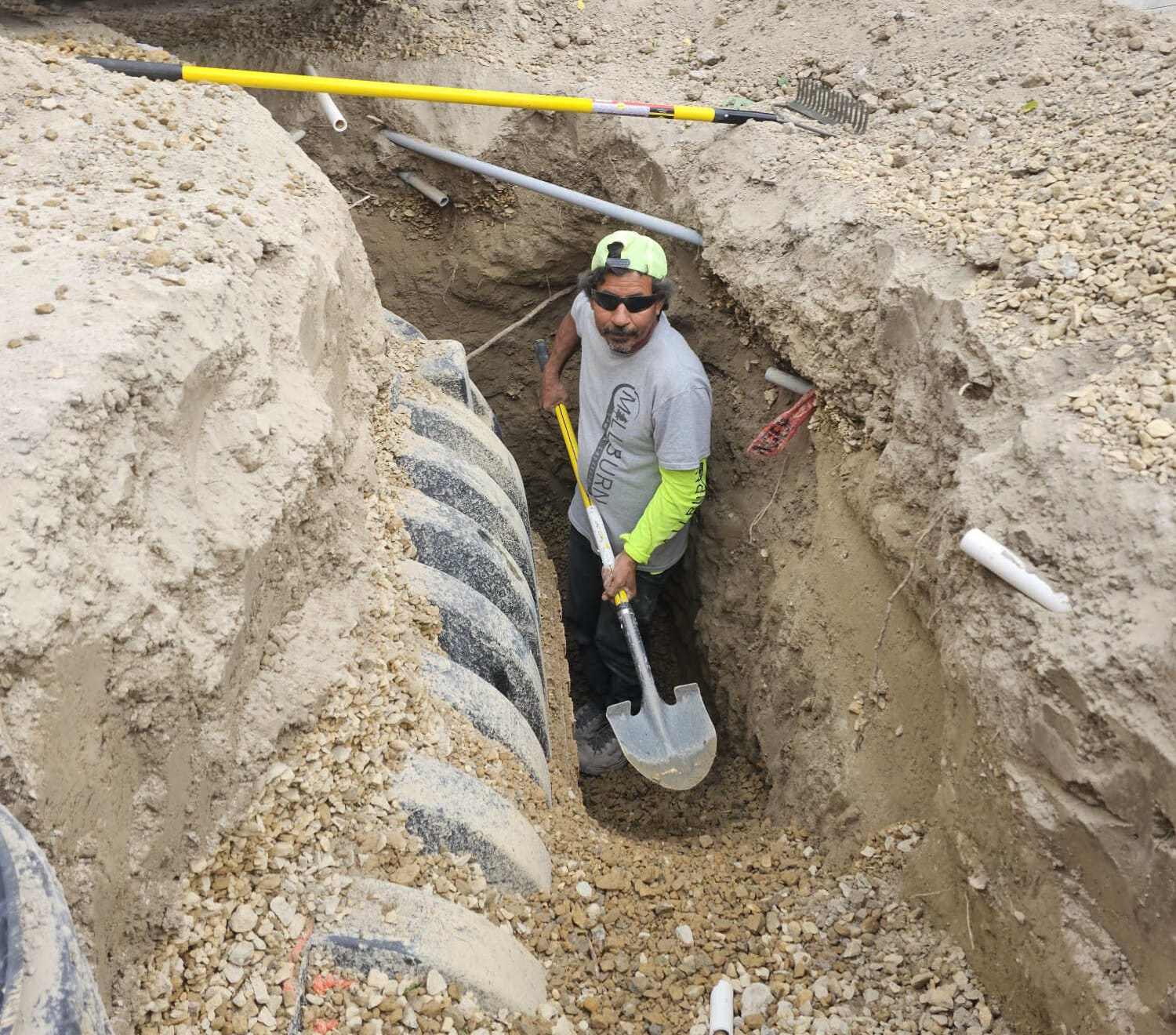
- French drains: Perforated pipe wrapped in filter fabric, buried in gravel-filled trenches, used to intercept and redirect subsurface water. Ideal for chronically soggy lawn areas or yards with clay soils that retain moisture.
- Surface swales: Shallow, gently sloped channels — usually grass-lined — designed to move water across the surface to a safe outlet. Swales are a cost-effective, low-maintenance solution for larger lot drainage in Bluffdale.
- Catch basins and drain boxes: Installed in low areas where water naturally concentrates, these surface drains connect to underground pipe networks that discharge water to the street gutter or a designated drainage area.
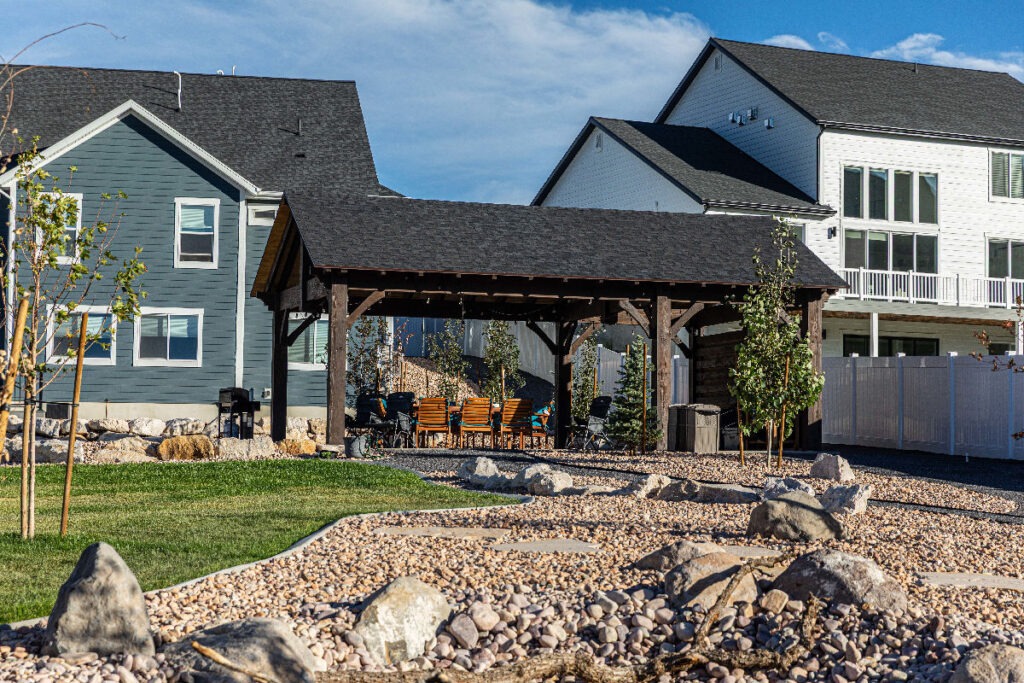
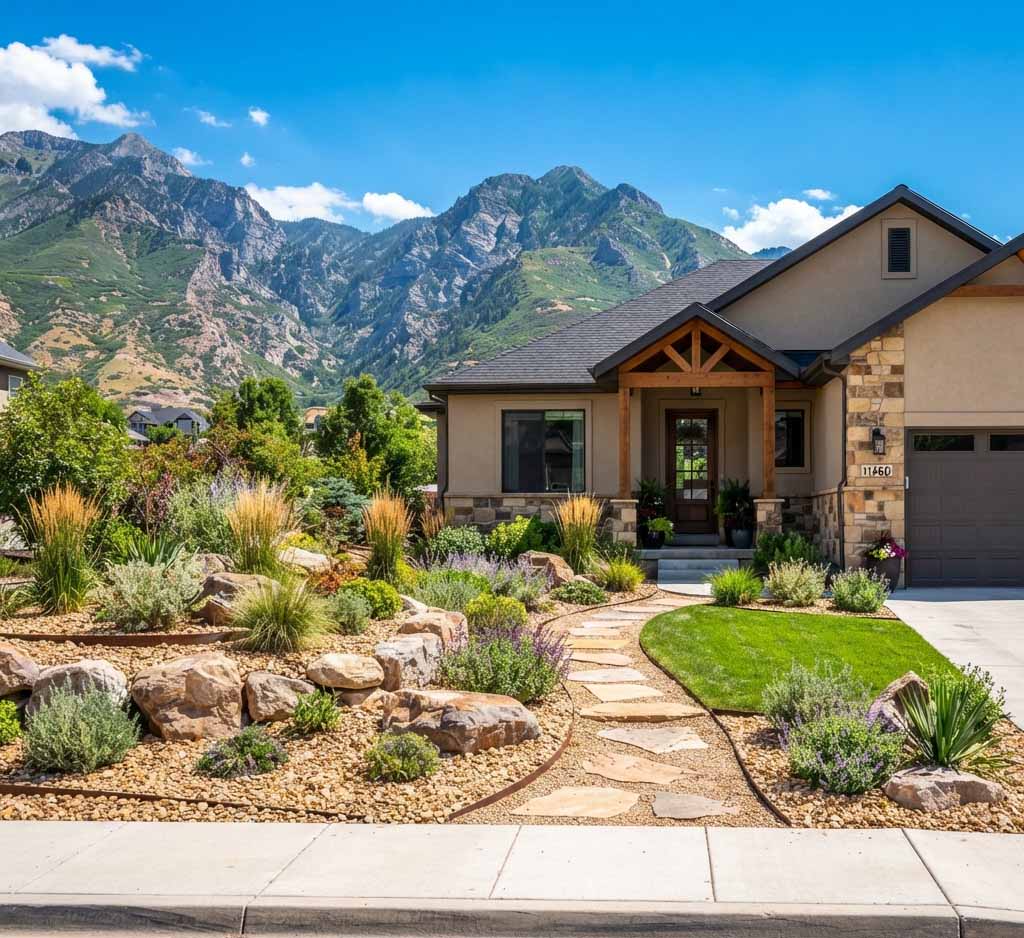
- Dry creek beds: A visually appealing approach that doubles as a functional drainage channel. Rock-lined creek beds guide water during storm events while adding a naturalistic design element popular in Utah landscapes.
- Downspout extensions and channel drains: Ensuring roof runoff is directed away from the foundation and discharged at a safe distance is a basic but critical part of any yard drainage solutions plan in Bluffdale.
An experienced designer selects the appropriate combination of these systems based on flow volume, lot size, HOA requirements, and the homeowner’s aesthetic preferences. In many cases, a well-designed landscape drainage plan for a Bluffdale property will incorporate two or three of these methods working together.
Coordinating Drainage With Hardscape and Irrigation Design
One of the most technically demanding aspects of landscape grading and drainage design in Bluffdale is coordinating drainage with the rest of the project — specifically hardscape installation and irrigation systems. Every patio, walkway, and driveway apron affects where water goes. A well-designed patio, for example, will have a slight pitch away from the house (typically 1/8 inch per foot) so rainfall and hose water don’t collect against the home’s foundation.
Channel drains are commonly installed at the base of driveways or along the low edge of patios to intercept sheet flow before it reaches the structure. Similarly, an irrigation designer needs to account for the same grading plan — heads need to be positioned so that water applied to the lawn stays where it’s intended and doesn’t run off into planting beds or hardscape areas.
For homeowners in Bluffdale working with the Jordan Valley Water Conservancy District’s conservation programs, efficient irrigation that works with — rather than against — the site’s natural drainage patterns can mean lower water bills and healthier plants year-round.
What Homeowners in Bluffdale Should Ask Before Hiring a Landscape Designer
Not every contractor offering landscape installation in Bluffdale handles grading and drainage with the same level of rigor. Before signing a contract, here are the questions you should ask any landscape designer or contractor.
- Do you provide a grading plan with spot elevations, or just rough grade by eye?
- How do you assess the soil composition on my lot and factor it into the drainage design?
- Will the drainage system you’re proposing meet Bluffdale City’s stormwater requirements?
- Can you show me examples of drainage solutions you’ve installed in similar Bluffdale or South Jordan properties?
- How does your irrigation system design integrate with the grading and drainage plan?
A qualified landscape grading contractor in Bluffdale will have clear, confident answers to all of these questions — and should be able to provide a plan that clearly shows water flow direction and proposed drainage infrastructure before breaking ground.
Ready to Fix Your Yard’s Drainage — the Right Way?
Millburn Lawn & Landscape has been solving grading and drainage challenges across Bluffdale, South Jordan, Herriman, and the greater Salt Lake Valley for years.
Don’t wait for the next rainstorm to reveal a problem that already exists.
Call us today or visit our website for a consultation — and let’s build a landscape that works as hard as it looks.
Frequently Asked Questions About Landscape Grading and Drainage in Bluffdale, Utah
Q: How do I know if my Bluffdale yard has a drainage problem?
A: Common signs include standing water after rain or irrigation, soggy lawn areas that stay wet for days, erosion channels forming in planting beds, water stains on your foundation or basement walls, or grass that dies off in patches due to prolonged saturation. If you’re noticing any of these, a professional landscape grading assessment is a smart first step.
Q: How much does landscape grading cost in Bluffdale, Utah?
A: Costs vary widely based on lot size, soil conditions, and the complexity of the drainage system needed. Minor finish grading for a residential lot may start around $500–$1,500, while more complex projects involving retaining walls, French drains, and catch basins can run several thousand dollars. A detailed site assessment is the best way to get an accurate number for your property.
Q: Does Bluffdale City have drainage requirements for residential landscaping?
A: Yes. Bluffdale City follows Salt Lake County’s stormwater management standards, which generally require that site improvements do not increase runoff onto adjacent properties or public rights-of-way. For significant grading projects, permits may be required. A qualified landscape contractor familiar with Bluffdale’s requirements can guide you through the permitting process.
Q: What’s the difference between a swale and a French drain?
A: A swale is an above-ground, gently sloped channel — typically grass-lined — that moves surface water across a yard to a designated outlet. A French drain, by contrast, is a subsurface system of perforated pipe buried in gravel that collects and redirects water underground. Swales work well for moving large volumes of water efficiently; French drains are better suited for areas where surface water isn’t practical or where subsurface moisture is the primary issue.
Q: Can poor drainage damage my home’s foundation?
A: Absolutely. Water that pools against a foundation can penetrate through cracks, cause hydrostatic pressure buildup, and over time lead to serious structural damage. Proper grading that moves water away from the home — combined with functional gutters and downspout extensions — is one of the most cost-effective ways to protect your home’s foundation in Bluffdale.
Q: How does Utah’s clay soil affect drainage design?
A: Utah clay soils (common throughout Bluffdale and the broader Salt Lake Valley) have very low percolation rates, meaning water does not pass through them easily. This makes surface runoff management especially critical, since water that can’t percolate into the ground will pool or flow to the lowest point. Landscape designers account for this by prioritizing surface drainage paths and installing subsurface systems where percolation deficits are severe.
Q: Do I need to grade my yard before installing sod or seed?
A: Yes — proper finish grading is essential before any turf installation. Laying sod over uneven or improperly graded soil will lock in drainage problems that become very expensive to fix later. Always ensure your grading plan is finalized, drainage infrastructure is installed, and the soil surface is smooth and correctly sloped before bringing in any plant material.