Will Your Herriman Landscape Require a Lot of Watering?
Water bills in the Salt Lake Valley don’t lie. Come July and August, when Herriman homeowners are running sprinklers at 6 a.m. just to keep things alive, the question hits hard: does my landscape have to be this thirsty?
The good news is — it doesn’t. The amount of water your landscape requires isn’t set in stone. It’s largely shaped by the choices made during the planning and design phase. If those choices haven’t been made yet — or were made without much thought — there’s almost always room to improve.
This post breaks down the real factors that drive irrigation demand in Herriman yards, what you can actually change, and how to build a landscape that looks great without draining your water budget every summer.
Why Watering Demands Vary So Much in Herriman
Herriman sits at approximately 4,400 feet in elevation — higher than Salt Lake City but still hot and dry from June through September. Average annual rainfall in the area hovers around 14–15 inches, most of which falls in spring and late fall. That means during peak summer, your landscape is almost entirely dependent on irrigation to survive.
And yet two neighbors on the same Herriman street can have wildly different water usage. One might spend $80/month on irrigation in July, while another spends $200. The difference almost always comes down to three things: plant selection, soil preparation, and irrigation system design.
The Biggest Factor — What You Plant
Nothing drives water demand more directly than plant selection. Turfgrass — particularly Kentucky bluegrass, which dominates a large share of Herriman lawns — is one of the thirstiest plants you can put in the ground. It needs 1.5 to 2 inches of water per week during peak summer heat just to stay green and healthy.
Compare that to native and climate-adapted plants like Gambel Oak, Blue Grama Grass, Agastache (Hummingbird Mint), Apache Plume, or Penstemon varieties. These plants — many of them recognized by the Plant Select® program, which recommends varieties proven for Intermountain West conditions — can survive on significantly less water once established. Some thrive on little more than Herriman’s natural rainfall after their first growing season.
If your landscape is heavily planted with water-hungry annuals, exotic tropical shrubs, or large expanses of Kentucky bluegrass, your irrigation demand will reflect that. Shift toward native, adapted, or water-wise landscaping in Herriman, and your usage drops significantly — often by 30 to 50 percent or more.
Soil Preparation — More Important Than Most Homeowners Realize
Herriman’s native soil is predominantly clay-heavy, with pockets of caliche — a hardened calcium carbonate layer that sits just beneath the surface in many parts of the Wasatch Front. This combination creates drainage problems that actually waste water in a counterintuitive way: water pools on the surface, evaporates, and never reaches the root zone where it’s needed.
Proper soil amendment at planting time — adding compost, breaking up compacted layers, and improving drainage structure — helps water penetrate where plants can actually use it. A landscape that’s been properly prepped can cut irrigation needs by 20 to 30 percent compared to one planted straight into untreated clay.
This is a step that often gets skipped to cut upfront costs, and homeowners almost always pay for it in higher water bills for years afterward.
Irrigation System Efficiency Plays a Huge Role
Even the most drought-tolerant yard can become water-hungry if the irrigation system isn’t dialed in correctly. Older spray head systems often deliver water faster than Herriman’s clay-heavy soil can absorb, resulting in runoff that never benefits your plants. Heads positioned incorrectly, running at the wrong time of day, or covering overlapping zones inefficiently can dramatically inflate water use without improving plant health.
For planting beds and shrub areas, drip irrigation is the most efficient option — delivering water directly to root zones with minimal evaporation loss. For lawns, matched-precipitation rotary nozzles like Hunter MP Rotators apply water more slowly and uniformly than traditional spray heads, dramatically reducing runoff on Utah’s clay soils.
The Jordan Valley Water Conservancy District, which serves much of the Herriman and South Jordan area, offers free sprinkler system audits to help homeowners identify inefficiencies. Taking advantage of that program can reveal immediate opportunities to cut water use without changing a single plant.
The Establishment Period — Plan for Higher Use in Year One
Even drought-tolerant plants need consistent moisture during their first one to two growing seasons. This is the establishment period — the phase where roots are spreading out and anchoring into native soil. During this window, watering demand will be higher than it will be long-term, and that’s expected.
It’s important not to judge your landscape’s water appetite based on Year 1. A properly designed water-wise landscape in Herriman might use the same amount of irrigation as a conventional lawn in its first summer — but then drop to a fraction of that once plants are fully established. Patience through that first season pays off for years.
What a Truly Water-Wise Herriman Landscape Looks Like
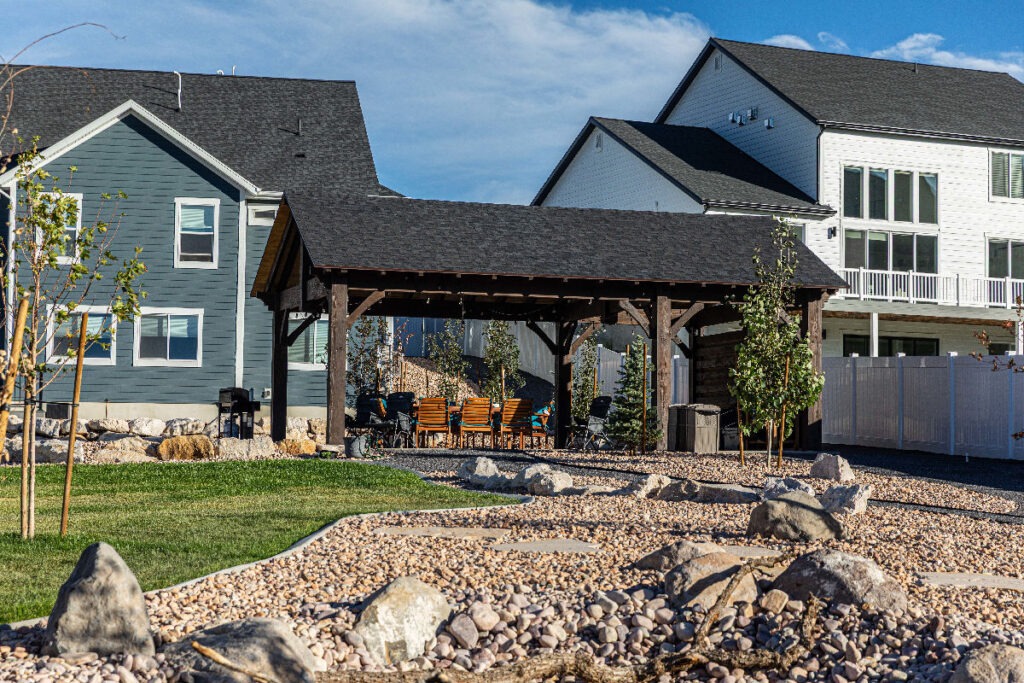
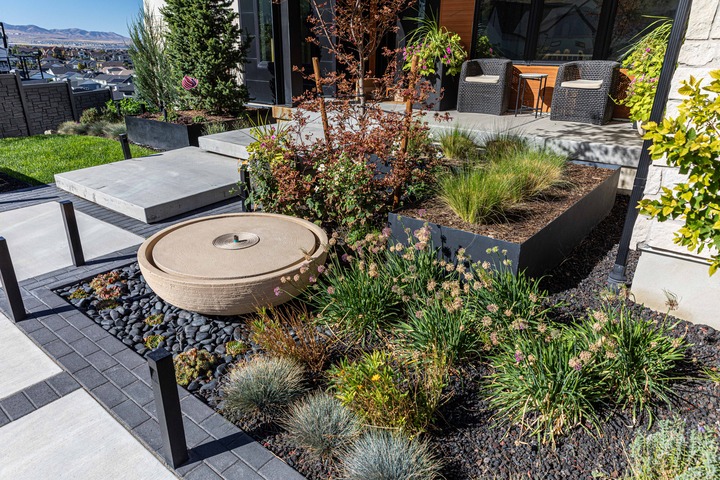
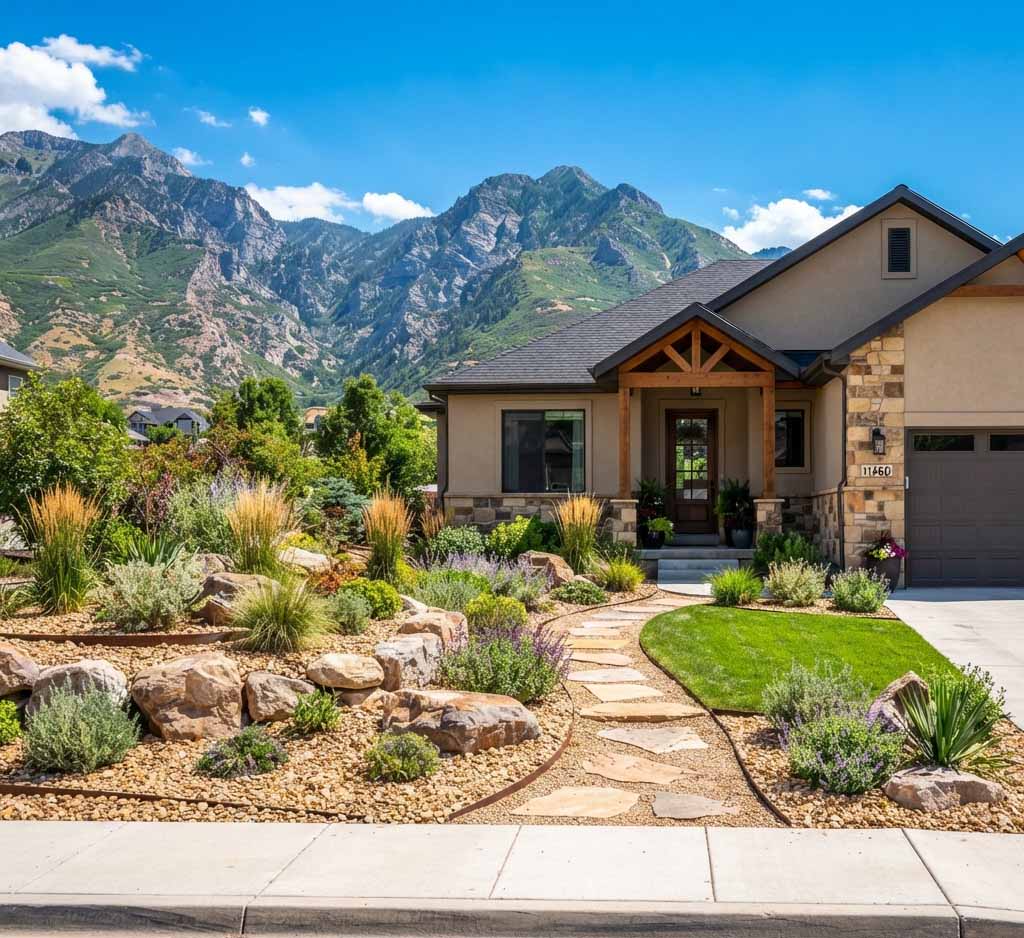
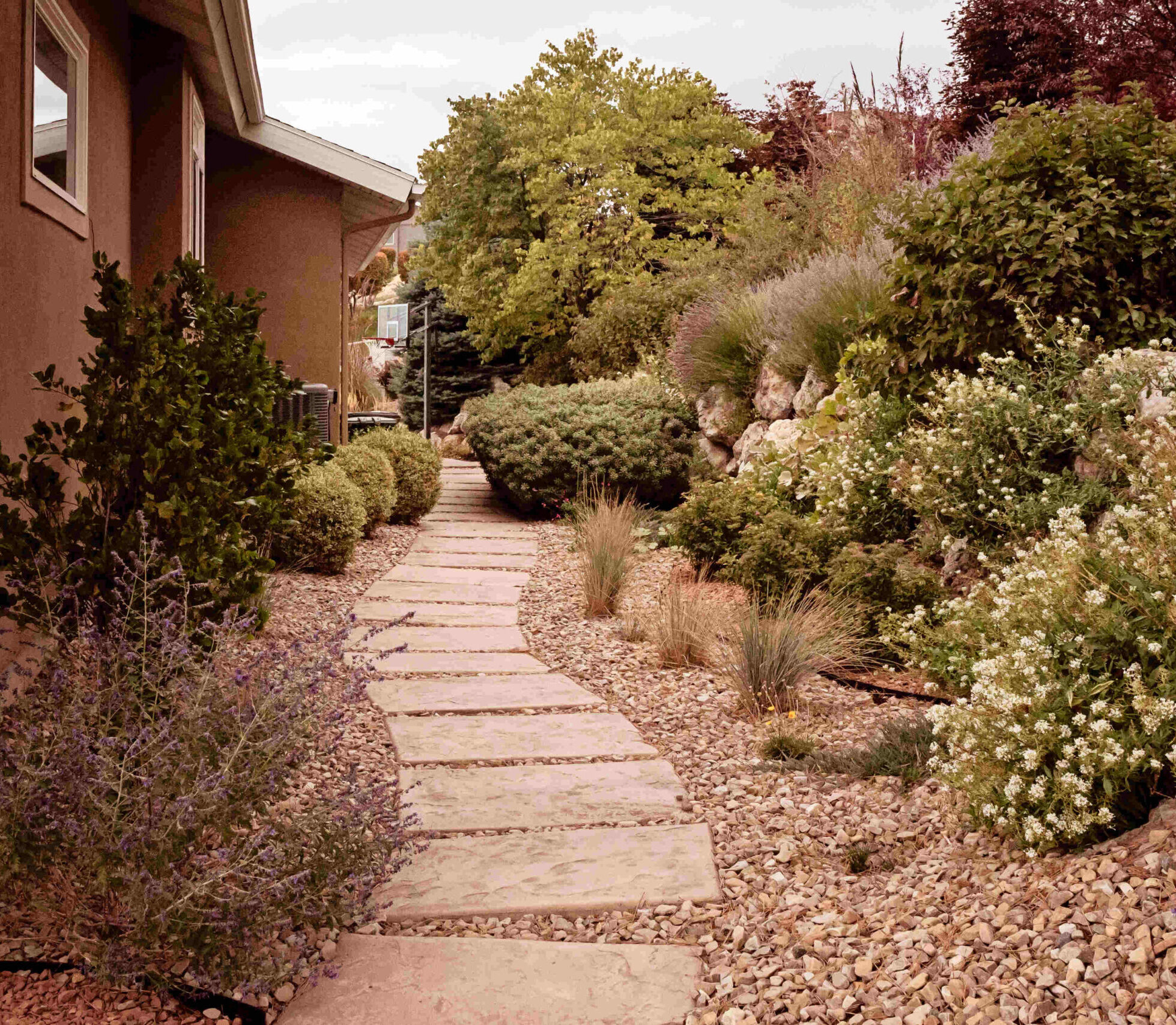
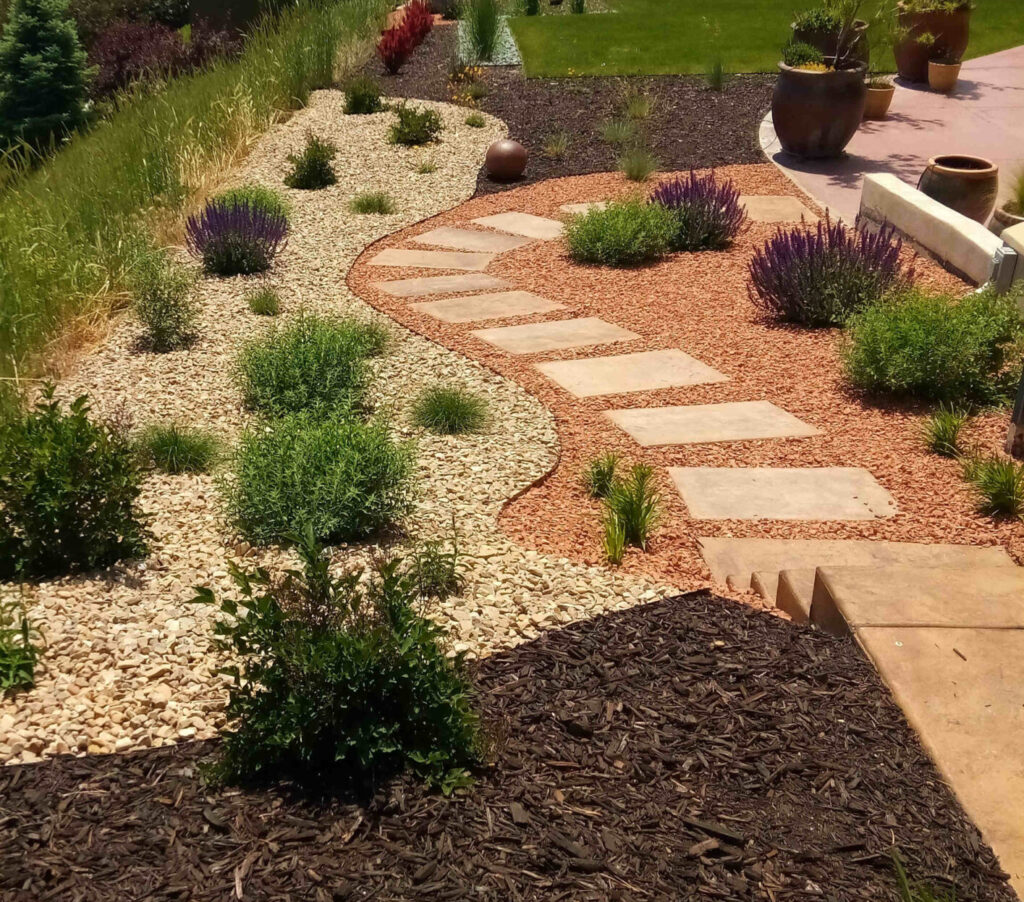
A well-designed, low-water landscape in Herriman doesn’t mean rocks and cacti. It means layered planting beds with drought-adapted trees, shrubs, perennials, and groundcovers. It means a defined lawn area for kids and pets, surrounded by hardscape and xeriscape elements. It means a smart irrigation system with drip zones and weather-based smart controllers that adjust automatically to seasonal conditions.
Done well, water-wise landscaping in the Herriman and South Jordan area can reduce irrigation usage by 30 to 60 percent compared to a traditional bluegrass lawn — while looking more interesting, requiring less maintenance, and supporting local pollinators and wildlife. It’s one of the best long-term investments a Herriman homeowner can make.
Ready to Reduce Your Irrigation Costs? Contact Millburn Today.
Millburn Lawn & Landscape has served Herriman, South Jordan, West Jordan, and the greater Salt Lake Valley for over 20 years. We design water-wise landscapes that lower irrigation demand without sacrificing curb appeal. If you’re tired of sky-high summer water bills or want to plan a yard with plants that actually thrive in Utah’s climate, we’re ready to help.
Call us or visit millburnlawn.com to schedule your free landscape design consultation.
Frequently Asked Questions
Q: How much does irrigation typically cost per month in Herriman during summer?
A: Most Herriman homeowners with traditional bluegrass lawns see irrigation costs of $80 to $200+ per month during June through August, depending on yard size and system efficiency. Water-wise landscapes can cut this significantly.
Q: Is drought-tolerant landscaping compatible with HOA rules in Herriman?
A: Many Herriman HOAs have updated their guidelines to accommodate xeriscape and low-water landscaping, especially as Utah has enacted state-level water conservation policies. Always verify your specific HOA’s current rules before starting a redesign.
Q: What’s the difference between xeriscape and low-maintenance landscaping?
A: Xeriscape specifically refers to water-efficient landscape design using drought-adapted plants and efficient irrigation. Low-maintenance landscaping is a broader term that includes water efficiency but also considers reduced mowing, pruning, and fertilization needs.
Q: How do I know if my sprinkler system is wasting water?
A: Common signs include water running into the street or sidewalk during irrigation cycles, soggy spots in the lawn, or unusually high summer water bills. A professional sprinkler audit or a free audit through Jordan Valley Water Conservancy District can identify specific inefficiencies.
Q: Should I replace my entire Herriman lawn to save water?
A: Not necessarily. Many homeowners see significant water savings by reducing lawn area (keeping a defined zone for kids and pets), amending soil, and upgrading irrigation heads — without a full overhaul. A landscape consultation can identify the highest-impact changes for your specific yard.
Q: Are there rebates for water-wise landscaping in the South Jordan or Herriman area?
A: Yes — the Jordan Valley Water Conservancy District offers the Flip Your Strip and other turf removal rebate programs for qualifying homeowners in their service area. Millburn Lawn & Landscape can help you understand what qualifies and plan a project accordingly.