Deciding how much to invest in a Salt Lake City landscape isn’t just an aesthetic question — it’s a strategic one, shaped by the property’s condition, the local climate, and how the space will actually be used, rather than a single formula that applies to every home.
Why Landscape Investment Deserves Real Thought
An outdoor space is more than a patch of ground around a house — it’s an extension of the home, a place for relaxation, and a meaningful contributor to overall property value. In Salt Lake City’s market, thoughtful landscape improvements can offer a genuinely strong return, but many homeowners still find themselves unsure how to prioritize where their investment should go.
What Actually Drives the Right Investment Level
Rather than a fixed percentage of home value, the right amount to invest depends on a combination of site-specific factors: lot size and existing landscape condition, the home’s overall value and neighborhood standards, and the homeowner’s personal aesthetic goals and how they plan to use the outdoor space. A modest starter yard and a large entertaining-focused property call for very different scopes of investment, even at similar home values.
Local Climate Considerations That Shape Every Decision
Salt Lake City’s climate adds real planning considerations that don’t apply everywhere: extreme temperature swings between seasons, limited annual precipitation, high-altitude sun exposure, and meaningful day-to-night temperature fluctuation. A landscape plan that ignores these factors tends to need costly rework down the line, regardless of how much was initially spent.
Where Investment Typically Gets Allocated
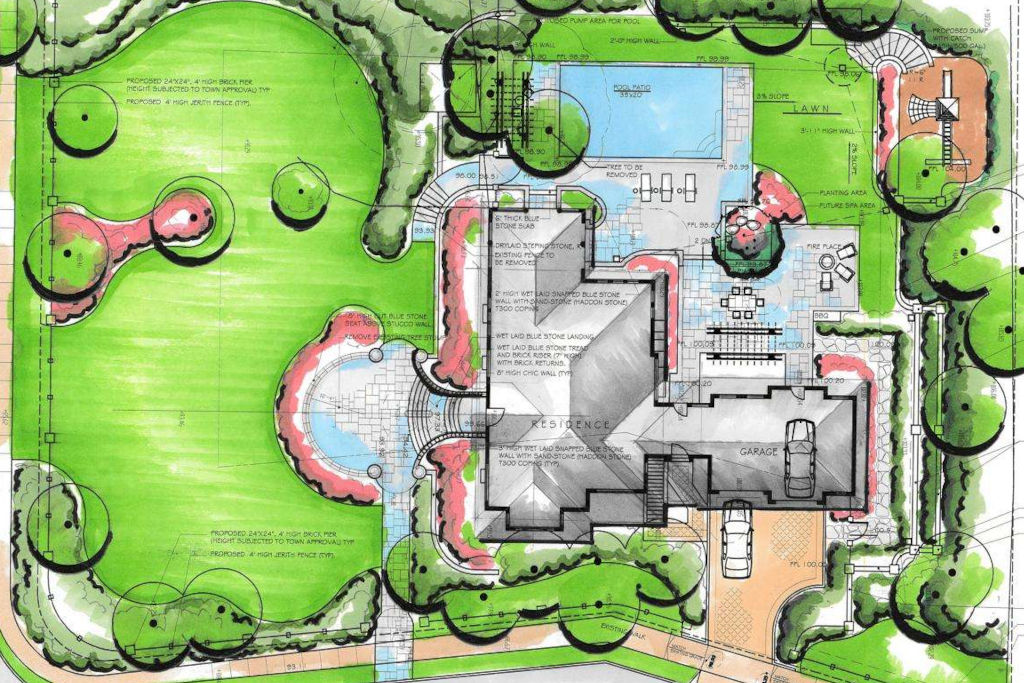
Hardscaping — patios, walkways, retaining walls, and outdoor living spaces — usually represents the largest single share of a landscape budget, since these features involve real material and labor costs. Softscaping, covering native Utah plant selections, drought-resistant landscaping, and tree and shrub installations, forms the next largest category. Irrigation systems, including water-efficient design and drip irrigation compliant with Utah water guidelines, typically represent a smaller but essential share, and lighting and electrical features round out a comprehensive plan.
Landscape Investments That Tend to Pay Off
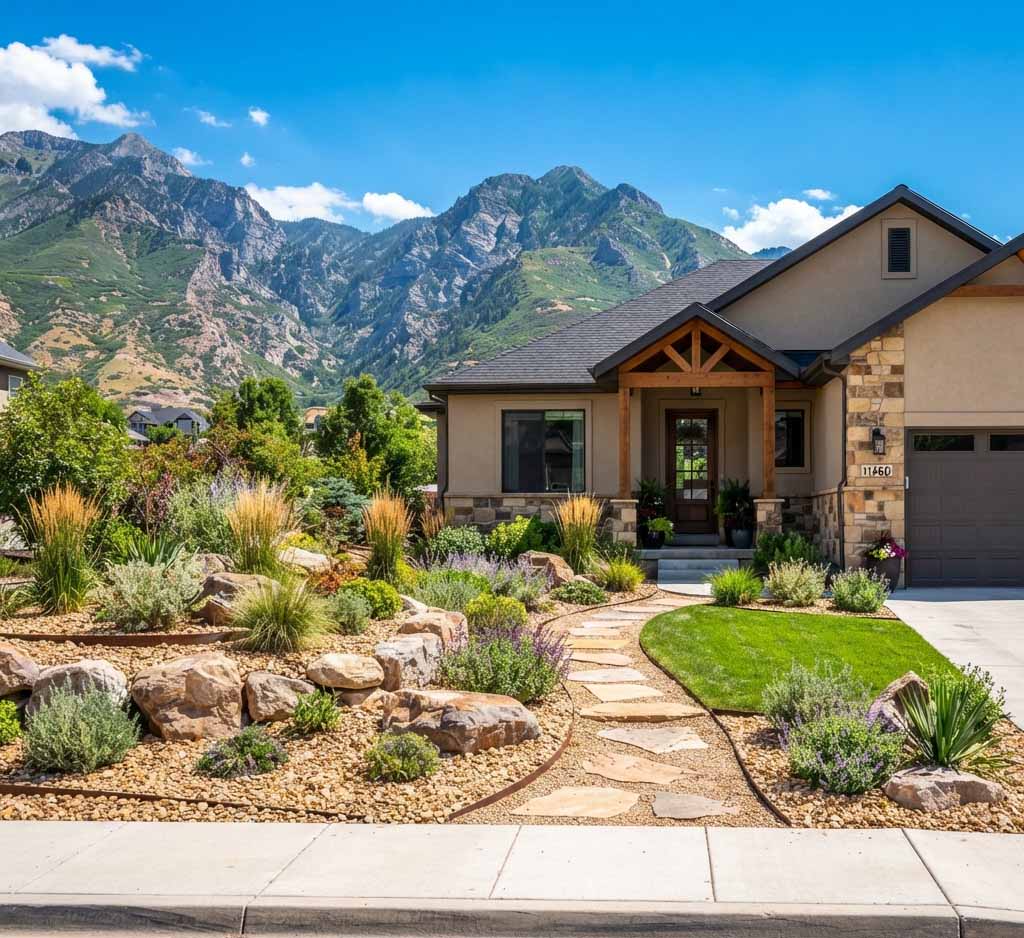
Xeriscaping consistently ranks among the higher-return landscape investments in this climate, given how directly it reduces ongoing water costs. Native plant gardens tend to increase property value while asking less in ongoing maintenance than non-native alternatives. Outdoor living spaces — patios, defined entertaining areas — recover a meaningful share of their cost through both enjoyment and resale appeal, and efficient irrigation systems reduce utility costs for as long as the home is owned.
Budget-Friendly Ways to Approach a Landscape Project
Phasing a larger project across multiple seasons spreads out cost without sacrificing the overall vision. Handling select DIY elements where it makes sense, prioritizing native plant selections over higher-maintenance imports, and designing an efficient irrigation layout from the start all reduce both upfront and long-term costs without cutting corners on the finished result.
Common Mistakes Worth Avoiding
Overlooking water conservation in the initial design, ignoring the region’s specific climate challenges, over-planting ornamental species that struggle here, building in poor drainage solutions, and underestimating ongoing maintenance requirements are among the most common — and most costly — landscape investment mistakes homeowners make in this market.
Ongoing Maintenance Is Part of the Investment
A landscape’s cost doesn’t end at installation. Basic ongoing maintenance and more advanced landscape care both represent a real, recurring share of the total investment, and water-efficient designs meaningfully reduce those long-term costs compared to a high-maintenance, high-water layout.
Frequently Asked Questions
What should I prioritize first in a landscape investment?
Water-efficient irrigation and drainage planning are worth prioritizing early, since they affect the long-term health and cost of everything planted afterward.
Does xeriscaping really offer a strong return in Salt Lake City?
Xeriscaping tends to perform well here specifically because it directly reduces ongoing water costs in a climate where water use is a genuine, recurring expense.
How do I choose the right landscape professional for my project?
Look for local experience, a portfolio of completed Salt Lake City projects, and genuine expertise in water conservation and the local ecosystem.
Ready to plan your Salt Lake City landscape investment? Contact our design team to discuss a strategy tailored to your property.