If your Salt Lake City lawn turns brown and patchy every mid-summer, that’s not bad luck — it’s a predictable result of Utah’s climate meeting a grass type that isn’t built for it, and there are genuinely attractive alternatives that hold up far better.
Why Salt Lake City Summers Are So Hard on Traditional Lawns
Salt Lake City summers run hot and dry, often hitting extended stretches of triple-digit heat with little rainfall to offset it. Traditional Kentucky bluegrass lawns, while popular for their look, need heavy consistent watering and can’t tolerate prolonged drought stress. Combine that demand with the region’s clay-heavy soils and intense summer sun, and the result is predictable: crispy, browning turf by midsummer regardless of how diligently you water.
Water Restrictions Compound the Problem
Even with a sprinkler system running on schedule, many lawns still don’t receive enough consistent hydration during peak heat, and seasonal water restrictions can make it harder to keep traditional turf looking green through the hottest stretch of summer. A lawn that depends on maximum watering to survive is especially vulnerable when that watering gets restricted right when it’s needed most.
Heat Stress and Soil Compaction
Once soil temperatures climb into the mid-80s, grass growth slows dramatically or stops altogether, which is when brown patches start to appear. Years of foot traffic compound the problem by compressing soil, making it harder for roots to access the air and water they need even when both are technically available.
Native Grasses Built for Utah’s Climate
Buffalograss is genuinely drought-tolerant, soft underfoot, and naturally stays lower-growing than traditional turf, while blue grama holds up reliably in low-water landscapes without the constant stress traditional lawns experience through summer.
Ornamental Grasses for Texture and Color
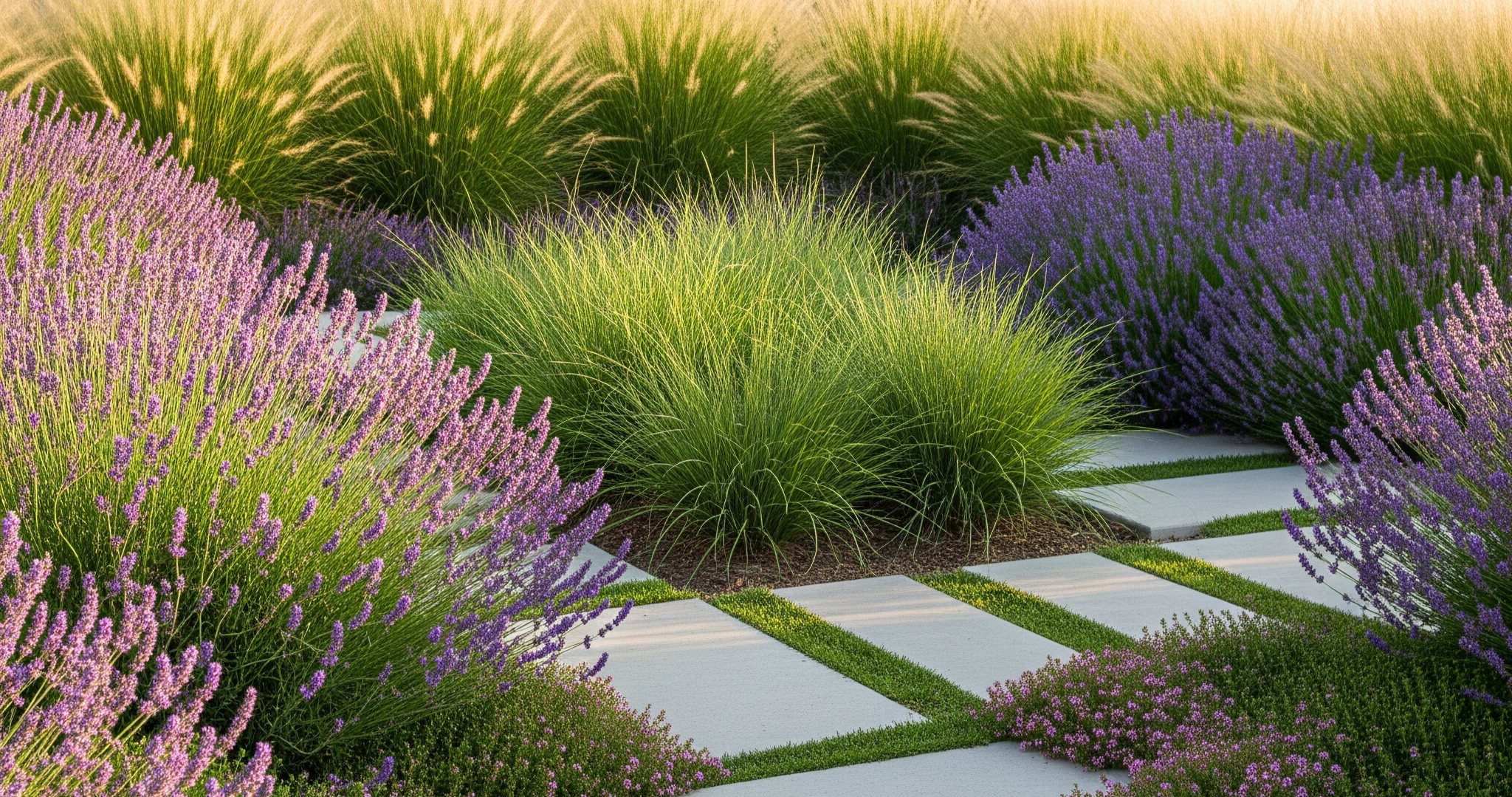
Feather reed grass adds height and an elegant, low-maintenance presence to a yard, while little bluestem brings genuine fall color and reliable heat tolerance — both hold up through Utah’s dry stretches in a way traditional turf simply doesn’t.
Ground Covers and Drought-Tolerant Perennials
Creeping thyme is fragrant, hardy, and attractive to pollinators, while sedum’s succulent-like structure needs minimal watering to thrive. Among flowering perennials, lavender handles Utah’s sun and adds real seasonal color, and penstemon, being native to the region, reliably attracts pollinators while asking very little in return.
What Switching Actually Gains You
Replacing high-maintenance turf with climate-appropriate plants reduces the time spent mowing and fertilizing, lowers the ongoing burden of maintaining a stressed lawn through summer, and generally enhances biodiversity in the yard by supporting pollinators that a monoculture lawn never would.
Frequently Asked Questions
Can I keep part of my lawn and still reduce water use?
Yes — many homeowners keep a smaller grass area for recreation or kids and pets, and replace the remaining lawn with drought-tolerant plants and ground covers.
Will native plants really look as good as a traditional lawn?
When thoughtfully designed, native and drought-tolerant plantings can be more visually interesting through the seasons than a lawn that spends midsummer brown and dormant.
When is the best time to replace a struggling lawn?
Spring and fall are generally the best windows for planting, since temperatures are more favorable for establishment than the peak heat of summer.
Transitioning Gradually Rather Than All at Once
Replacing an entire lawn in a single season can feel like a big commitment, and it doesn’t have to happen all at once. Many homeowners convert one section at a time — starting with the area that struggles most each summer — which spreads out both the cost and the effort while letting you see how the new plantings perform before committing the rest of the yard.
Preparing Soil Before Planting Alternatives
Whatever you choose to replace struggling turf with, amending Utah’s clay-heavy soil before planting gives new grasses and perennials a much stronger start. Working in compost and ensuring proper drainage prevents the same struggles that likely contributed to the original lawn’s decline from simply repeating themselves with the new plantings.
Millburn Lawn & Landscape designs custom, drought-tolerant landscapes for Salt Lake City yards. Contact us to talk about alternatives to a struggling summer lawn.