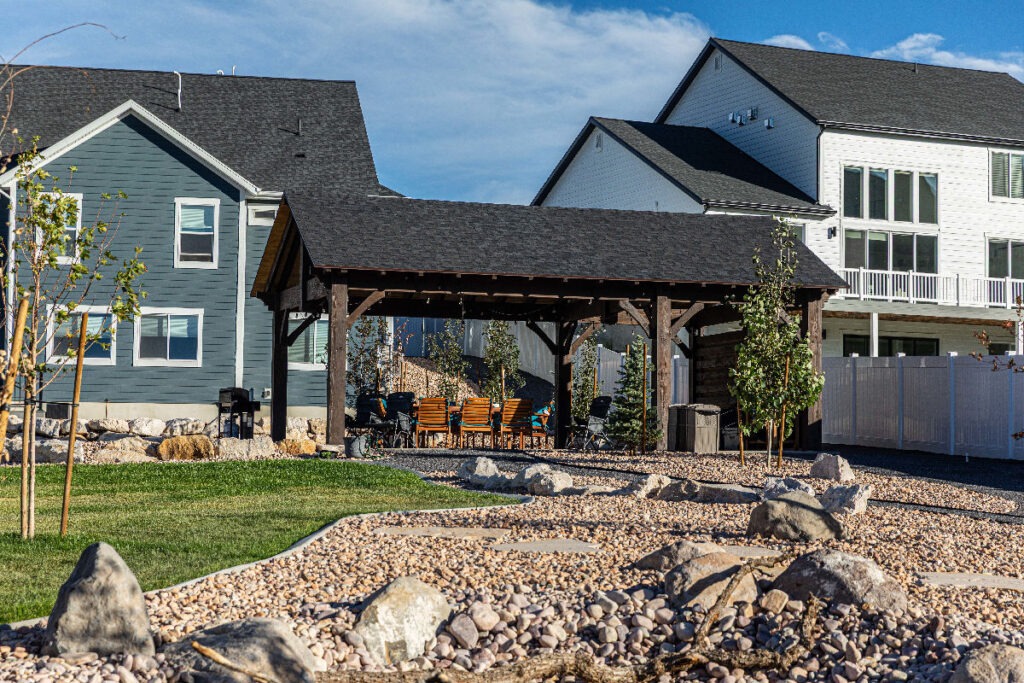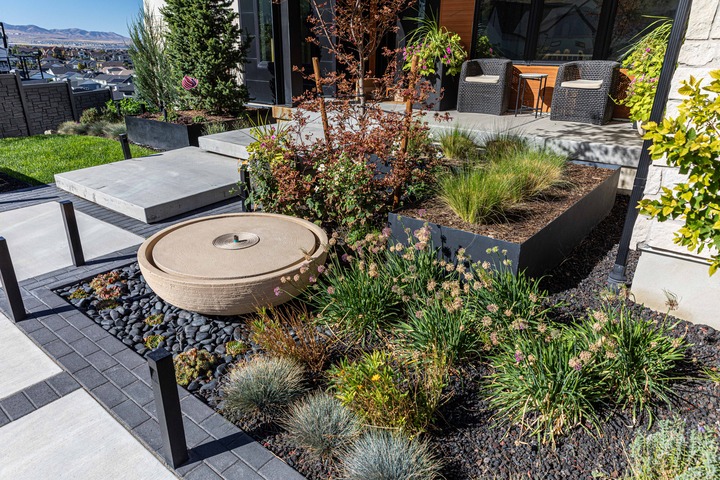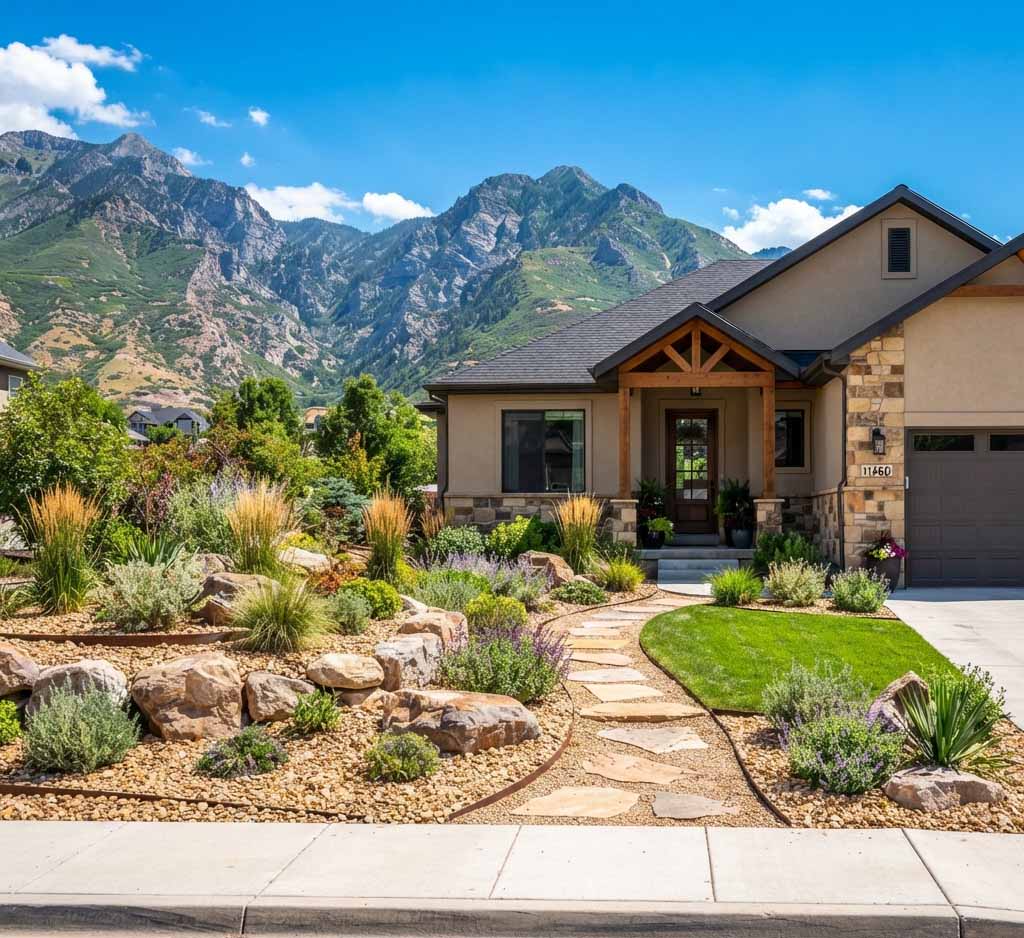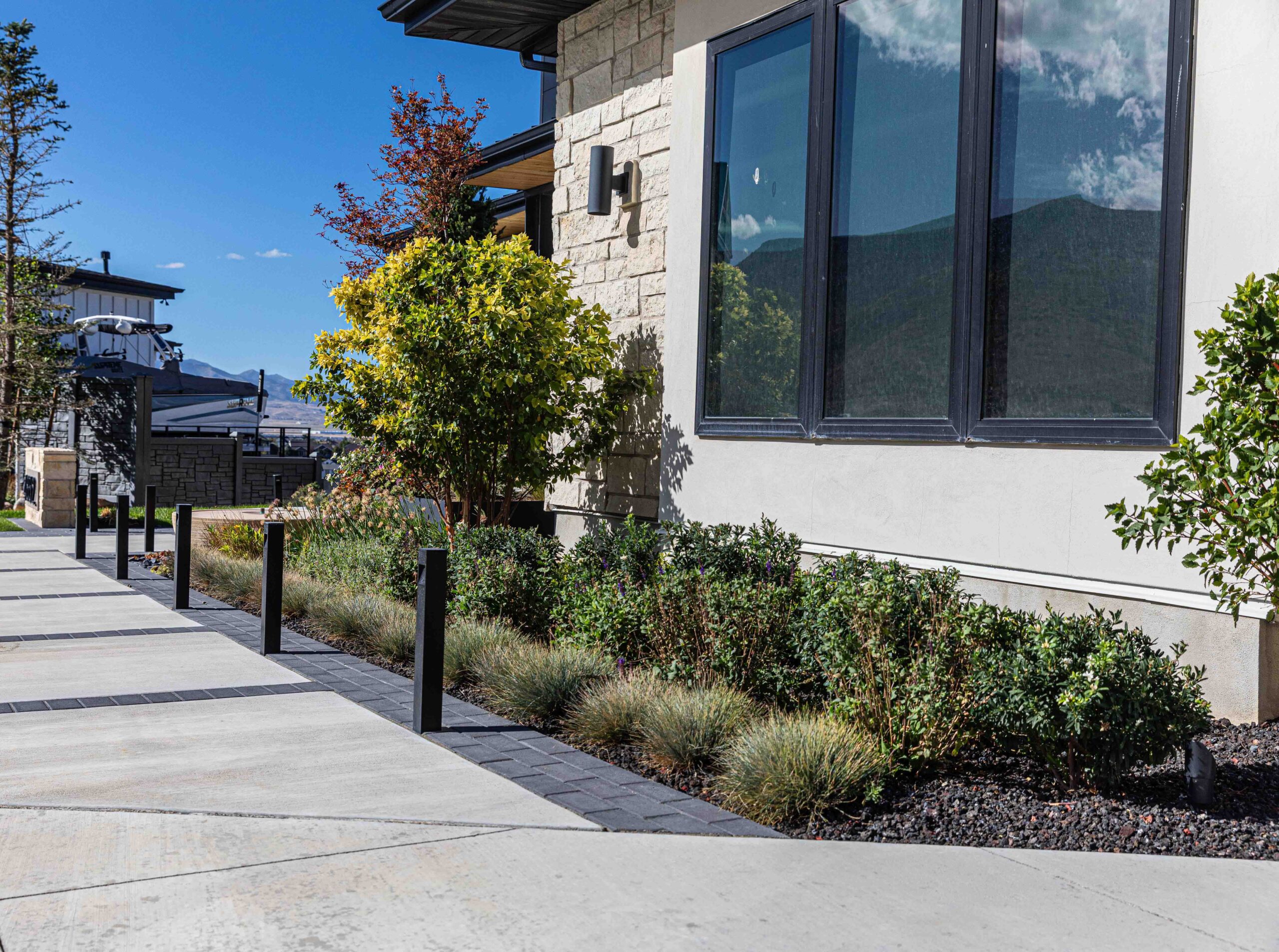
East Millcreek homeowners near Mill Creek Canyon deal with three landscape conditions that most standard design plans don’t address together: seasonal mule deer pressure from the canyon corridor, wind that funnels down the drainage and damages plants and structures, and cold pockets that produce frost on nights when the rest of Millcreek stays warm. These are the reason carefully chosen plants fail, outdoor furniture gets damaged, and yards on the canyon-adjacent streets consistently underperform.
This guide explains how each condition works in east Millcreek specifically, and how to design a landscape that accounts for all three from the ground up.
The Three Canyon Conditions That Shape East Millcreek Landscape Design
Not all of Millcreek shares the same growing conditions. The neighborhoods nearest Wasatch Boulevard — the streets approaching the canyon entrance along 3800 South — sit in the path of environmental factors that do not affect properties further west in the city. Understanding why your yard behaves differently from a Millcreek property a mile away requires understanding what the canyon actually does to the local microclimate.
Deer: The Canyon Corridor Is a Highway
Mill Creek Canyon supports a resident mule deer population that moves predictably between higher canyon habitat and the valley floor as seasons shift. The movement corridor runs directly through east Millcreek neighborhoods. Deer follow the creek drainage and established travel routes downhill in late summer and fall when canyon vegetation dries out, and again in late winter when snow limits high-elevation forage.
The result is deer pressure that is seasonal, consistent, and route-specific. Deer use the same travel routes year after year. A yard that sits on one of those corridors will see deer every year — not randomly, not occasionally, but on a schedule tied to the canyon’s food cycle. Homeowners who treat this as a plant-selection problem alone — swapping in ‘deer-resistant’ varieties from a generic nursery list — frequently find the problem continues, because the design itself is not accounting for where and how deer enter the property.
Canyon Wind: Why East-Facing Sites Take a Different Hit
Mill Creek Canyon functions as a natural wind channel. Storm systems and cold air moving through the Wasatch drain down the canyon drainage and accelerate at the mouth where the terrain opens into the valley. Properties with eastern or southeastern exposure directly facing the canyon mouth experience wind events that are significantly stronger than what the same storm produces further west in Millcreek — enough to cause damage that surprises homeowners who moved from other parts of the city.
The landscape consequences extend beyond plants blowing around. Canyon wind in east Millcreek desiccates foliage on exposed sides of properties, breaks branches on improperly anchored trees, damages pergola structures designed for standard residential wind loads, and creates conditions where marginally cold-hardy plants suffer winter damage on the canyon-facing side of a property while the sheltered side stays fine. The result is frost damage or dieback on one side of the yard with no obvious explanation — until the wind exposure is mapped.
Cold Pockets: Frost Where You Don’t Expect It
Cold air is denser than warm air and flows downhill. On still, clear nights — the conditions that produce radiation frost — cold air drains from higher canyon elevations down the Mill Creek drainage and pools in low-lying areas on canyon-adjacent properties. These cold pockets can run two to five degrees Fahrenheit colder than the surrounding area, enough to cause frost damage on nights when the official low temperature would not suggest any risk.
This is why east Millcreek homeowners sometimes find frost damage on mornings after nights that seemed safe. The temperature reported at the nearest weather station does not reflect the cold pocket at the base of a slope, against a north-facing fence, or in a drainage depression on the property. The same plant that thrives in a west Millcreek yard can fail repeatedly in an east Millcreek cold pocket — not because the plant was wrong for zone 7a, but because the cold pocket is effectively running one or two zones colder on the nights that matter.
Deer-Resistant Plant Design for East Millcreek’s Canyon Corridor
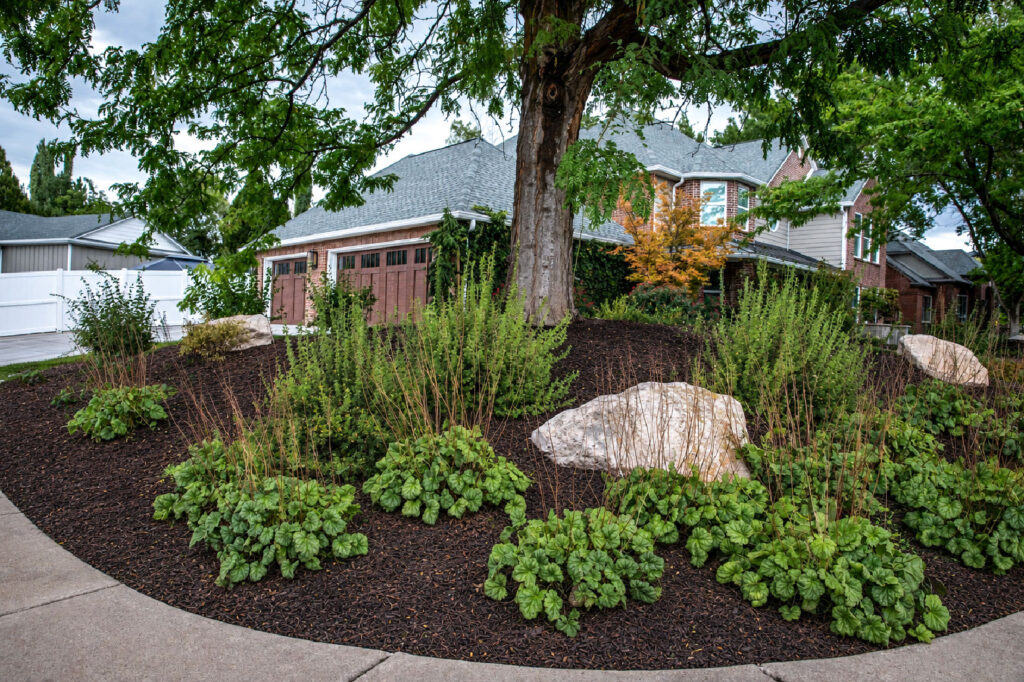
Effective deer management in east Millcreek is a design problem, not just a plant list problem. The yards that hold up through deer season combine three elements: a plant palette that is genuinely unappealing to mule deer in canyon-pressure conditions, structural deterrence at the specific points where deer enter the property, and targeted protection for any high-value plants the homeowner wants to keep regardless of deer preference.
Plants That Perform Reliably in East Millcreek
These species hold up consistently against Millcreek’s canyon deer population in zone 7a alkaline soil conditions:
- Russian Sage (Perovskia atriplicifolia) — aromatic oils strongly unappealing to deer. Thrives in alkaline soil and handles the exposed conditions of east-facing Millcreek sites.
- Penstemon — Utah native species are among the most reliably deer-resistant plants on the Wasatch Front. Rocky Mountain Penstemon and Firecracker Penstemon both perform well in canyon-edge conditions.
- Lavender — deer consistently avoid the volatile oils. Hidcote and Munstead varieties handle Millcreek’s winters reliably and suit the canyon-adjacent planting character.
- Catmint (Nepeta) — strongly aromatic, avoidance is consistent, and the bloom period runs from May through frost.
- Rabbitbrush (Ericameria nauseosa) — native to the Wasatch Front, extremely deer-resistant, adapted to rocky alkaline soil and wind exposure exactly like east Millcreek’s canyon-edge conditions.
- Ornamental grasses — Karl Foerster Feather Reed Grass and Blue Oat Grass are seldom browsed. Their texture and low palatability make them reliable in high-pressure corridors.
- Apache Plume (Fallugia paradoxa) — native Wasatch foothill shrub, deer-resistant, handles drainage and soil conditions of canyon-adjacent sites, and provides late-season seed-head interest.
Structural Deterrence at Entry Points
Mass plantings of aromatic, deer-resistant species along the specific fence lines or property edges where deer typically enter — the east and southeast sides of most canyon-adjacent east Millcreek properties — create an olfactory and physical barrier that makes the yard less rewarding than the next one. Deer are opportunists: the goal is to shift their path, not achieve perfect exclusion.
For homeowners who want higher-value plants that deer prefer, targeted enclosures — decorative metal fencing around specific beds, raised beds at 24 inches or higher — protect those elements without making the whole yard feel defensive.
Windbreak Design That Protects Without Killing the Canyon View
The intuitive response to canyon wind is a tall dense hedge or solid fence on the eastern boundary. This is actually less effective than a staggered, permeable windbreak — and it closes off the canyon views that most east Millcreek homeowners specifically chose their property to enjoy.
A solid barrier creates a turbulence zone immediately on its leeward side that reduces its own effectiveness — wind lifts over the barrier and drops back down within a short distance. A permeable multi-layer windbreak — low shrubs at the outer perimeter, taller columnar or open-form trees set slightly inward — reduces wind velocity by filtering it at multiple heights and maintains that reduction over a longer downwind distance. The result is significantly lower wind speed at the primary outdoor living areas, without a wall that eliminates the canyon and mountain views.
Species well-suited to windbreak function in east Millcreek’s conditions:
- Rocky Mountain Juniper (Juniperus scopulorum) — native to the Wasatch, extremely wind-tolerant, columnar forms add vertical structure without excessive spread or view obstruction.
- Gambel Oak (Quercus gambelii) — native Wasatch foothill oak, handles wind exposure, provides wildlife habitat value appropriate to the canyon-adjacent setting.
- Serviceberry (Amelanchier alnifolia) — native multi-stem shrub, handles canyon wind, provides spring flowers and fall color, and is deer-resistant.
- Idaho Fescue (Festuca idahoensis) — native bunchgrass that handles wind at exposed east-facing sites without the desiccation damage that affects some ornamental grasses.
Pergola and structure design on canyon-facing east Millcreek sites also needs to account for higher wind loads. Slatted rather than solid roof panels, properly engineered post footings, and anchored rather than freestanding structures are the right choices for exposed properties.
Designing Around Cold Pockets in East Millcreek Yards
The first step is locating where cold pockets occur on your specific property. Observe the site on still, clear nights in late October or early spring when frost is possible. Low points, north-facing corners against fences or walls, and depressions in the terrain are where cold air pools. A min/max thermometer left in the suspected cold pocket versus a higher spot on the same property overnight will confirm the temperature difference.
Once identified, two design strategies apply. First, avoid placing cold-sensitive plantings in confirmed cold pockets — save those areas for the hardiest species or for hardscape. Second, use raised planting areas where possible: raised beds, berms, or planting above grade keep foliage above the cold air layer that pools at ground level on radiation frost nights.
Plant selection also changes in confirmed cold pocket areas. A species rated cold-hardy to USDA zone 7a that sits in a pocket running three degrees colder on frost nights is effectively being planted in zone 6b conditions. Selecting species with a margin of cold hardiness beyond the minimum for the site — zone 6b or 6a tolerance for plants in confirmed cold pocket locations — is the most reliable protection available short of active frost management.
Design Your East Millcreek Yard for the Canyon It Lives Next To
Millburn designs landscapes for east Millcreek properties that account for the specific conditions Mill Creek Canyon creates — deer-resistant planting, windbreaks that preserve your views, and cold-pocket-aware plant placement from the first design decision.
Call (801) 810-5452 or visit millburnlandscape.com to schedule your east Millcreek landscape design consultation.
Frequently Asked Questions
Which east Millcreek streets are most affected by canyon deer pressure?
Properties nearest Wasatch Boulevard and along the streets approaching the canyon entrance from 3800 South — experience the most consistent deer pressure. Deer follow established drainage and travel routes, so streets that align with those routes see repeat seasonal visitation. Neighboring yards dealing with deer regularly is a reliable indicator your property is in the same corridor.
How do I find out if my east Millcreek property has a cold pocket?
Direct observation on still, clear nights in late October or early spring is the most reliable method. Place a min/max thermometer in the suspected low spot and compare it to a higher location on the same property overnight. A difference of two degrees or more confirms a cold pocket. Low points, north-facing corners against fences or walls, and terrain depressions are the most common cold pocket locations.
Can I still have a canyon view and get wind protection in east Millcreek?
Yes — with a staggered, permeable windbreak rather than a solid barrier. A multi-layer planting of low shrubs at the perimeter and taller columnar trees set slightly inward reduces wind velocity through the filtering effect without creating a solid wall that blocks the canyon view. Solid fences and dense hedges on the canyon-facing boundary actually create more turbulence immediately downwind and eliminate the view the property is valued for.
Are there plants that are both deer-resistant and cold-hardy for east Millcreek’s conditions?
Yes — most of the best deer-resistant plants for east Millcreek also happen to be cold-hardy and adapted to the alkaline soils common in canyon-edge Wasatch Front sites. Russian Sage, Penstemon, Rabbitbrush, Apache Plume, and Serviceberry are all deer-resistant, cold-tolerant beyond zone 7a minimums, and naturally adapted to the drainage and soil conditions of east Millcreek properties.
Does Millburn Lawn & Landscape design for east Millcreek’s canyon conditions?
Yes. Millburn Lawn & Landscape provides landscape design for east Millcreek and throughout Salt Lake County, including sites with canyon deer pressure, wind exposure, and cold pocket microclimate challenges specific to properties near Mill Creek Canyon. Call (801) 810-5452 or visit millburnlandscape.com to schedule a consultation.