The landscape design requests we’re seeing most in Salt Lake City right now share one theme: yards built to use less water without looking like a gravel lot. Xeriscaping has matured past “rocks and cactus” into genuinely attractive design, and it’s driving most of what’s currently popular locally.
Water-Wise Design, Done Well
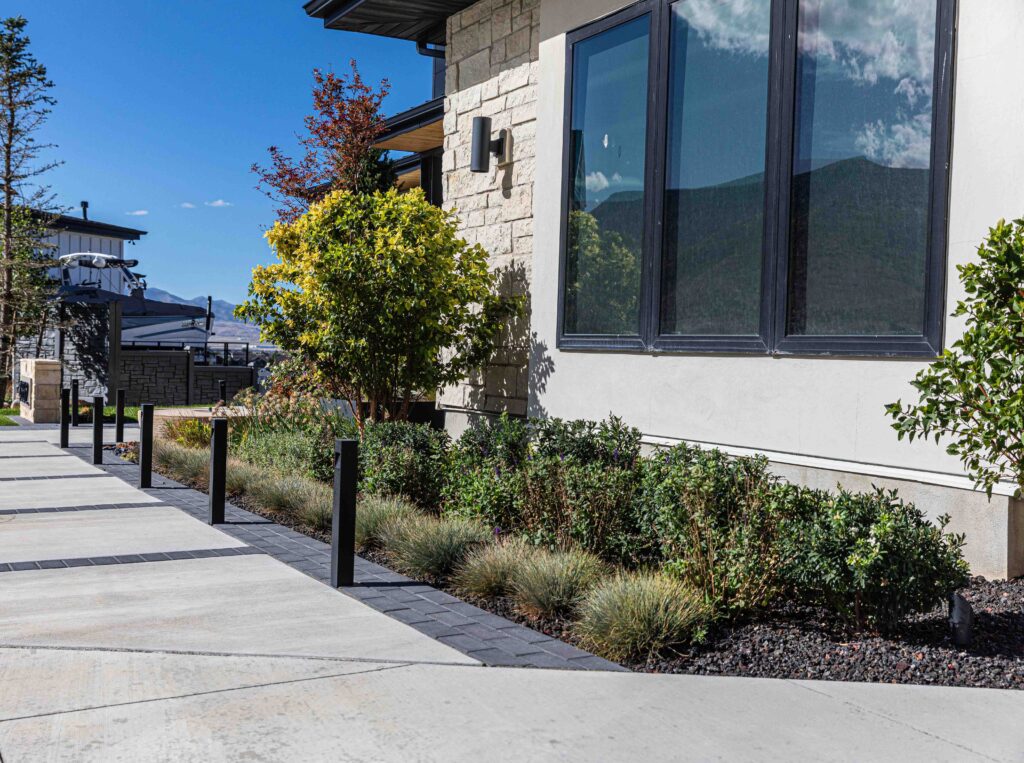
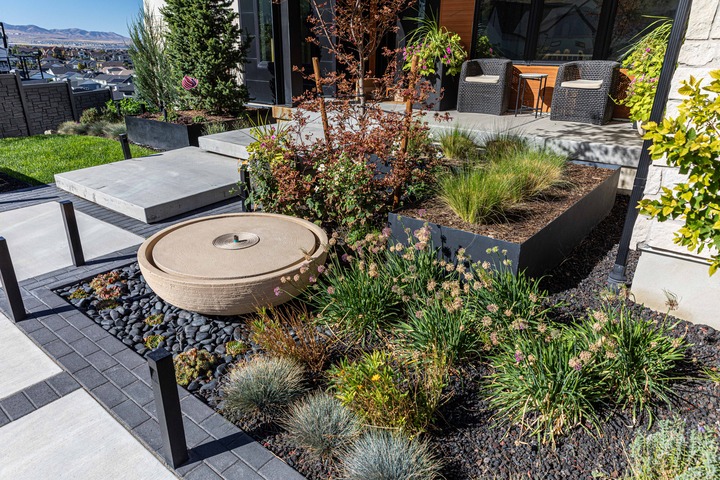
The biggest shift in Salt Lake City landscape design is homeowners replacing traditional turf-heavy yards with drought-tolerant plantings, mulched beds, and reduced-grass layouts — not to eliminate lawn entirely, but to shrink it to the areas that actually get used, like a play space or a defined seating area, while converting the rest to lower-water planting. Native and adapted plant species — penstemon, rabbitbrush, ornamental grasses, and Utah-hardy perennials — are doing the visual work that lawn used to do, with a fraction of the water demand.
Outdoor Living as a Design Priority
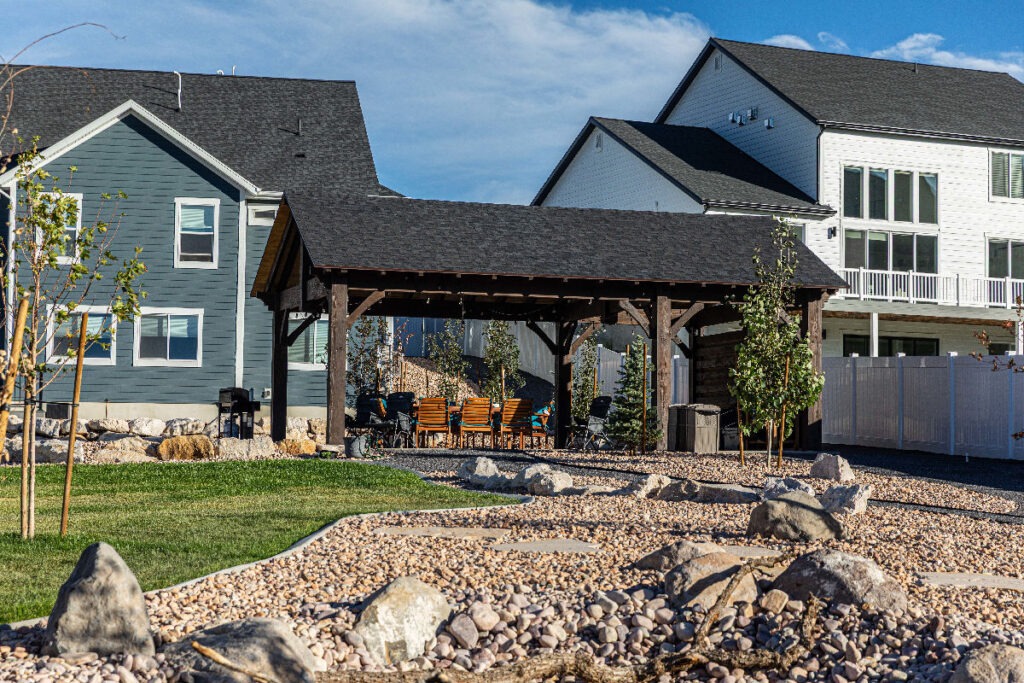
Fire pits, pergolas, and defined patio spaces have moved from “nice to have” to a starting point in many Salt Lake City design consultations. With Utah’s long, mild fall season extending outdoor use well past summer, homeowners are asking for spaces that function into October rather than just July and August — which changes material choices (durable, weather-resistant hardscape) and layout (wind-sheltered seating, fire features for extending evening use).
Layered, Low-Maintenance Planting
Rather than large single-species beds, current designs favor layered plantings — groundcover, mid-height shrubs, and taller accent plants combined — which fill in faster, need less mulch refresh, and read as more intentional than a single mass planting. This approach also handles Utah’s temperature swings better, since a mixed planting rarely loses its entire visual impact if one species struggles in a particular season.
Practical Materials Over Purely Decorative Ones
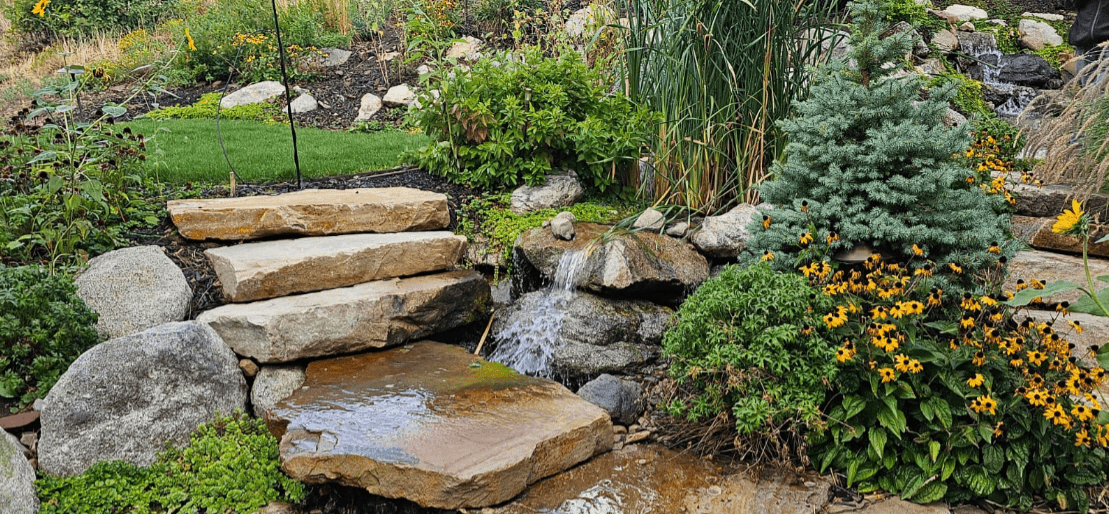
Permeable pavers, decomposed granite paths, and boulder retaining features are showing up more often than poured concrete or traditional block walls — partly for water management (permeable surfaces reduce runoff issues common on Salt Lake City’s clay-heavy soil) and partly because they read as more natural against xeriscape-style planting.
Frequently Asked Questions
Is xeriscaping the same as just using rocks instead of grass?
No — modern xeriscaping in Salt Lake City is plant-forward, using drought-tolerant species, efficient irrigation, and strategic mulch rather than replacing everything with gravel. Rock is one material among several, not the whole design.
Do these trends work for older, established yards or only new construction?
They work well for renovations — converting sections of an existing lawn to xeriscape planting, or adding a fire pit and patio to an established yard, is one of the more common project types we see.
Will reducing my lawn hurt my home’s curb appeal?
Well-designed xeriscape typically improves curb appeal rather than hurting it — the shift is toward more visual interest through varied plant texture and color, not less.
How much of my yard should be converted to water-wise planting?
It depends on how the space is used. A common approach is keeping lawn only where it serves an active function — play area, pet space — and converting the rest to lower-water planting.
Trend: Designing for Utah’s Temperature Swings
Salt Lake City’s climate produces wider daily and seasonal temperature swings than many regions, and current design work increasingly accounts for that directly — choosing plant combinations that hold visual interest through hot, dry summers and cold winters rather than peaking for a few weeks and fading. Ornamental grasses, for instance, are showing up more often specifically because they provide structure and movement through fall and winter after flowering perennials have gone dormant, rather than leaving beds looking empty for half the year.
Trend: Smart, Zoned Irrigation
Weather-based smart controllers that adjust watering automatically based on actual conditions, rather than a fixed timer, are becoming a standard request rather than an upgrade. Paired with properly zoned irrigation — separating turf areas from planting beds so each gets the water schedule it actually needs — this reduces water waste significantly compared to older systems running everything on one schedule.
What’s Falling Out of Favor
Large, single-variety turf lawns with no defined use are increasingly being scaled back in new design work, not eliminated but rightsized to match how the space is actually used. Solid-color mulch beds with a single ornamental shrub variety are also giving way to the layered planting approach, since a monoculture bed is both less visually interesting and more vulnerable if that one plant species struggles in a given year.
Millburn Lawn & Landscape designs water-wise, livable yards for Salt Lake City properties. Call us to start a design consultation.