Most lawn problems in Utah don’t start in the grass — they start several inches below it, in soil that’s naturally alkaline, low in organic matter, and often compacted from construction. Building a healthier lawn here means correcting the soil first; the grass follows.
Why Utah Soil Fights You
Along the Wasatch Front, native soil skews alkaline — commonly in the 7.5 to 8.5 pH range — because the region gets far less rainfall than the parts of the country most turfgrass advice is written for. Rain naturally acidifies soil over time by leaching out calcium and other alkaline minerals; without much of it, those minerals stay put. That alkalinity locks up iron and other micronutrients in a form grass roots can’t absorb, which is why so many Utah lawns show yellowing (iron chlorosis) even when they’re being watered and fertilized correctly.
On top of the pH issue, most residential lots along the Wasatch Front sit on soil that was compacted by construction equipment before a house was ever built, then covered with a thin layer of sod or seed. That compaction restricts root depth, water penetration, and airflow — three things every other lawn-care step depends on.
What Actually Fixes It
- Core aeration — pulls small plugs of soil out of the lawn, relieving compaction and giving roots room to grow deeper. This matters more in Utah than in looser, naturally aerated soils.
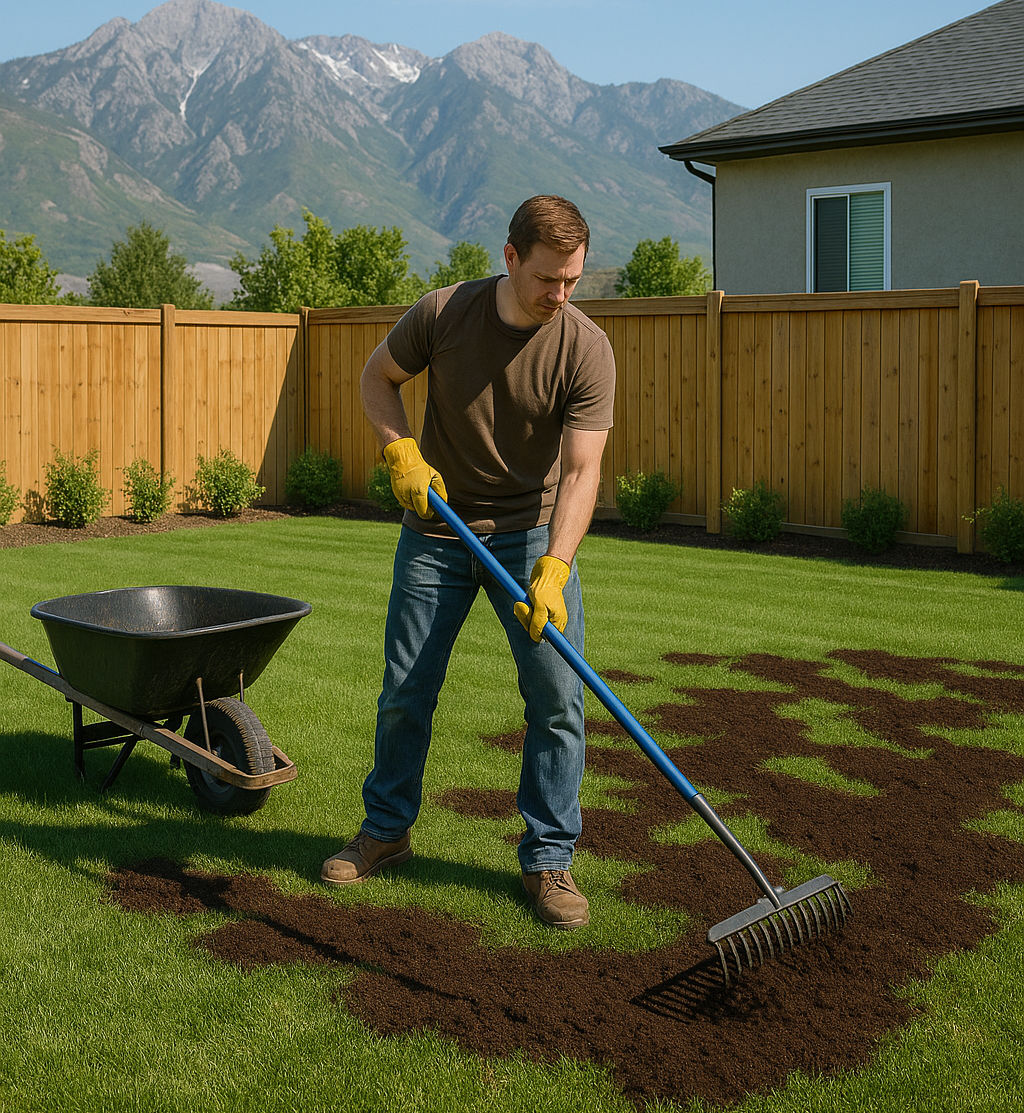
- Topdressing with compost — a thin layer of quality compost after aeration adds organic matter that alkaline Utah soil is naturally short on, improving water retention and microbial activity over time.
- Soil testing before fertilizing — guessing at fertilizer type wastes money and can worsen nutrient lockup. A basic soil test tells you whether the issue is pH, a specific nutrient deficiency, or compaction.
- Iron supplementation — for lawns already showing yellowing, a chelated iron treatment can green up grass faster than trying to shift soil pH, which is a slow, multi-season project.
The Timing That Matters
Aeration and overseeding work best in early fall in Utah, when soil temperatures are still warm enough for root growth but the heat stress of summer has passed. Spring aeration is possible but less effective, since it opens the door for warm-season weeds to move into the loosened soil before grass roots can fill it in.
Frequently Asked Questions
Why is my Utah lawn yellow even though I water it regularly?
Yellowing despite adequate watering is usually iron chlorosis — Utah’s alkaline soil locks up iron in a form grass can’t absorb. It’s a soil chemistry issue, not a watering issue, and more water won’t fix it.
How often should I aerate my lawn in Utah?
Most Wasatch Front lawns benefit from aeration once a year, ideally in early fall. Lawns with heavy clay content or high foot traffic can benefit from aeration twice a year.
Does adding topsoil fix compacted soil?
Not on its own — adding soil on top of a compacted layer just creates a new layer above the problem. Aeration first, then topdressing with compost, addresses the compaction directly.
Can I test my own soil, or do I need a professional?
Home test kits can give a rough pH reading, but they don’t measure nutrient levels or organic matter content accurately. A lab-based soil test gives a complete picture worth acting on.
Is Utah soil bad everywhere, or does it vary by area?
It varies. Bench-area soil tends to be more alluvial and better-draining; valley-floor soil often carries more clay. Both are alkaline, but the compaction and drainage challenges differ by location.
Not sure what your lawn’s soil actually needs? Millburn Lawn & Landscape can evaluate your soil and build a plan around what’s actually happening underneath your grass. Call us to get started.