Summers in Salt Lake City routinely push into the high 90s, and while a mature shade tree is the traditional solution, not every yard has room for one — HOA restrictions, limited space, or a homeowner simply not wanting to wait years for a canopy to fill in all point toward faster alternatives that still meaningfully cool a backyard.
Why Homeowners Skip Large Shade Trees
Large shade trees come with real tradeoffs beyond the years-long wait for meaningful coverage. Many neighborhoods restrict tree height or placement through HOA guidelines. Large shade species can carry significant water demand, which matters during Utah’s recurring drought cycles. Root systems can lift sidewalks and interfere with foundations or utility lines over time, and leaf drop, pruning, and general upkeep add an ongoing maintenance commitment many homeowners would rather avoid, especially on a smaller lot that can’t accommodate a big-rooted tree in the first place.
Structural Shade: Pergolas and Awnings
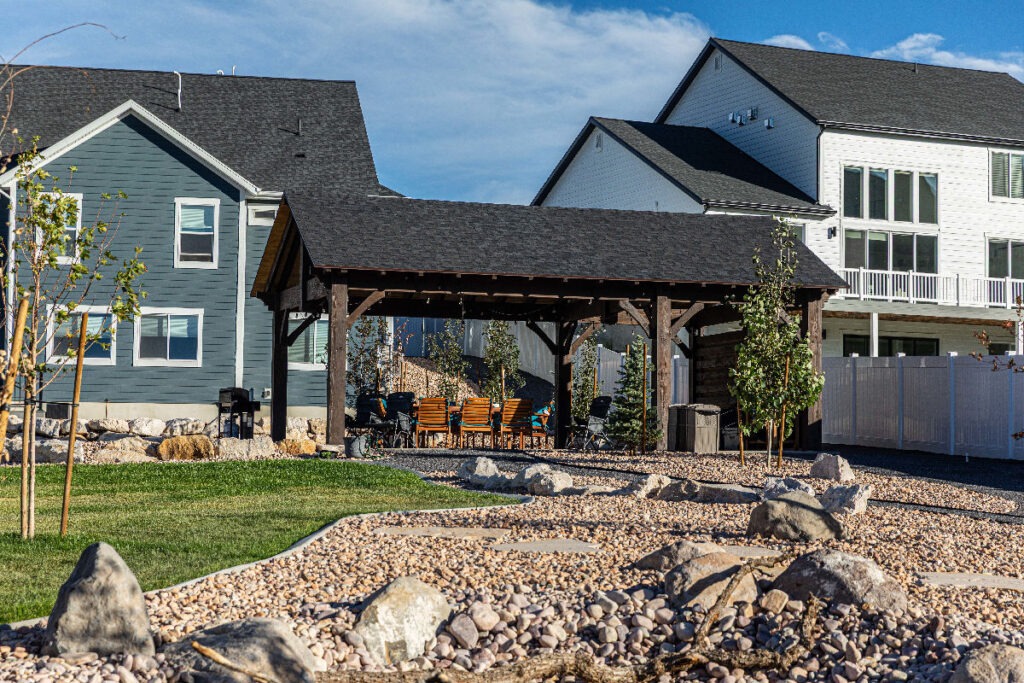
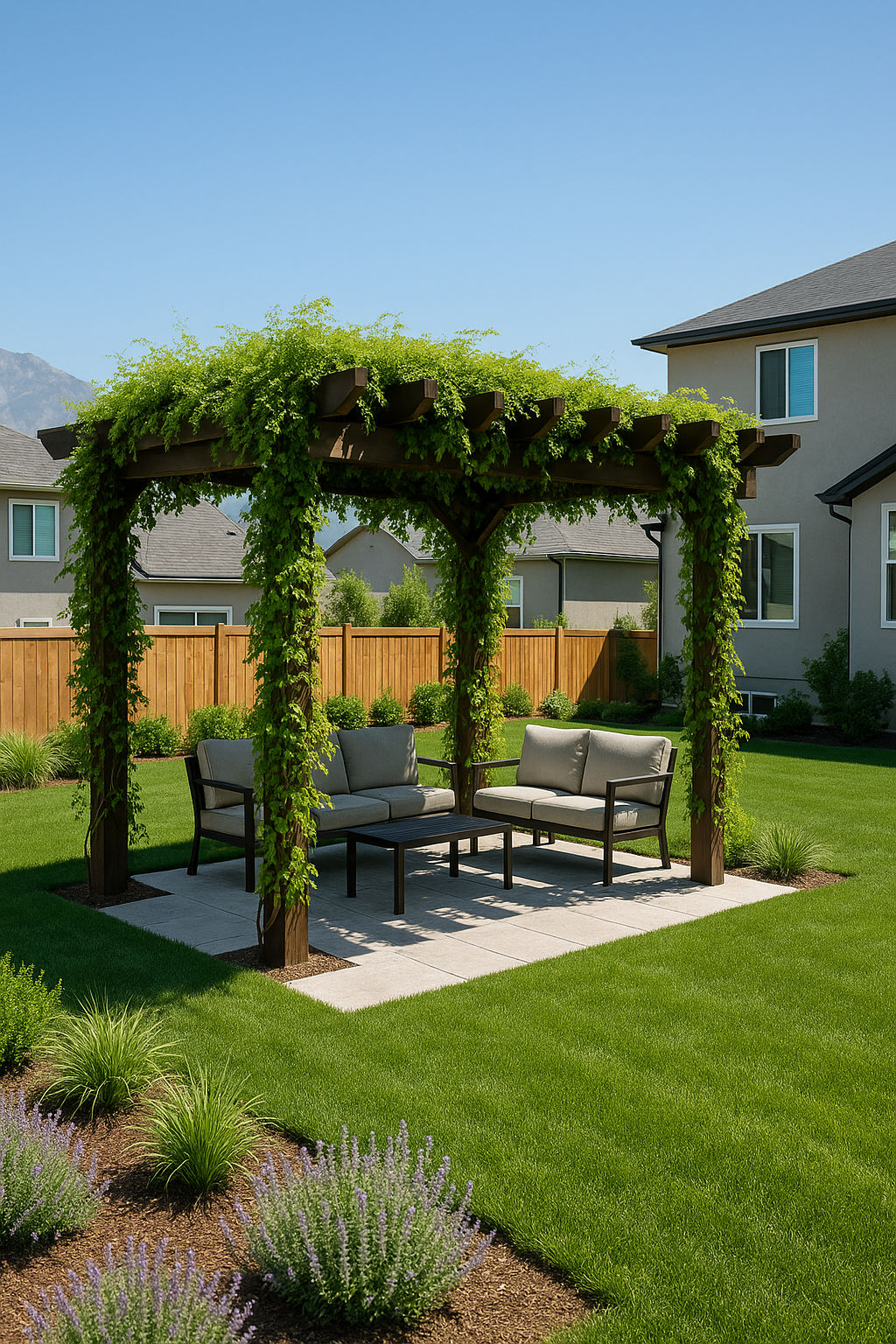
A pergola provides shade immediately upon installation rather than years into the future, and pairing it with a drought-tolerant climbing vine on drip irrigation adds a green, layered look without the water demand of a full tree canopy. Retractable awnings offer even more flexibility — full shade during peak afternoon sun, retracted for stargazing or cooler evening hours, with no long-term commitment to a fixed structure.
Shade Sails for Budget-Friendly Coverage
Shade sails are among the most affordable and fastest-to-install shade solutions available, and they work particularly well over defined-use areas like a kids’ play space or a backyard seating zone where full coverage matters more than aesthetic permanence.
Shrubs and Vertical Greenery as Living Shade
Dense, fast-growing shrubs — serviceberries and lilac perform well in Utah’s climate — provide partial shade and privacy screening with far less water demand than a mature tree, and they establish meaningfully faster. Vertical trellises trained with climbing plants offer a similar effect along fences or walls, doubling as a decorative feature while providing filtered shade to nearby seating or walkway areas.
Planning Shade Solutions Around Utah’s Seasons
Structures should be positioned to block the intense southern and western sun that defines Salt Lake City summers, while climbing plants chosen for seasonal color add visual interest as temperatures cool into fall. Come winter, removable or retractable shade structures avoid snow-load damage that a fixed, permanently installed structure could sustain under a heavy Utah snowfall.
Frequently Asked Questions
What’s the most affordable way to add shade to a Salt Lake City yard?
Shade sails are typically the most budget-friendly option — they’re straightforward to install and can be repositioned or removed as needed, without the cost of a permanent structure.
Which climbing plants grow well in Utah’s climate for shade structures?
Virginia Creeper, honeysuckle, and certain drought-tolerant clematis varieties are reliable performers on pergolas and trellises throughout the Salt Lake Valley.
Do pergolas require permits in Salt Lake City?
Often yes, particularly if the structure attaches to the home. Checking local building codes before installation avoids complications after the project is underway.
Will a shade sail or awning hold up to Utah’s winter snow?
Fixed shade sails and awnings can be vulnerable to snow load; retractable awnings and removable shade sails avoid this risk by being taken down or retracted before winter weather arrives.
Combining Multiple Shade Strategies
Many of the most effective Salt Lake City backyards don’t rely on a single shade solution but layer several together — a pergola over a primary seating area, shade sails extending coverage to a play zone, and shrubs or vertical greenery providing privacy and partial shade along property edges. This layered approach avoids the all-or-nothing tradeoff of relying entirely on one large tree, while still creating genuinely comfortable outdoor space through the hottest parts of a Utah summer afternoon.
Cost and Maintenance Tradeoffs to Consider
Each shade option comes with different long-term maintenance implications worth weighing before installation. Pergolas and awnings require occasional structural upkeep but little ongoing labor. Shade sails need periodic tightening or seasonal removal but are simple to maintain. Living shade — shrubs, trained vines — requires pruning and establishment care but improves in coverage and appearance over time as it matures, unlike a structure that looks the same on day one as it does years later.
Ready to transform your Salt Lake City backyard into a cool, shaded retreat? Contact Millburn Lawn & Landscape today for a custom design consultation.