Utah summers get genuinely hot, and a plunge pool offers Salt Lake City homeowners a compact, space-efficient way to cool off without committing a large share of the yard to a full-sized pool.
What Exactly Is a Plunge Pool?
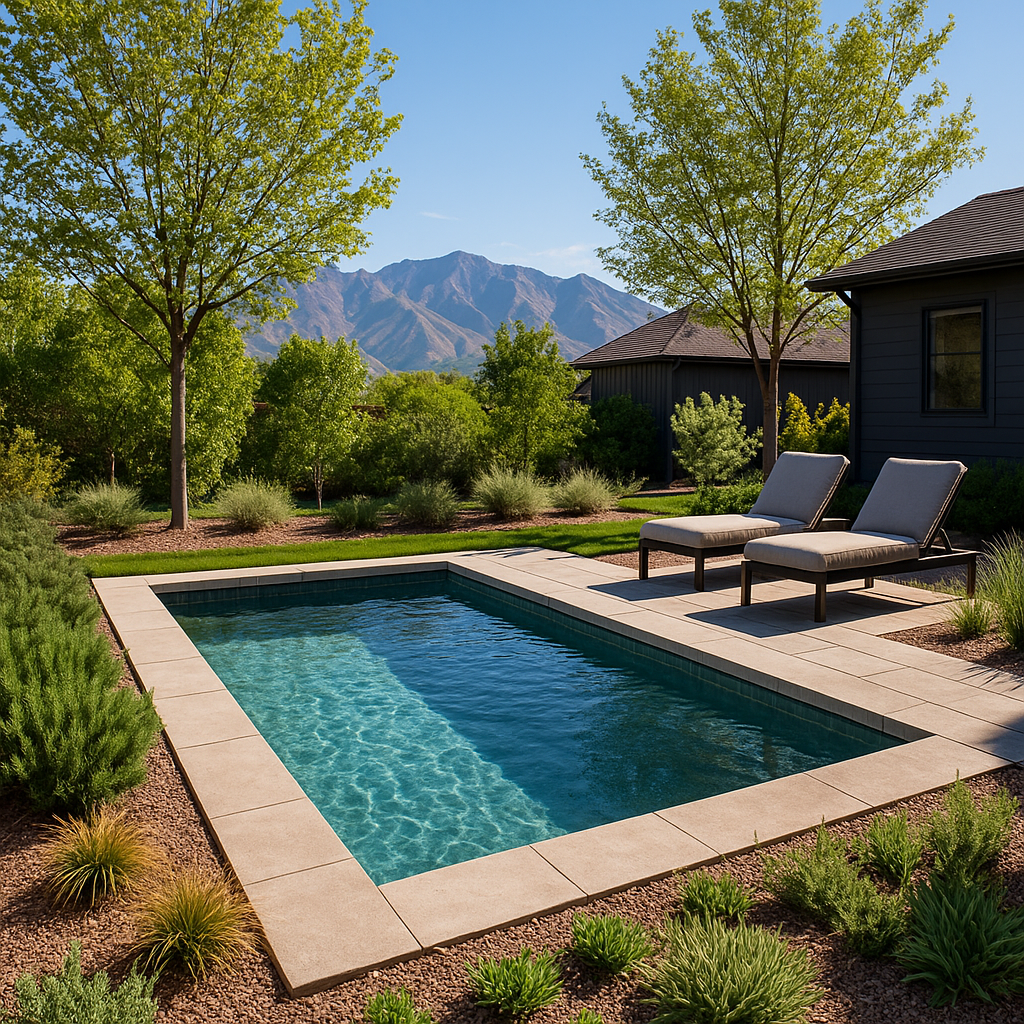
A plunge pool is a compact swimming pool built for cooling off, lounging, or light exercise rather than swimming laps. Typically smaller than a traditional pool, plunge pools generally run seven to thirteen feet wide and four to six feet deep — sized for relaxation and backyard visual impact rather than serious swimming.
Why Plunge Pools Fit Salt Lake City Yards So Well
Installing a full-sized pool in Utah comes with real space, seasonal temperature, and water-use considerations, and a plunge pool addresses each of them directly. A plunge pool fits easily into compact or urban lots where a traditional pool wouldn’t, uses meaningfully less water than a full-sized pool, warms up faster given its smaller volume — extending usable months into spring and fall — and generally involves simpler, lower-cost ongoing maintenance and chemical balancing than a larger pool.
A Natural Fit for Modern and Mid-Century Homes
Salt Lake City’s modern and mid-century architecture pairs particularly well with a plunge pool’s clean lines. Rather than dominating the yard the way a full-sized pool can, a well-placed plunge pool becomes a striking, architecturally consistent focal point that complements the home rather than competing with it.
A Practical Way to Handle Salt Lake City Summers
With summer temperatures regularly climbing into the 90s, a plunge pool offers a genuinely practical way to cool off close to home — whether that’s after a workout, in the evening with a drink in hand, or simply as a place to sit and unwind on a hot afternoon.
Designing the Pool Into the Full Landscape
A plunge pool works best when it’s woven into the broader outdoor design rather than dropped into an otherwise unrelated yard. Natural stone decking or pavers tie the pool visually to the rest of the hardscape, built-in benches or submerged steps add function without extra footprint, LED lighting extends usability into the evening, and nearby water-wise plantings or a poolside fire feature round out the space into a genuine backyard retreat.
What Cost Actually Depends On
A plunge pool’s total cost is driven primarily by site conditions — how much excavation and grading the yard requires — along with material choices for decking and coping, and the extent of surrounding hardscape and plantings included in the design. Because plunge pools involve less excavation and water volume than a full-sized pool, they’re generally a more accessible entry point into a backyard pool than homeowners initially assume.
Permits and Safety Requirements
Like any pool, plunge pools must meet Utah’s safety codes, including fencing requirements. A qualified installer handles the permitting and compliance work, so the process doesn’t fall on the homeowner to navigate alone.
Frequently Asked Questions
Can a plunge pool be heated?
Yes — and because of their smaller volume, plunge pools heat considerably faster than full-sized pools, making them practical for cooler spring and fall use.
Do plunge pools require fencing in Utah?
Yes — plunge pools are subject to the same safety codes as larger pools, including required fencing, and a qualified installer manages compliance.
How much yard space does a plunge pool actually need?
Considerably less than a traditional pool — their compact footprint makes them a realistic option even for smaller or narrower urban lots.
Millburn Lawn & Landscape designs custom plunge pools integrated into your full outdoor living space. Contact us to start planning your Salt Lake City backyard oasis.