Commercial property owners in Salt Lake City are responsible for more than how their landscaping looks — a poorly maintained landscape creates real safety hazards for staff, customers, and tenants, and the liability that comes with them.
Why Landscape Safety Deserves Its Own Attention
Real estate and property management teams often think of landscaping as an aesthetics line item, separate from the safety and liability concerns that get more formal attention elsewhere on a property. But landscape-related hazards — obstructed pathways, tripping risks, uncleared snow and ice — are just as much a liability exposure as any other property safety issue, and they’re often easier to prevent with routine, proactive maintenance than the safety issues that get more institutional attention.
Prune Low Branches Before They Become a Hazard
Tree branches that droop too low can obstruct pedestrian pathways, block lighting fixtures, or interfere with sightlines near entrances and parking areas. Keeping bottom branches pruned to roughly 8 to 10 feet above ground level maintains clear, safe passage for pedestrians and preserves the lighting coverage that keeps walkways visible after dark — proactive pruning ahead of a problem is far simpler than responding after a branch has already caused an obstruction or incident.
Define Clear Lawn and Walkway Edges
Lawns without clearly defined boundaries create tripping hazards, since visitors may have difficulty distinguishing where turf ends and a garden bed, walkway, or curb begins. Consistent edging and trimming establishes a clean, visually obvious separation between landscape elements — a safety benefit as much as an aesthetic one, since it removes the ambiguity that leads to missteps.
Check for Holes and Ground Depressions
Uneven soil compression beneath a lawn can create holes or depressions that aren’t visible until someone steps into one, particularly if the area is covered with leaves or thick grass growth. Beyond the unsightly appearance, these ground-level defects pose a real and often underestimated liability risk for employees, guests, and tenants. Filling and reseeding depressions as soon as they’re identified prevents them from becoming a larger, more visible hazard.
Have a Snow and Ice Removal Plan Before Winter Arrives
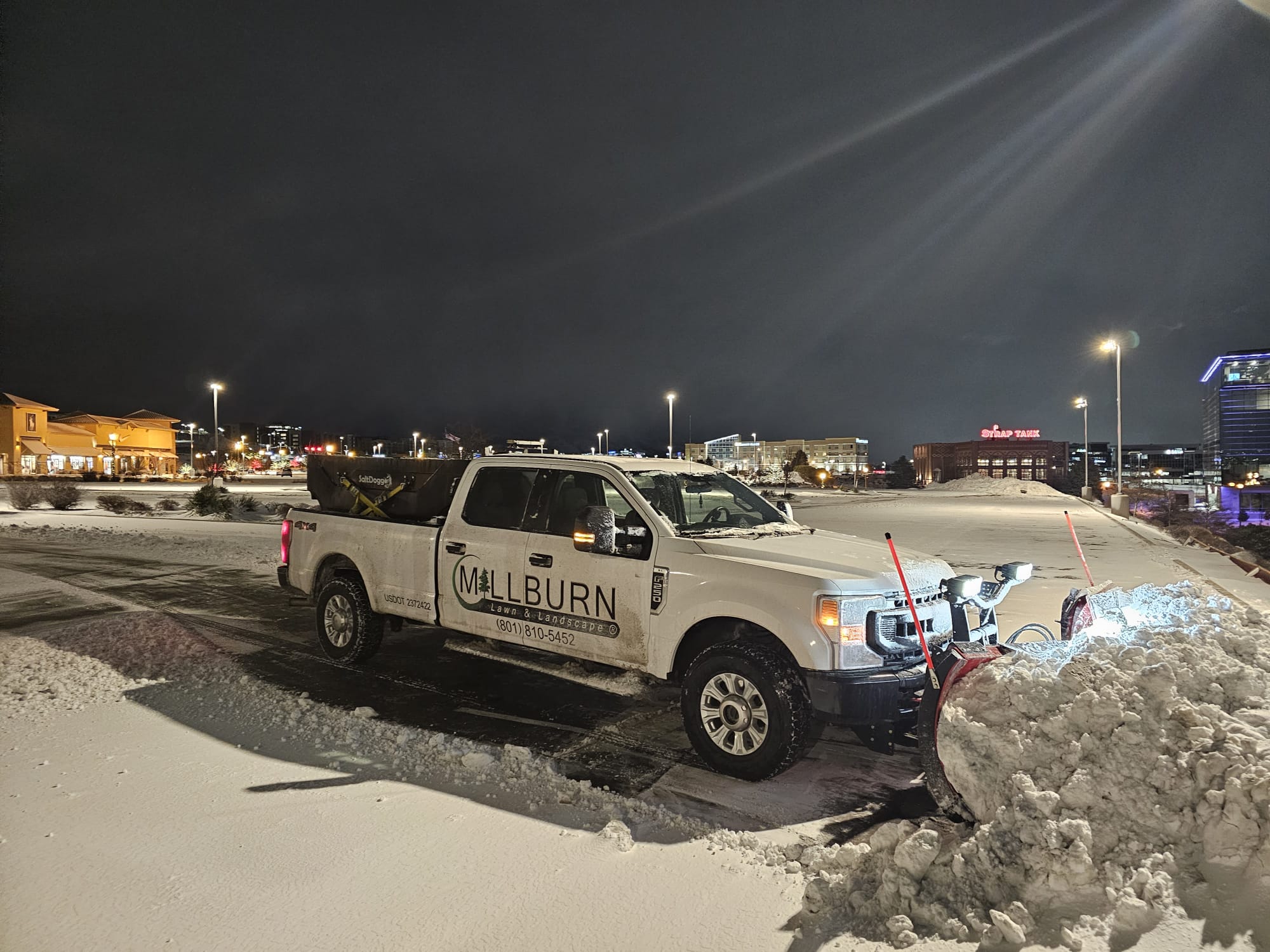
Businesses without a defined snow and ice removal strategy in place before winter weather hits face both the immediate safety risk of slick surfaces and the downstream cost of responding reactively rather than proactively. The right approach balances response speed with proper technique — clearing quickly matters, but so does doing it in a way that actually addresses ice risk rather than just visible snow.
Why Commercial Landscape Safety Pays Off
Commercial landscape maintenance sits at the intersection of aesthetics, functionality, and security — getting the timing and approach right on all three sets a property up to make a strong first impression while genuinely reducing safety liability, rather than treating the two as separate concerns.
Frequently Asked Questions
How high should tree branches be pruned for pedestrian safety?
A common standard is raising bottom branches to roughly 8-10 feet above ground level, keeping pathways, sightlines, and lighting clear for pedestrians.
What’s the biggest hidden landscape safety risk on commercial properties?
Ground depressions and uneven soil beneath lawn areas are often the most underestimated risk, since they’re not visible until covered vegetation or leaves obscure them further, creating an unexpected trip hazard.
How far in advance should commercial properties plan for snow removal?
Before winter weather arrives — waiting until the first storm to arrange snow removal service often means limited provider availability and a reactive, rather than proactive, safety response.
Millburn Lawn & Landscape helps Salt Lake City businesses maintain safe, well-kept commercial landscapes. Call us to schedule a property assessment.