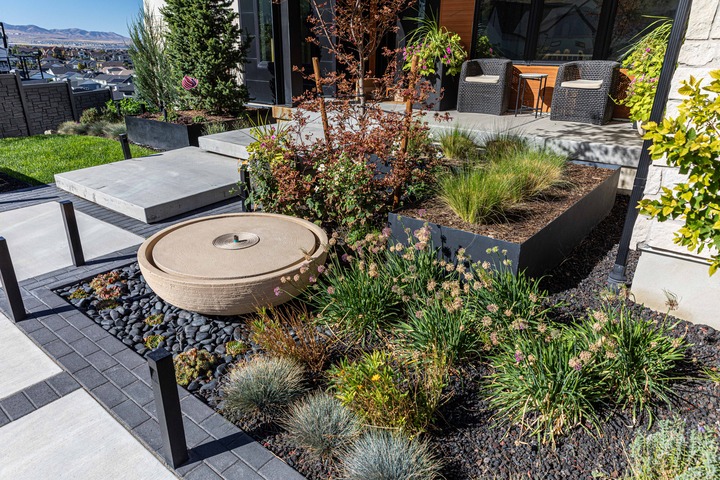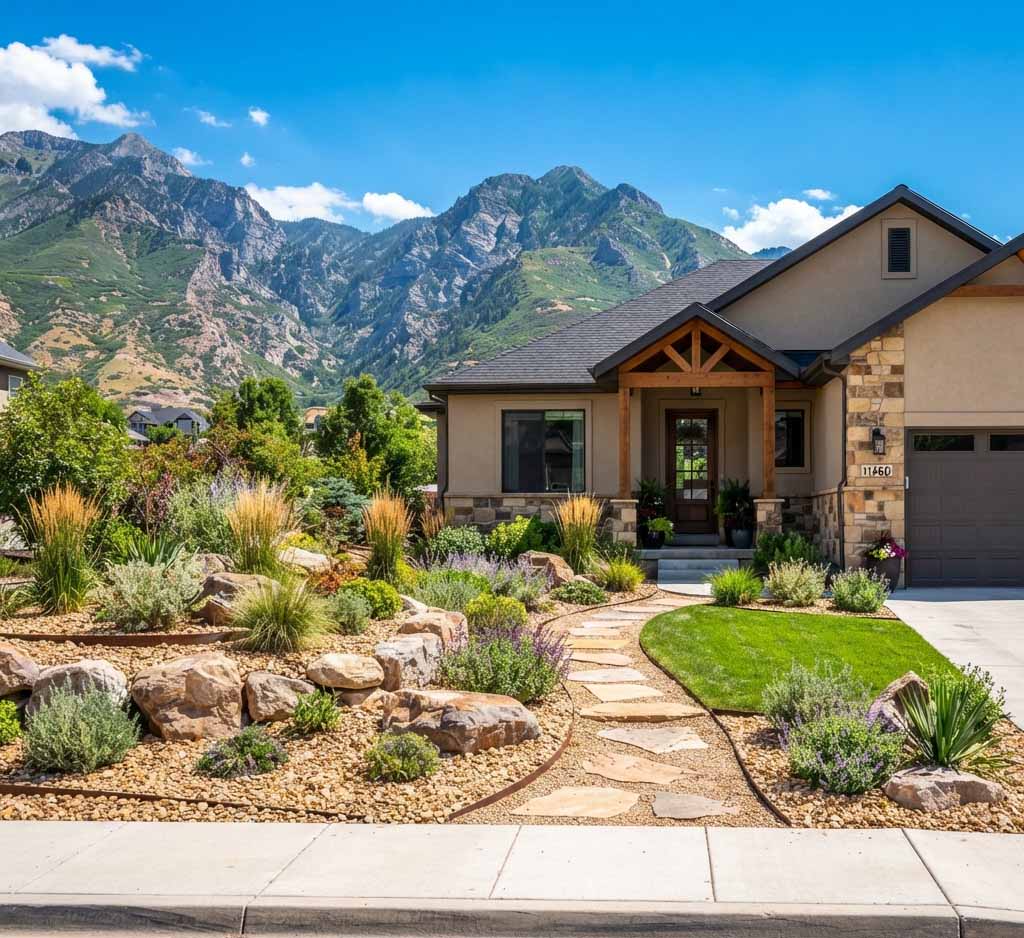
Industrial properties — warehouses, distribution centers, manufacturing sites — often have the largest landscaped footprint of any commercial property type relative to their maintenance budget, which makes water efficiency and low-maintenance design a bigger priority here than almost any other commercial category.
Why Industrial Sites Need a Different Approach
Industrial properties typically have large perimeter and buffer areas required by zoning, but minimal foot traffic through most of that landscaped space. That combination — large area, low visibility, tight budget — means the traditional commercial landscaping approach doesn’t make financial or practical sense. The priority shifts to durable, low-input plantings that hold up with minimal attention.
Water-Efficient Strategies for Large Industrial Sites
- Drip irrigation over spray heads in planting beds — delivers water directly to root zones with far less evaporation loss than overhead spray, which matters at industrial scale where even small efficiency gains multiply across acres
- Native and drought-adapted plant selection for buffer and perimeter zones — species suited to Utah’s climate that don’t require supplemental water once established
- Smart controller scheduling — irrigation systems that adjust based on actual weather data rather than a fixed timer, reducing water waste during cooler or wet stretches
- Mulch coverage on all planted beds — reduces evaporation, suppresses weeds, and cuts down on the labor needed to keep large buffer areas looking maintained
Sustainable Development Beyond Water
Industrial landscaping increasingly factors into broader site sustainability goals — stormwater management through bioswales or permeable surfaces, using landscaped areas to manage runoff rather than fighting it, and selecting plant material that supports local pollinator populations without adding maintenance burden. These aren’t just environmental checkboxes; they often reduce long-term maintenance costs by working with the site’s natural drainage rather than against it.
Matching Maintenance to Realistic Budgets
The most common mistake on industrial sites is installing a landscape design that looks good on day one but requires a maintenance level the property never actually budgets for afterward. A sustainable industrial landscape plan should be built around what the property can realistically maintain long-term, not what looks best at installation.
Frequently Asked Questions
Why do industrial properties need different landscaping than office parks?
Industrial sites typically have larger landscaped areas with less foot traffic and tighter maintenance budgets relative to their size, which shifts priorities toward durability and low water/maintenance input over ornamental design.
Is drip irrigation worth the investment for large industrial buffer zones?
At industrial scale, the water savings from drip irrigation versus spray heads compound significantly, often making it worth the upfront investment through reduced water usage over time.
What plants work best for Utah industrial buffer zones?
Native and drought-adapted species suited to Utah’s climate — ones that establish well and require minimal supplemental water once mature — are typically the best fit for large, low-maintenance buffer areas.
How does stormwater management factor into industrial landscaping?
Features like bioswales and permeable surfaces let landscaped areas absorb and manage runoff naturally, which can reduce strain on a site’s drainage infrastructure compared to standard turf and hardscape.
Balancing Zoning Requirements With Practical Maintenance
Many industrial sites carry municipal or zoning-mandated landscaping requirements for perimeter buffers, often specifying minimum plant coverage or screening from adjacent roads and properties. Meeting these requirements with the lowest-maintenance planting palette possible — rather than the most visually elaborate option that technically satisfies the code — keeps long-term costs down while still fulfilling the zoning obligation. Working with a landscaper who understands local zoning language for industrial buffer requirements avoids both under-compliance (risking code violations) and over-designing beyond what’s actually required.
Seasonal Maintenance Considerations for Large Sites
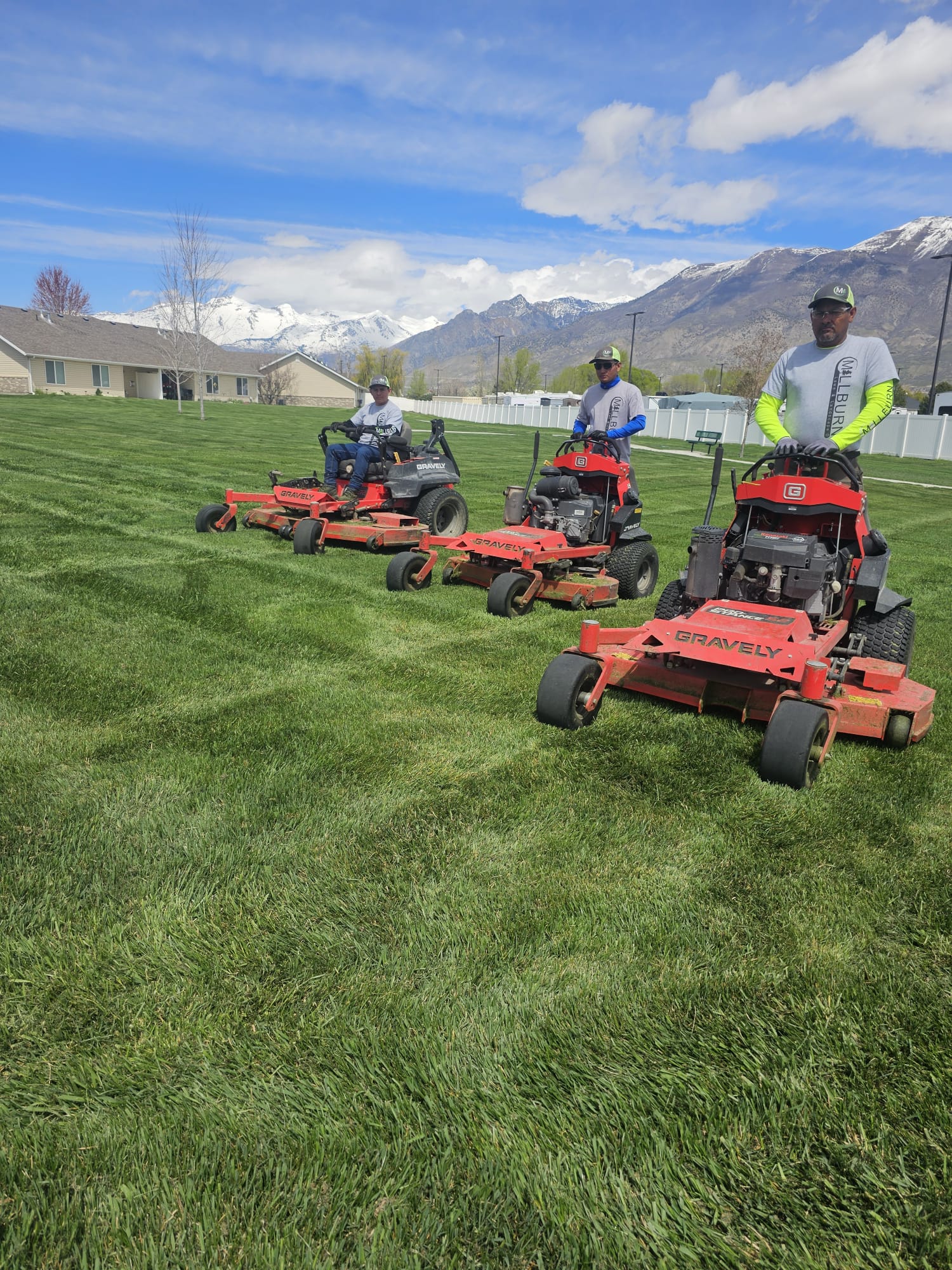
Industrial properties benefit from maintenance schedules built around efficiency at scale rather than the more frequent, detail-oriented visits appropriate for a small commercial lot. Larger mowing equipment, batch irrigation system checks across multiple zones in a single visit, and seasonal rather than weekly bed maintenance for buffer areas all reduce the labor cost of maintaining a large footprint without letting the property look neglected. The goal is a maintenance cadence that matches the property’s actual visibility and use, not the same schedule used for a high-visibility retail frontage.
Millburn Lawn & Landscape designs and maintains industrial landscapes built for real-world budgets. Call us to talk about your site.