The Lawn Question Every Herriman Homeowner Is Starting to Ask
For decades, the answer to how much lawn a homeowner should have was simple: as much as you can maintain. A lush green lawn was the default backyard, the assumed baseline, the starting point from which everything else was designed. In Herriman, Utah, that assumption is changing — and for very good reasons.
Water scarcity is real in the Salt Lake Valley. Herriman homeowners are subject to Jordan Valley Water Conservancy District regulations, and drought-year restrictions have become a near-annual reality rather than a rare exception. At the same time, the cost of water continues to climb, lawn care services are increasingly expensive, and many homeowners are honestly asking whether the green carpet they are maintaining is actually adding the value and enjoyment they are paying for.
The question is not whether lawns are bad — they are not. Green grass has genuine functional and aesthetic value. The real question is how much lawn is actually right for your specific property, your family’s use patterns, and Herriman’s water reality. This guide gives you the honest, practical framework to answer it.
The Real Cost of Lawn in Herriman, Utah
Before deciding how much lawn to keep or plant, it helps to understand what lawn actually costs in Herriman’s specific context — beyond the obvious mowing time.
Water: The Dominant Cost
Cool-season turf grasses — Kentucky Bluegrass and Tall Fescue, the most common lawn grasses in Herriman — require approximately 1 to 1.5 inches of water per week during the active growing season in Utah’s climate. On a typical Herriman lot with 2,000 square feet of lawn, that translates to roughly 50,000 to 70,000 gallons of irrigation water annually, depending on the summer’s heat and humidity conditions.
At current Jordan Valley Water Conservancy District rates, that water costs Herriman homeowners approximately $400 to $700 per year just for lawn irrigation — and that figure rises meaningfully in drought years when tiered pricing applies to higher usage levels. A larger lawn or one managed with older, less efficient irrigation equipment can cost significantly more.
Time and Maintenance
A 2,000 square foot lawn in Herriman requires mowing approximately every 5 to 7 days during peak growing season — typically May through September — totaling 20 to 25 mowing sessions per year. Add edging, fertilization, aeration, overseeding, weed control, and seasonal irrigation system startup and shutdown, and a well-maintained Herriman lawn represents a meaningful annual time or service investment. Many homeowners significantly underestimate this cost until they begin tracking it.
Environmental Impact
Utah is in the Colorado River Basin, and the water sustainability challenges of the entire region make every gallon of landscape irrigation a conservation consideration. Herriman specifically sits in one of the fastest-growing areas of one of the driest states in the US. The Utah Division of Water Resources has identified residential landscape irrigation — of which lawn watering is the largest component — as the single most impactful area for conservation action. Choosing your lawn size thoughtfully is a genuinely meaningful environmental choice in Herriman.
How Much Lawn Do Herriman Families Actually Use?
Before making any changes to your lawn size, conduct an honest use assessment. This is the most important step and the one most homeowners skip — leading to either keeping more lawn than they need or eliminating lawn they will genuinely miss.
Ask yourself and your family these questions honestly:
- Active recreation: Do we regularly use the lawn for activities that require turf — kids playing, dogs running, lawn games, picnics on the grass? If yes, how many square feet of open turf do those activities actually require?
- Visual enjoyment: Do we value the green lawn primarily for how it looks from inside the home or from the street, rather than for active outdoor use? If so, a smaller, strategically placed lawn achieves the same visual goal at a fraction of the water cost.
- Pet needs: If dogs use the lawn as a relief and exercise area, how much space do they genuinely need? Many dog owners find that a dedicated 400 to 600 square foot grass zone serves their pets fully, compared to a full backyard of turf.
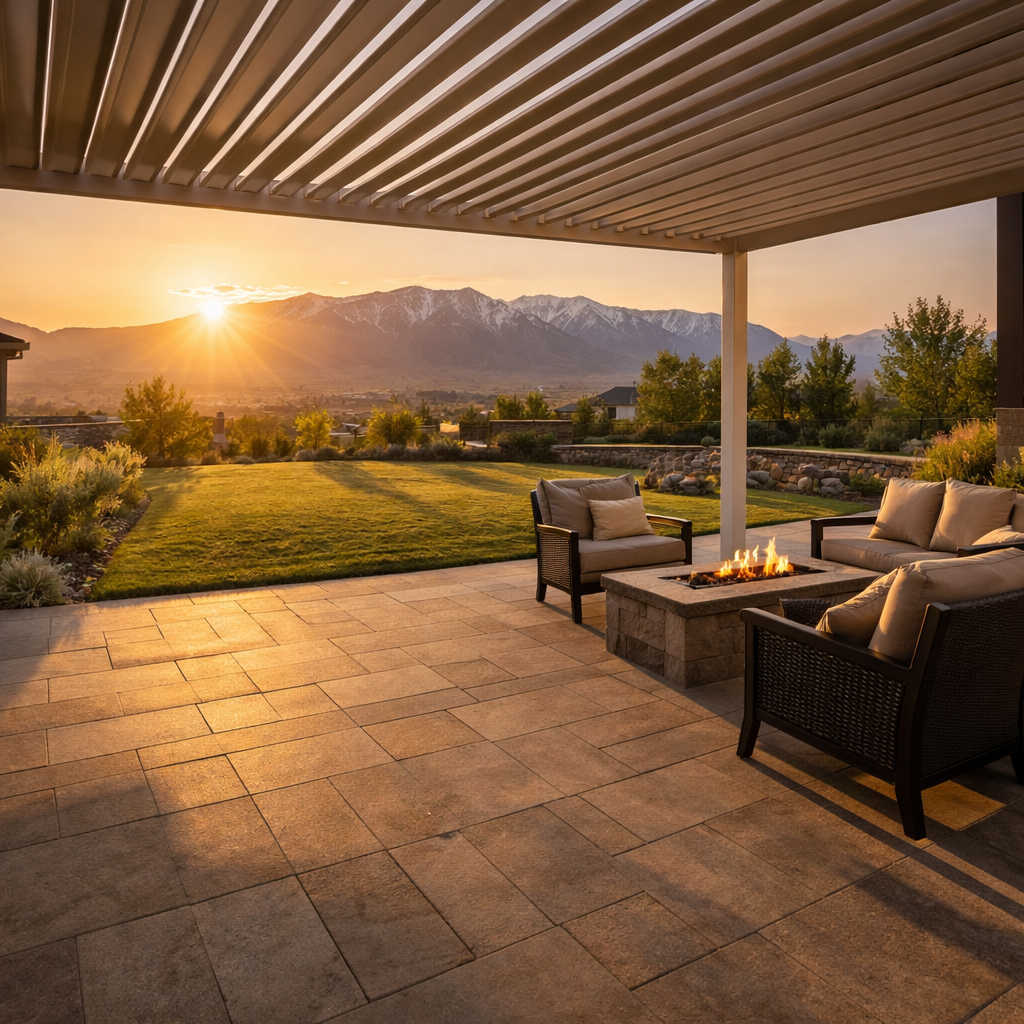
- Entertaining style: Do guests gather on the lawn, or do they primarily use hardscape areas like the patio and deck? Most outdoor entertaining in Herriman happens on hard surfaces, not grass.
For most Herriman families, an honest use assessment reveals that 400 to 800 square feet of well-placed, well-maintained lawn satisfies the actual functional needs of the household — a fraction of the 2,000 to 3,000 square feet of turf that many properties currently carry.
Right-Sizing Your Lawn: A Framework for Herriman Homeowners
Right-sizing does not mean eliminating lawn. It means matching your lawn footprint to your household’s actual use, water budget, and maintenance capacity — and filling the rest of your yard with thoughtful alternatives that look great with far less resource investment.
The 25% Principle
As a practical starting point for Herriman homeowners evaluating their lawn footprint, the 25% principle offers a useful benchmark: consider limiting turf to no more than 25% of your total landscapeable yard area. On a typical Herriman backyard of 2,500 to 3,500 square feet, that translates to 625 to 875 square feet of grass — enough for a generous play area, visual anchor, or pet zone, while freeing the majority of the yard for lower-water alternatives.
Many Herriman homeowners who have right-sized to the 25% range report that their yard looks better, requires less overall maintenance, and costs significantly less to water — while still having the green space their family actually uses.
Front Yard Lawn: Worth Reconsidering
Front yard turf is where the water-use versus use-value equation is most imbalanced for most Herriman homeowners. A typical Herriman front yard lawn is walked on perhaps a handful of times per year, yet consumes as much water as a far more actively used backyard space. Utah’s Water-Wise Landscaping initiative offers rebates for Herriman homeowners who convert front yard turf to water-wise alternatives — making this the most financially incentivized change available for households looking to reduce water bills and landscape maintenance.
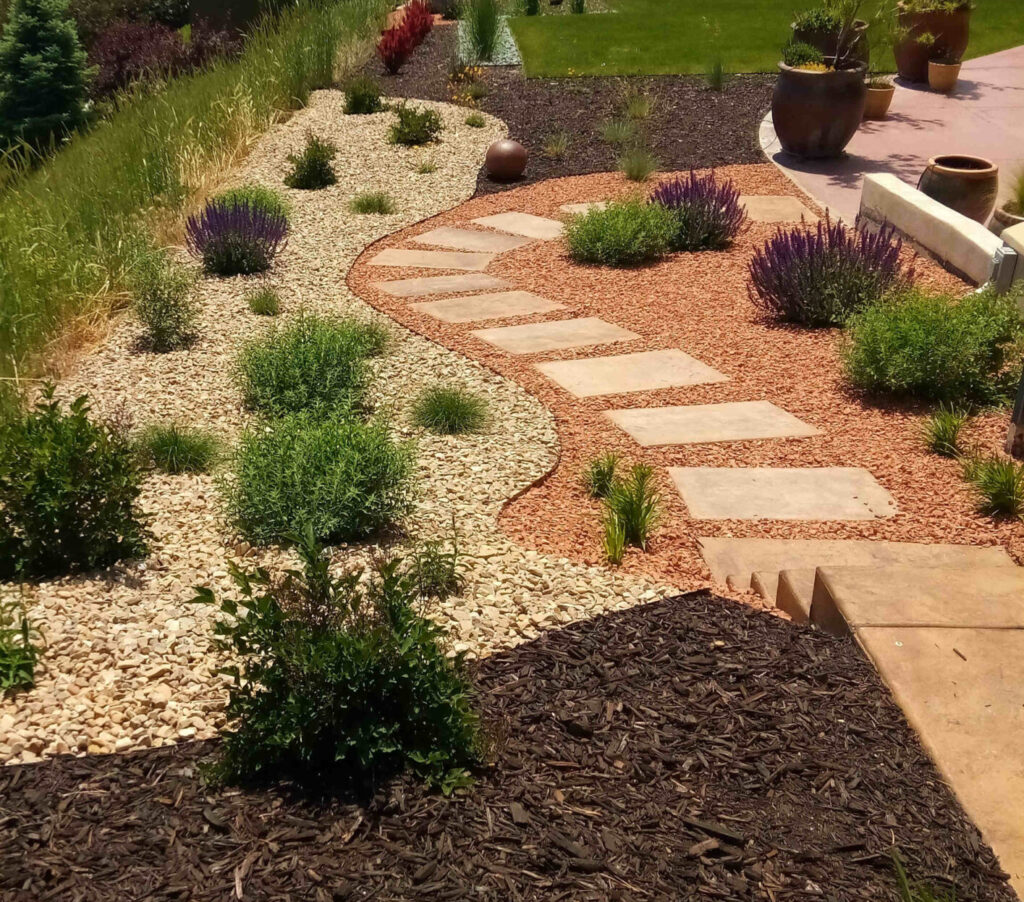
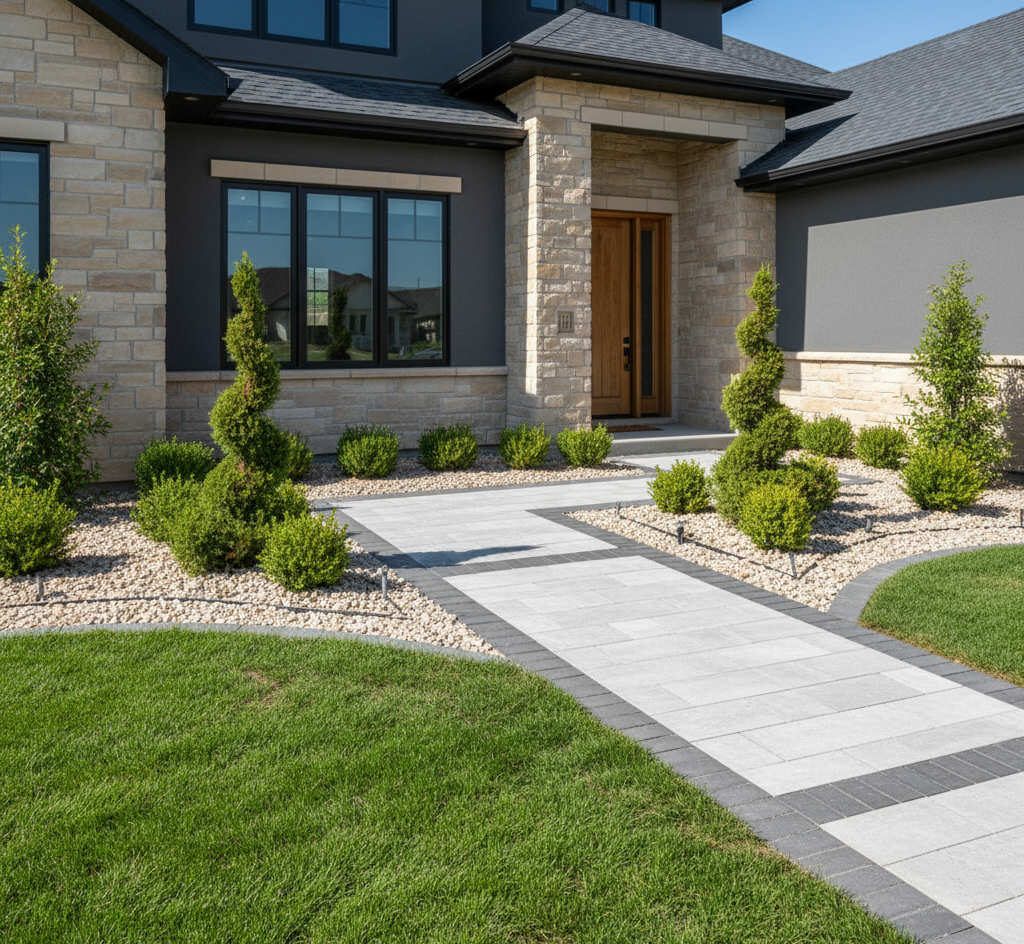
A front yard design that replaces turf with a combination of decorative rock, drought-tolerant shrubs and perennials, and a defined pathway can look more intentional and polished than a struggling grass lawn while using as little as 20% of the water.
Backyard Lawn: Right-Size Around Use Zones
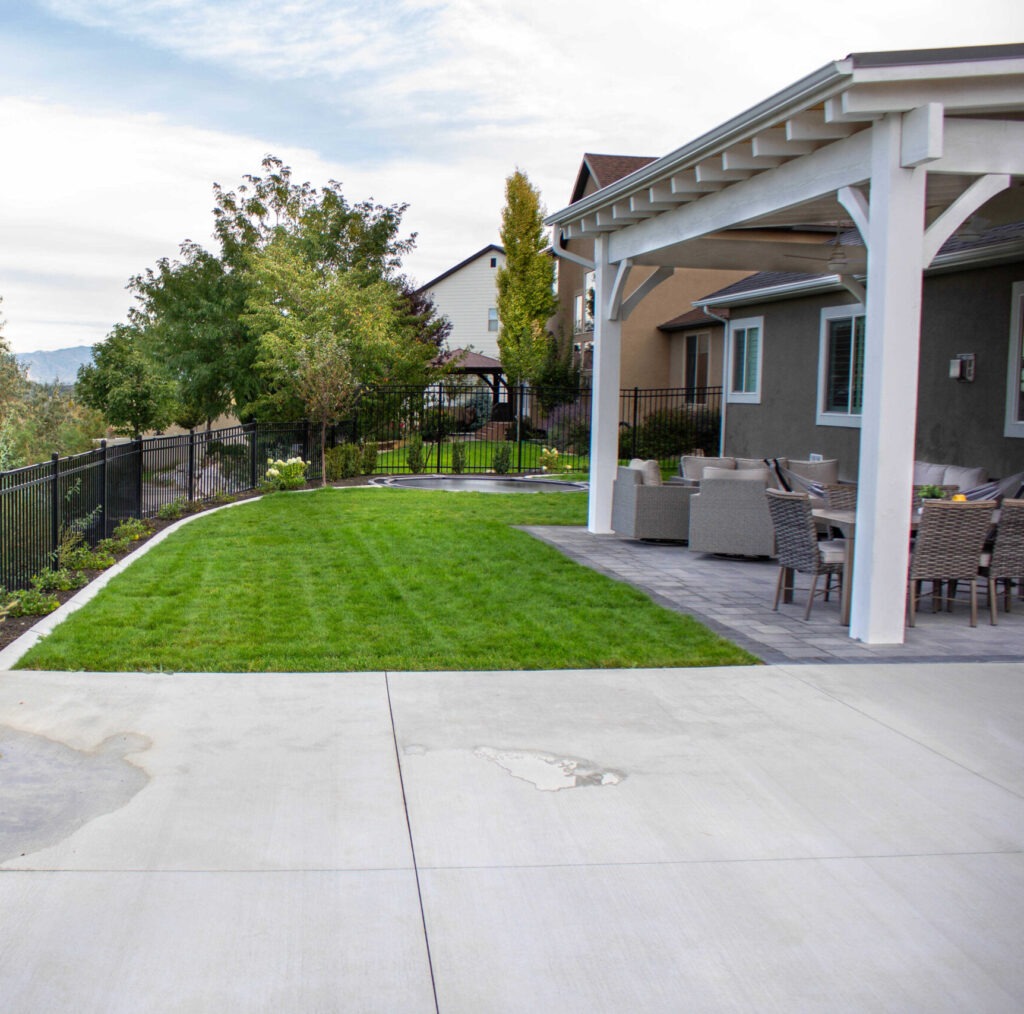
In the backyard, the most effective approach to right-sizing is zoning: identify the specific areas and activities that genuinely require turf, and keep grass there while transitioning surrounding areas to alternatives. A defined turf area for children’s play and pet use, bordered clearly by a mowing edge, hardscape, or planting bed, is easier to maintain, easier to irrigate precisely, and easier to keep looking healthy than a sprawling lawn of inconsistent condition.
Lawn Alternatives That Thrive in Herriman
Reducing lawn does not mean replacing green with gravel. Herriman’s climate supports a wide range of beautiful, low-water alternatives that can fill former turf areas with color, texture, and year-round interest.
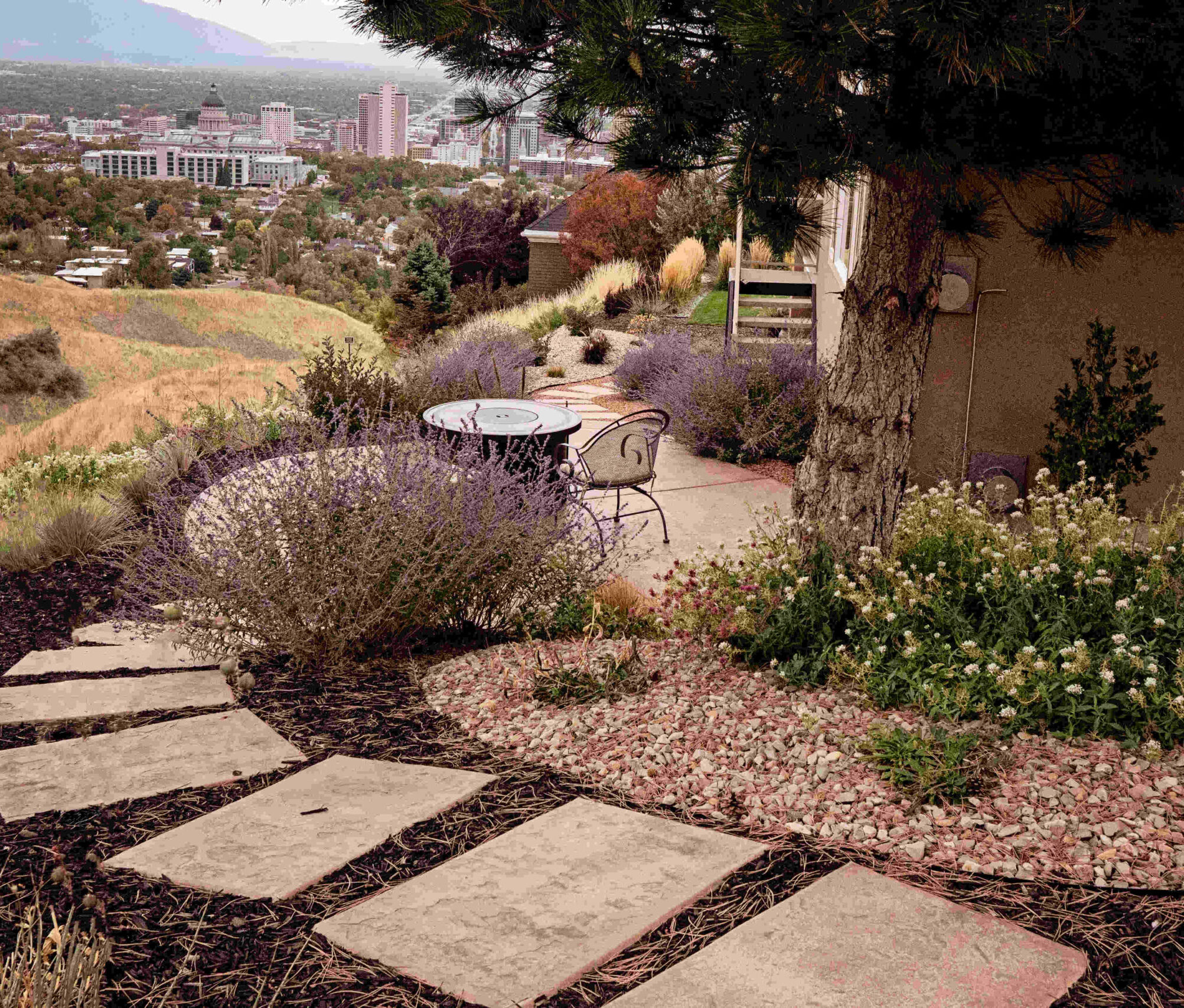
- Ornamental grasses: Blue Oat Grass, Karl Foerster Feather Reed Grass, and Blue Grama Grass all provide movement, texture, and seasonal interest with a fraction of the water turf requires. They are completely cold-hardy in Herriman’s zone 7a.
- Groundcovers: Creeping Phlox, Ice Plant, and Creeping Thyme all form dense, attractive carpets that suppress weeds, require minimal water once established, and provide seasonal color that traditional turf cannot match.
- Decorative hardscape: Decomposed granite, river rock, and flagstone pathways and gathering areas eliminate the need for turf in transition zones and high-traffic areas while creating visual interest and definition.
- Raised planting beds: Replacing lawn perimeter areas with raised beds filled with drought-tolerant perennials and shrubs creates layered visual interest and wildlife habitat while dramatically reducing water use.
- Artificial turf: Quality synthetic turf in designated play and pet zones provides the look and feel of natural grass with zero water requirement. Specify antimicrobial infill and a drainage rate appropriate for Herriman’s occasional heavy rain events.
Lawn Size Quick Reference for Herriman, Utah
Use this table to compare lawn coverage options against water use, maintenance, and best use case.
| Lawn Coverage | Annual Water Use | Maintenance Level | Best Suited For |
| Full turf (60%+ of yard) | Very high — 60,000+ gal/yr | High — weekly mowing + inputs | Large active families, sports use |
| Moderate turf (40% of yard) | High — 40,000-55,000 gal/yr | Moderate-high | Families with kids and pets |
| Right-sized turf (25% of yard) | Moderate — 20,000-30,000 gal/yr | Moderate | Most Herriman households |
| Minimal turf (under 15%) | Low — under 15,000 gal/yr | Low | Adults, empty-nesters, low-maintenance preference |
| No turf (xeriscape) | Very low — under 5,000 gal/yr | Very low | Water-conscious, design-forward homeowners |
Design a Smarter, More Beautiful Herriman Yard — With Less Lawn
Right-sizing your lawn in Herriman is not about sacrifice — it is about getting more from your outdoor space with less water, less maintenance, and less expense. Our local landscape design team specializes in helping Herriman homeowners make this transition beautifully.
Frequently Asked Questions
Q How much water does lawn use in Herriman, Utah?
Cool-season turf grasses common in Herriman — Kentucky Bluegrass and Tall Fescue — require approximately 1 to 1.5 inches of water per week during Utah’s growing season. A 2,000 square foot lawn typically uses 50,000 to 70,000 gallons of irrigation water per year in Herriman’s climate, costing $400 to $700 or more annually at current Jordan Valley Water Conservancy District rates.
Q Are there rebates for reducing lawn in Herriman, Utah?
Yes. Utah’s Water-Wise Landscaping rebate program offers incentives for Herriman homeowners who convert turf to water-efficient landscaping. Contact the Jordan Valley Water Conservancy District directly for current rebate amounts and program requirements, as these change periodically. The front yard is typically the most eligible area for rebate programs.
Q What is the best grass type for a smaller, water-efficient lawn in Herriman?
For a right-sized Herriman lawn, Tall Fescue is generally the better choice over Kentucky Bluegrass — it requires less frequent watering, tolerates Herriman’s summer heat better, and stays greener through mild drought stress. Fine Fescue blends work well in shadier areas. Avoid Bermuda grass, which goes dormant brown in Herriman’s cool-season climate.
Q Can I have no lawn at all in Herriman, and will my yard still look good?
Absolutely. Well-designed xeriscape landscapes in Herriman can be among the most visually striking yards in a neighborhood — layered ornamental grasses, drought-tolerant flowering perennials, decorative rock, and specimen trees create year-round interest that turf simply cannot match. Many Herriman homeowners who have eliminated turf entirely report that their yard receives far more admiring comments than it did when it was a standard grass lawn.
Q What should I replace my front yard lawn with in Herriman?
The most successful Herriman front yard turf replacements combine a defined decorative pathway, a planting bed framework with drought-tolerant shrubs like Potentilla and ornamental grasses, flowering perennials such as Lavender and Russian Sage for seasonal color, and a clean mulch or decorative gravel ground cover. The result looks intentional, requires minimal water, and eliminates weekly mowing from your routine.