Drainage and grading problems are some of the most common—and most costly—issues West Jordan homeowners face. Standing water, muddy yards, erosion, cracked patios, and even foundation damage often trace back to poor drainage or improper grading.
Many homeowners don’t realize that drainage is not a surface problem. It’s a system-level issue involving slope, soil, water flow, and long-term planning. Professional landscape design addresses drainage and grading first, before patios, plants, or walkways are ever installed.
This guide explains how drainage and grading issues are handled properly, why they matter in West Jordan’s climate, and how smart planning protects your home and landscape investment.
Why Drainage and Grading Matter in West Jordan, Utah
West Jordan properties face unique challenges:
- Clay-heavy soils that drain slowly
- Seasonal snowmelt
- Sudden spring rainstorms
- Freeze-thaw cycles
- Sloped or builder-graded lots
Without proper drainage and grading, water naturally moves toward low points—often toward foundations, patios, or walkways. Over time, this causes structural damage, plant failure, and expensive repairs.
Professional drainage planning ensures water moves away from structures and through the landscape safely.
Step One: Evaluating Existing Water Flow
Before any solution is designed, professionals observe how water behaves on the property.
This includes:
- Identifying low spots and pooling areas
- Watching water flow during rain or snowmelt
- Examining downspout discharge locations
- Checking slope direction around the foundation
In West Jordan, many yards appear flat but actually slope incorrectly, sending water toward the home instead of away from it.
Understanding Proper Grading
What Is Grading?
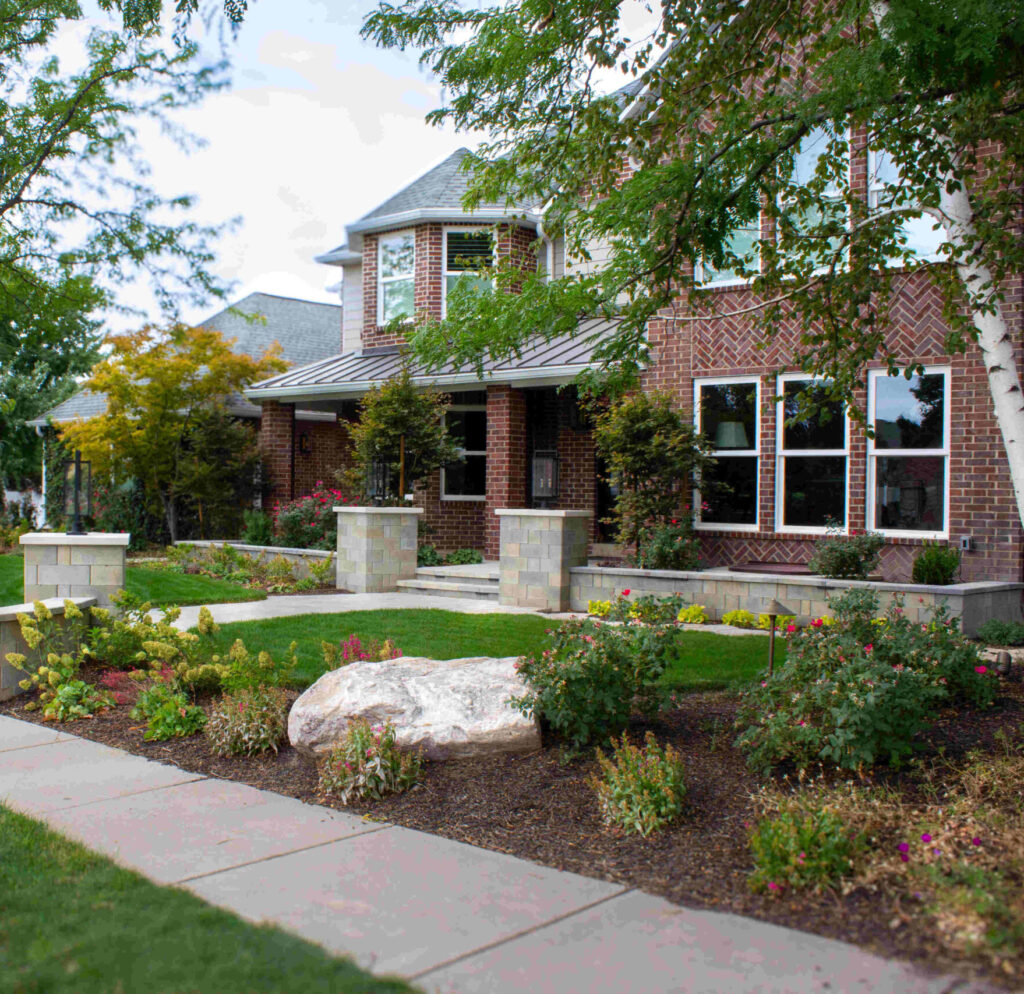
Grading refers to shaping the land to control how water flows. Proper grading ensures:
- Water drains away from the home
- Slopes are gentle and stable
- Patios and walkways remain level
- Soil erosion is minimized
A general rule is that ground should slope away from the foundation at a minimum of 2–5% for the first several feet.
Common Grading Problems in West Jordan Yards
Designers frequently see:
- Negative grading (soil sloping toward the house)
- Settled soil around foundations
- Improper builder grading
- Hardscapes installed without drainage consideration
These issues often worsen over time as soil settles and water repeatedly follows the same path.
Drainage Solutions Used in Landscape Design
Once grading issues are identified, drainage systems are designed to manage excess water efficiently.
Surface Drainage Solutions
- Swales (shallow channels that redirect water)
- Sloped planting beds
- Permeable hardscape materials
Surface solutions work best for managing rainwater and snowmelt across lawns and open areas.
Subsurface Drainage Systems
When surface solutions aren’t enough, underground systems are used.
These include:
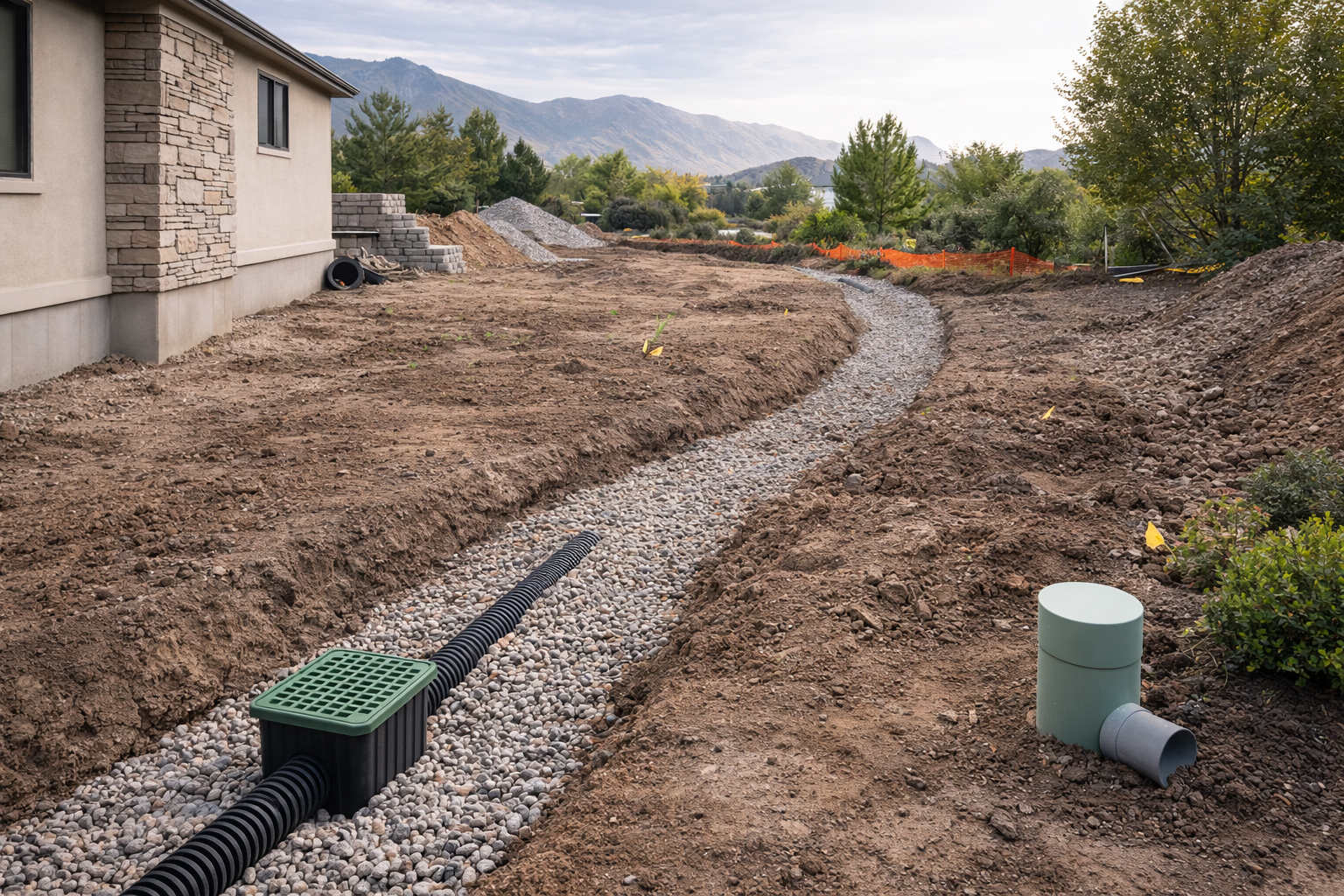
- French drains
- Catch basins
- Drainage pipe networks
In West Jordan’s clay soils, subsurface drainage is often critical to prevent water from sitting beneath lawns and patios.
Managing Downspout and Roof Runoff
Roof runoff is a major contributor to drainage problems.
Professionals ensure:
- Downspouts discharge away from foundations
- Water is redirected to drainage systems
- Splash blocks or drain pipes prevent erosion
Improper downspout placement can undo even the best grading work.
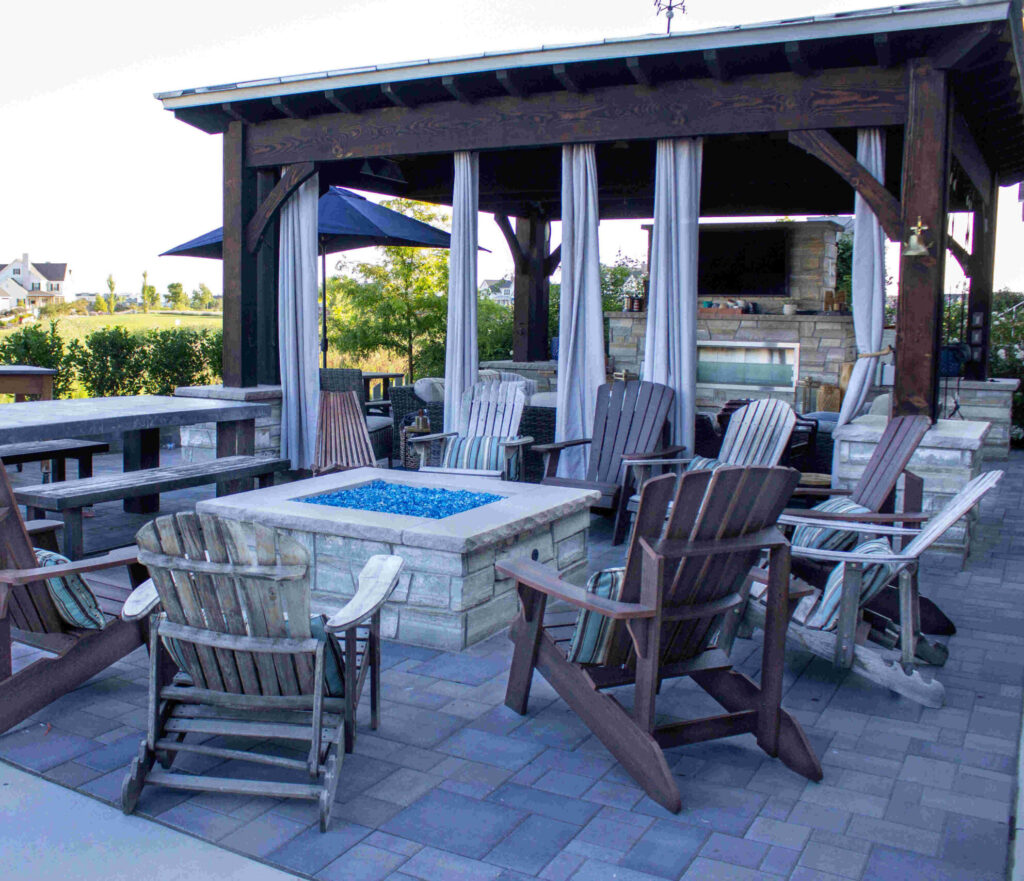
Drainage Considerations for Patios and Walkways
Hardscapes must be designed with drainage in mind.
Professionals:
- Slightly slope patios away from structures
- Install proper base materials
- Use drainage layers beneath pavers
- Avoid placing hardscapes in natural drainage paths
Without these steps, patios crack, shift, or hold water.
Protecting Plants Through Proper Drainage
Plants suffer when drainage is ignored.
Poor drainage leads to:
- Root rot
- Soil compaction
- Stunted growth
- Plant failure
Designers match plant selection and placement to drainage conditions, ensuring water-loving plants are placed in low areas and drought-tolerant plants are placed in higher zones.
Addressing Erosion and Soil Stability
Improper grading often causes erosion on slopes.
Solutions include:
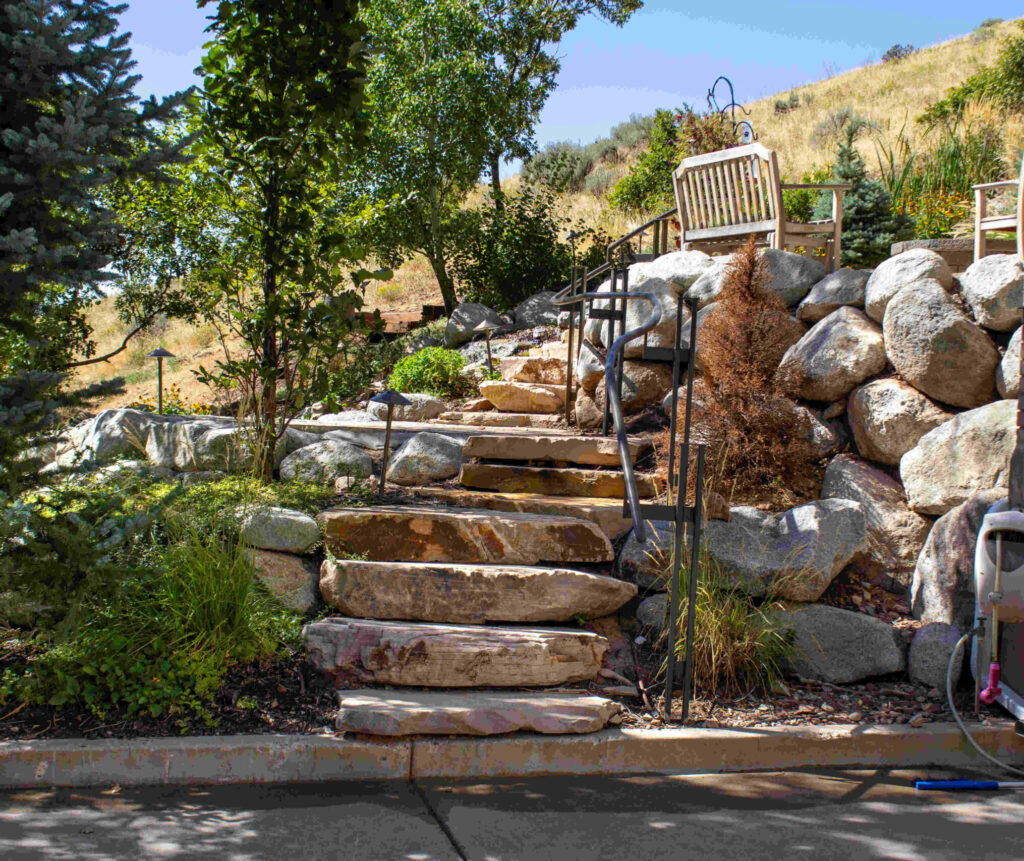
- Terracing
- Retaining walls
- Ground cover planting
- Stabilized soil amendments
These features control runoff speed and protect soil structure over time.
Long-Term Drainage Planning
Drainage solutions are designed for future conditions, not just today’s problems.
Professionals consider:
- Soil settling
- Plant maturity
- Increased runoff from new hardscapes
- Seasonal changes
This forward-thinking approach prevents repeat issues.
Why Professional Drainage Design Matters
Drainage mistakes are expensive to fix after installation.
Professional landscape designers:
- Analyze site-specific conditions
- Design systems that meet local requirements
- Prevent foundation and hardscape damage
- Save homeowners money long-term
In West Jordan, drainage and grading should never be an afterthought.
Final Thoughts
Handling drainage and grading issues correctly is the foundation of every successful landscape project.
By:
- Evaluating water flow
- Correcting slopes
- Installing proper drainage systems
- Planning for long-term performance
Professional design protects your home, your landscape, and your investment.
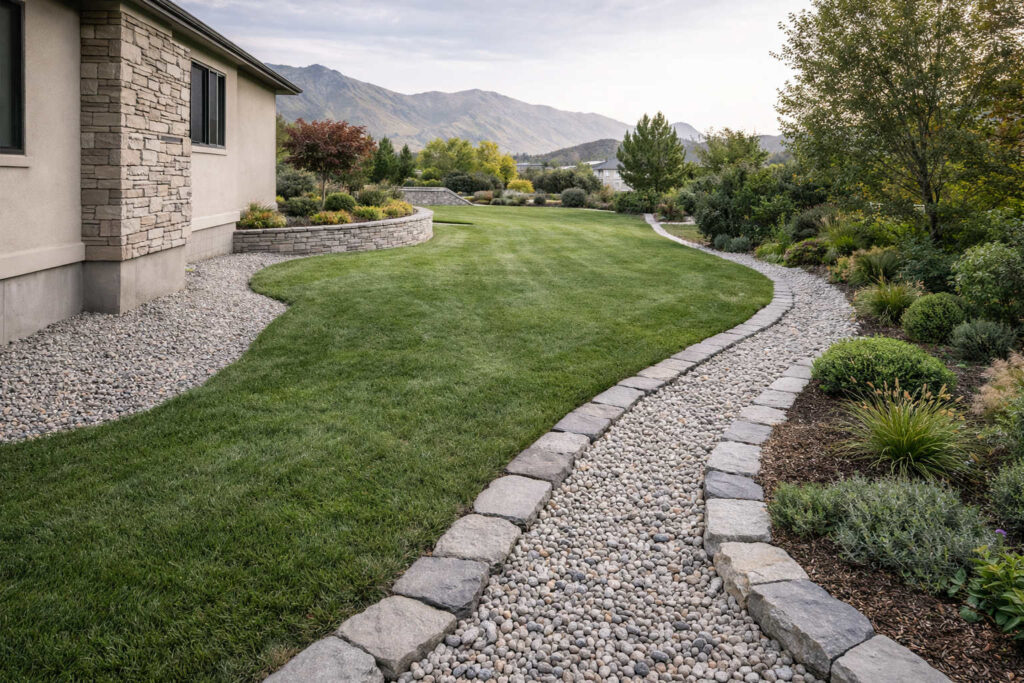
Experiencing drainage or grading issues in West Jordan, Utah?
Don’t wait for water damage to get worse.
Visit https://www.millburnlandscape.com/
to schedule a professional landscape consultation and protect your property the right way.
Frequently Asked Questions (FAQ)
Can drainage issues be fixed without redoing the whole yard?
Yes. Many drainage solutions can be installed without full landscape replacement.
How do I know if my yard has grading problems?
Signs include pooling water, soggy soil, foundation moisture, and erosion.
Are French drains effective in Utah soil?
Yes, when designed correctly and installed with proper materials.
Will fixing drainage improve plant health?
Absolutely. Proper drainage prevents root damage and plant stress.
Is drainage addressed before landscape installation?
It should be. Drainage and grading are always handled before patios, plants, or walkways are installed.