Utah’s arid climate challenges traditional landscaping, but it also opens the door to genuinely elegant, sustainable outdoor spaces — a thoughtfully designed low-water landscape can look refined and intentional while asking far less of the region’s limited water supply.
Why Low-Water Landscaping Makes Sense in Utah
Water is a genuinely limited resource here, and periodic drought conditions have made water-wise landscaping less of a trend and more of a practical necessity. A well-designed low-water landscape helps conserve water and reduce utility bills, keeps a yard compliant with local water usage guidelines during restriction periods, reduces the ongoing maintenance burden, and showcases the natural character of Utah’s high-desert ecosystem rather than fighting against it.
Native and Drought-Tolerant Plantings as the Foundation
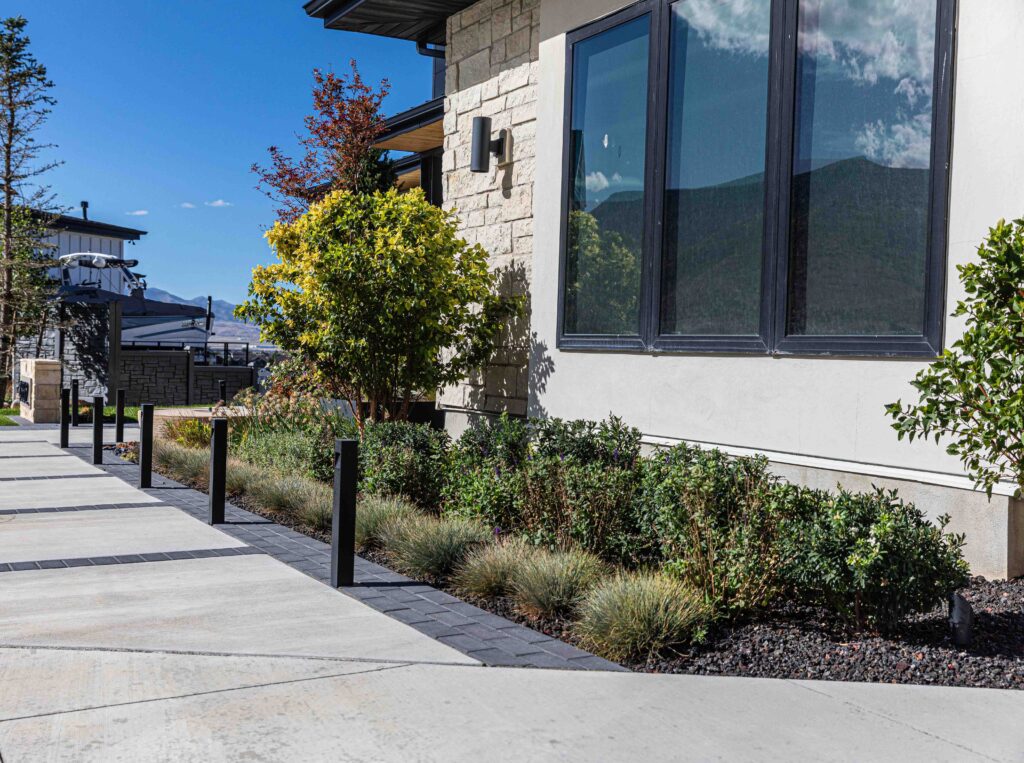
Selecting plants that genuinely thrive in Utah’s dry climate — blue fescue, Apache plume, penstemon, Utah serviceberry — adds texture, movement, and color without the constant irrigation demand of non-native ornamentals. Grouping plants by similar water needs, rather than mixing thirsty and drought-tolerant species together, keeps irrigation efficient and each plant genuinely healthy.
Gravel and Stone as Design Elements, Not Just Filler
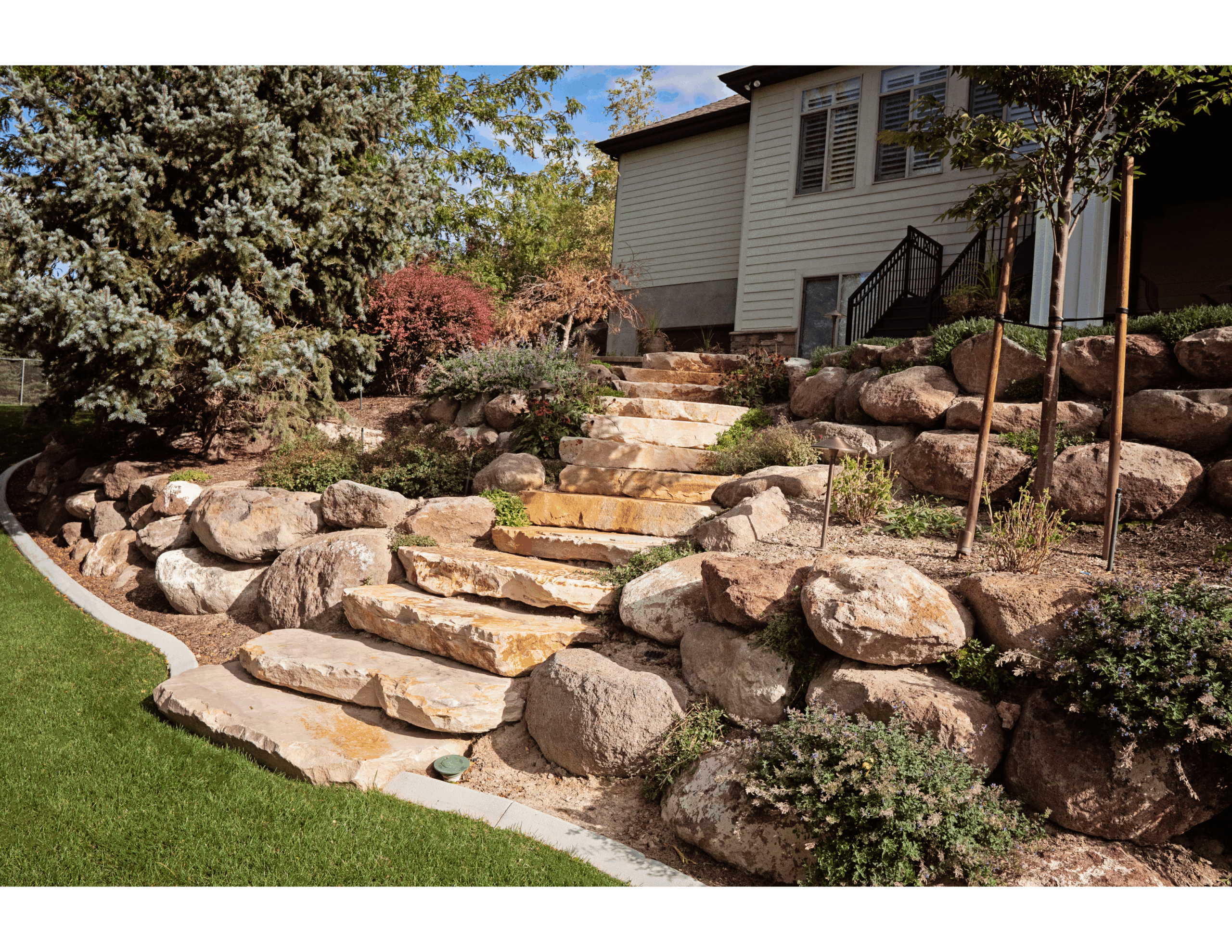
Crushed granite, decorative boulders, and river rock paths add real structure and a refined look while eliminating the water demand of turf in those areas. Used thoughtfully, these materials read as intentional design choices rather than simply “areas where the grass didn’t grow.”
Minimalist Lawn as an Accent, Not the Default
Rather than eliminating grass entirely, a smaller, well-placed lawn section can serve as a visual accent or a defined gathering spot — offering the contrast and softness turf provides without the water demand of covering an entire yard in it.
Efficient Irrigation That Matches the Design
Drip irrigation and smart controllers deliver water precisely where and when it’s needed, avoiding the waste that comes from broadcast sprinklers watering hardscape and gravel areas along with actual plantings.
Outdoor Living That Complements a Low-Water Design
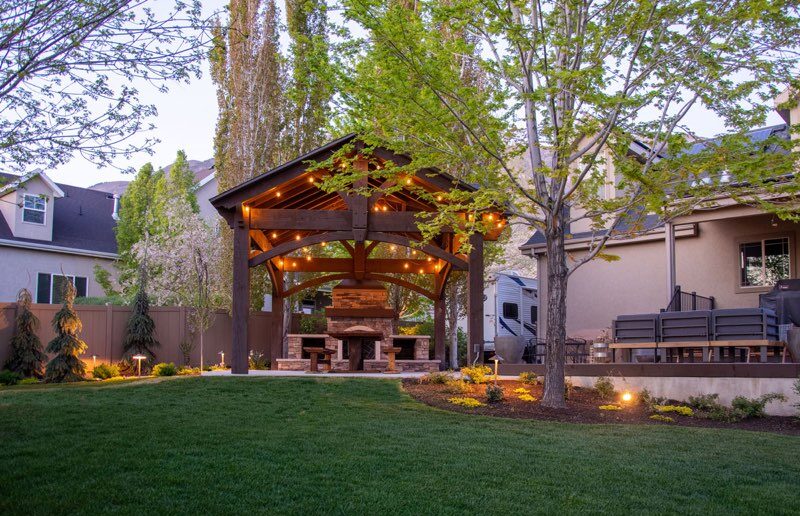
Pergolas, seating walls, fire pits, and patios built from natural materials elevate a low-water landscape’s usability without adding to its water demand, blending functional outdoor living space seamlessly with the surrounding drought-tolerant plantings.
Design Details That Elevate the Result
Repeating colors and textures throughout a design creates visual flow and a more polished, cohesive finish than a landscape assembled piecemeal. Working with a property’s natural slope, or adding subtle terracing, brings genuine depth and dimension. Low-voltage lighting extends a landscape’s presence into the evening, highlighting architectural features and walkways, and positioning seating or pathways to frame a mountain or valley view turns a practical design choice into a genuine amenity.
Frequently Asked Questions
Can a low-water landscape really look luxurious rather than sparse?
Yes — with thoughtful plant selection and hardscape design, native and drought-tolerant landscaping can look genuinely elegant rather than like a compromise.
Do I need to remove all grass for a water-wise yard?
Not necessarily — a smaller, well-placed lawn area can be kept as an accent while the rest of the yard shifts to lower-water plantings.
What’s the most efficient irrigation method for a Utah yard?
Drip irrigation paired with a smart controller generally delivers the most precise, lowest-waste watering for a low-water landscape design.
Balancing Hardscape and Planting Ratios
A common mistake in low-water design is going too far in either direction — an all-gravel yard can feel stark and uninviting, while too much planting undermines the water savings that make xeriscaping worthwhile. A ratio that keeps roughly a third to half of the yard in hardscape or gravel, balanced against thoughtfully grouped plantings, tends to produce the most visually rich result.
Seasonal Interest Beyond Summer Blooms
A genuinely well-planned low-water landscape doesn’t go flat once summer’s peak blooms fade. Ornamental grasses add movement and texture through fall, structural elements like boulders and dry creek beds maintain visual interest through winter, and early bloomers ensure the yard doesn’t look barren the moment spring arrives.
Millburn Lawn & Landscape designs low-water landscapes that stay true to Utah’s natural character. Schedule your consultation to get started.