One of the most common questions South Jordan homeowners ask when considering landscape design is:
“Can you design a landscape that actually works year-round?”
In Utah, this is a valid concern. With hot summers, snowy winters, and dramatic seasonal shifts, many landscapes look great for a few months and then feel unusable or neglected the rest of the year. A truly successful landscape should not disappear once fall arrives or become a maintenance burden in winter.
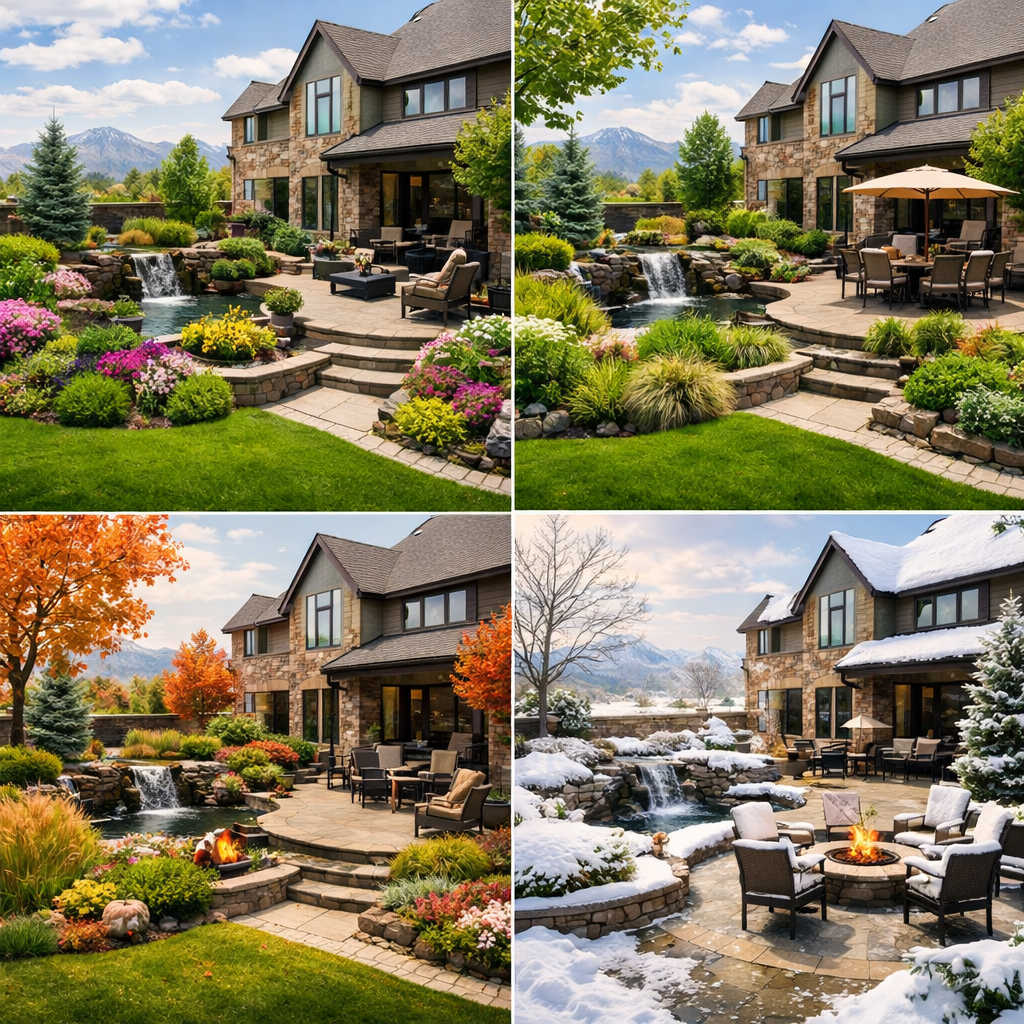
The good news is that year-round landscape design is absolutely possible when it’s planned intentionally. This guide explains how professional designers create landscapes in South Jordan that remain functional, attractive, and practical across all four seasons.
What “Year-Round Landscape Design” Really Means
A year-round landscape is not about forcing plants to look the same every month. Instead, it focuses on:
- Seasonal interest
- Functional outdoor spaces
- Safe and accessible circulation
- Low-maintenance durability
- Smart material and plant selection
In South Jordan, a year-round landscape balances beauty in spring and summer with structure, usability, and visual interest during fall and winter.
Designing With Utah’s Seasons in Mind
Professional designers begin by designing for the climate, not against it.
South Jordan landscapes must handle:
- Summer heat and sun exposure
- Sudden temperature drops
- Snow accumulation and snow storage
- Freeze-thaw cycles
- Seasonal irrigation shutdowns
Each of these factors influences how patios, walkways, plants, and hardscape features are placed.
Hardscape Is the Backbone of Year-Round Design
Plants change with the seasons, but hardscape provides structure all year.
Key hardscape elements include:
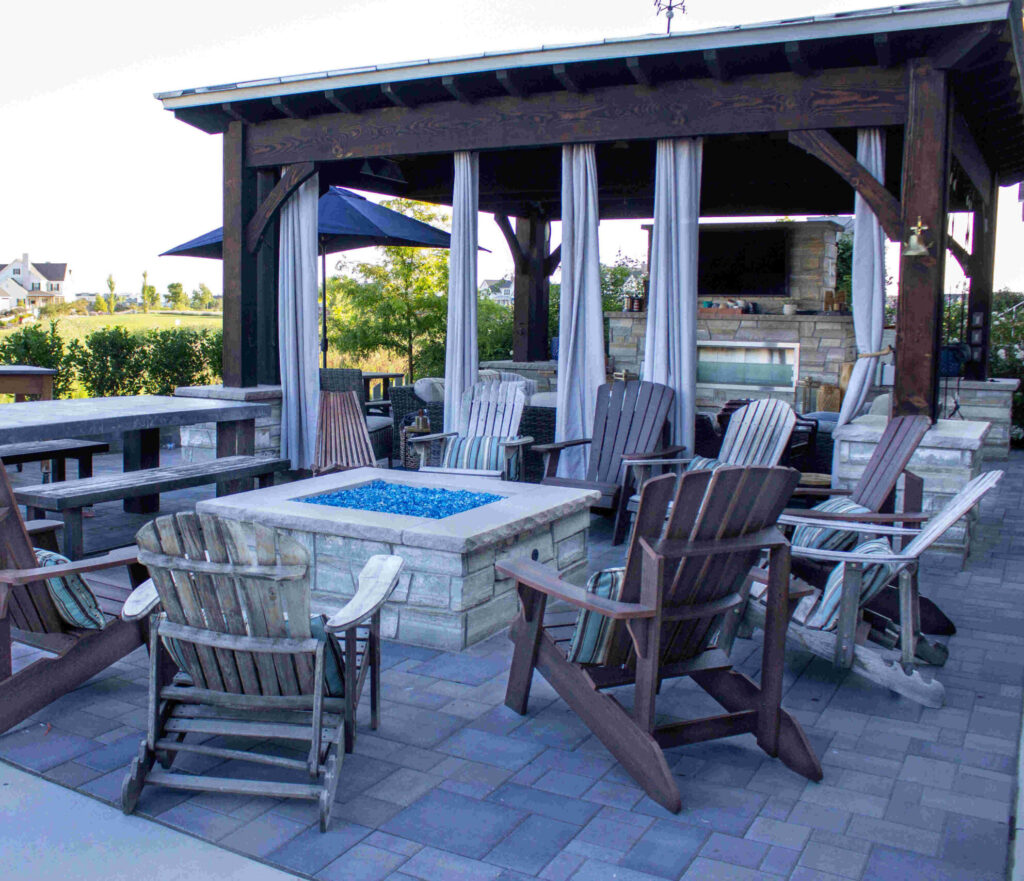
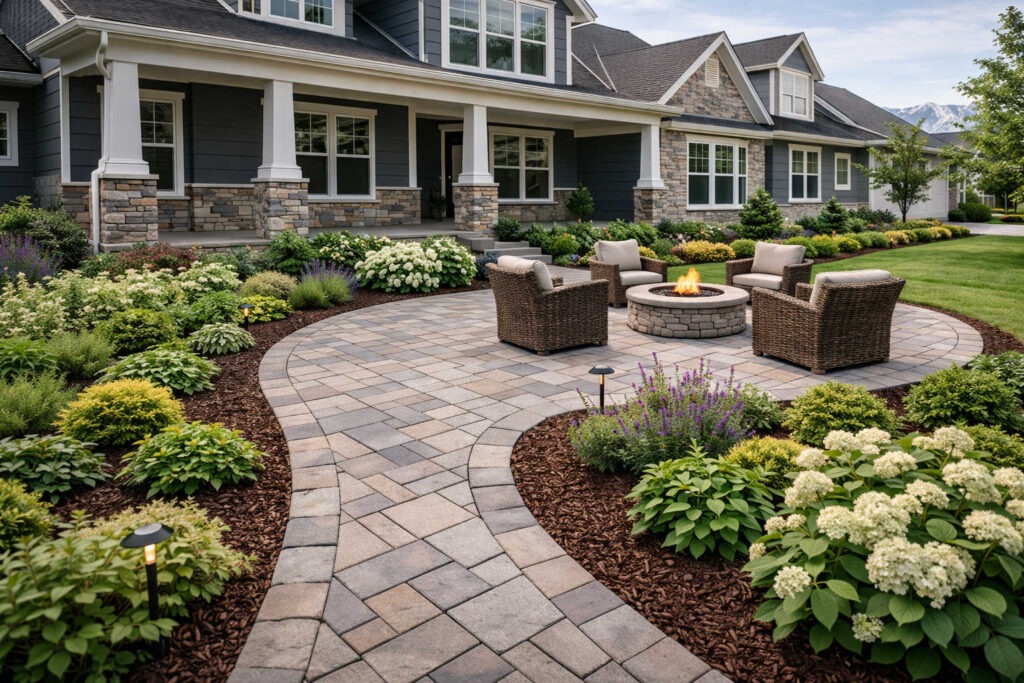
- Patios and seating areas
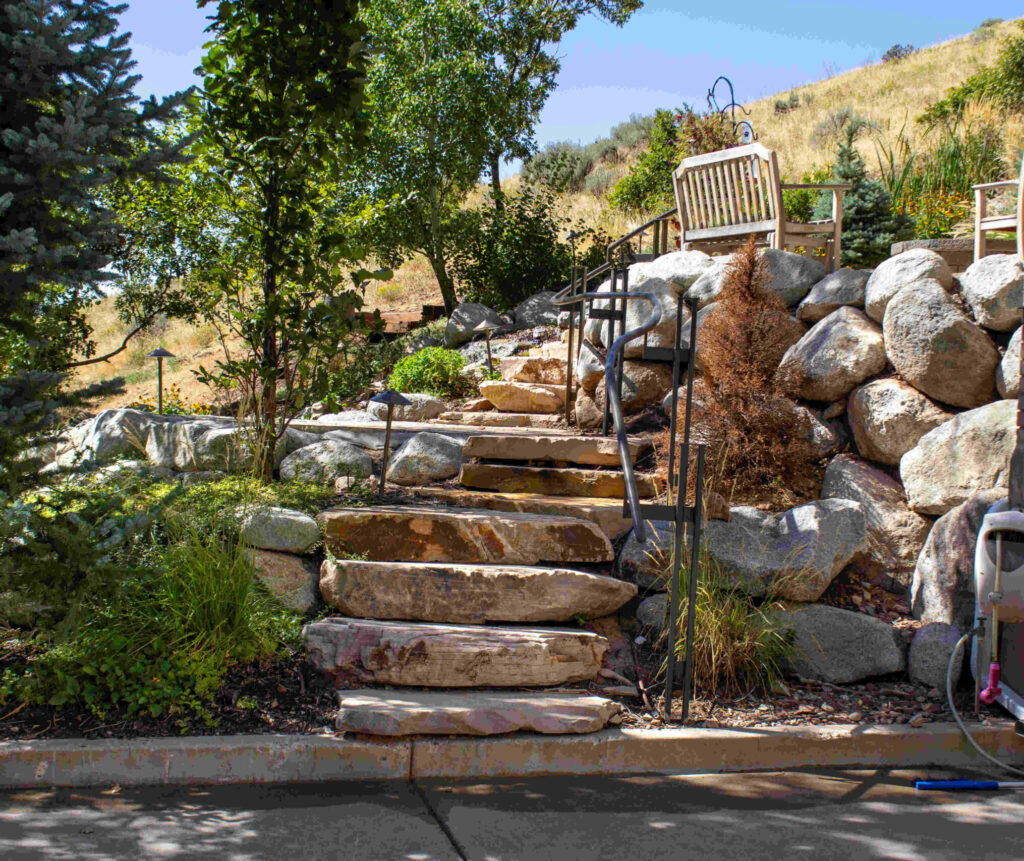
- Walkways and steps
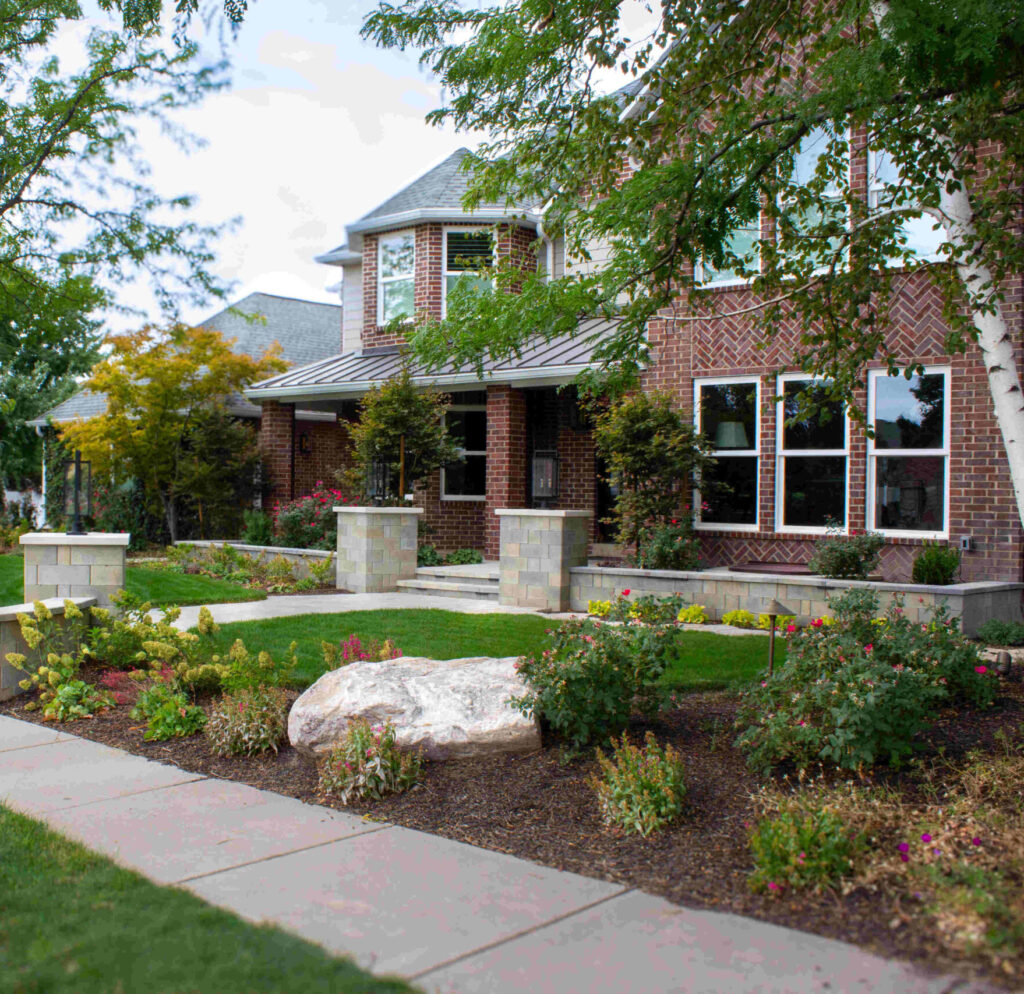
- Retaining walls
- Outdoor kitchens or fire features
In winter, these features provide visual definition and usability. In summer, they become gathering and entertainment spaces. Proper materials and installation ensure they hold up through South Jordan’s freeze-thaw cycles.
Plant Selection for All-Season Interest
Year-round landscapes rely on a layered planting strategy.
Designers combine:
- Evergreen trees and shrubs for winter structure
- Perennials for seasonal color
- Ornamental grasses for texture and movement
- Trees that provide shade in summer and interest in fall
This layered approach ensures the landscape never feels empty, even when flowers fade.
Designing Outdoor Spaces for Multiple Seasons
A landscape that works year-round includes spaces designed for different times of year.
Examples include:
- Patios positioned for summer shade
- Fire features that extend outdoor use into fall and winter
- Wind protection through planting and walls
- Covered or partially sheltered seating areas
In South Jordan, these features significantly extend how long homeowners can enjoy their outdoor spaces.
Managing Snow, Ice, and Winter Safety
Year-round design also addresses winter safety and functionality.
Designers consider:
- Walkway placement for snow removal
- Proper slopes to prevent ice buildup
- Clear paths between entrances
- Areas for snow storage away from plants
These considerations prevent damage and improve safety without sacrificing aesthetics.
Smart Irrigation and Seasonal Transitions
Year-round landscapes use irrigation systems designed for seasonal change.
This includes:
- Zoned irrigation for different plant needs
- Efficient drip systems
- Easy winterization access
Smart irrigation ensures plants thrive during the growing season while simplifying shutdown and startup during winter.
Low-Maintenance Design for Every Season
A landscape that works year-round should not demand constant attention.
Professional designs minimize:
- Excessive pruning
- Seasonal replanting
- Lawn-heavy layouts
- High-water-demand plants
In South Jordan, low-maintenance landscapes remain clean and intentional even during dormant seasons.
Designing for Long-Term Performance
Year-round landscapes are designed for longevity.
Designers plan for:
- Mature plant size
- Material durability
- Soil stability
- Changing homeowner needs
This prevents overcrowding, cracking hardscape, and declining plant health over time.
Why Professional Planning Matters
Many homeowners try to solve seasonal issues after installation. Professional designers solve them before construction begins.
Expert planning:
- Reduces future maintenance costs
- Prevents seasonal usability issues
- Improves property value
- Creates a cohesive, lasting design
In South Jordan, year-round landscape success depends on thoughtful, site-specific planning.
Why Professional Planning Matters
Many homeowners try to solve seasonal issues after installation. Professional designers solve them before construction begins.
Expert planning:
- Reduces future maintenance costs
- Prevents seasonal usability issues
- Improves property value
- Creates a cohesive, lasting design
In South Jordan, year-round landscape success depends on thoughtful, site-specific planning.
Final Thoughts
Yes, you can absolutely design a landscape that works year-round.
When done correctly, a year-round landscape:
- Looks intentional in every season
- Provides functional outdoor spaces
- Handles Utah’s climate with ease
- Requires less ongoing effort
The key is designing with all seasons in mind, not just summer.
Want a landscape that works in every season in South Jordan, Utah?
Professional design makes all the difference.
Visit https://www.millburnlandscape.com/
to schedule a landscape design consultation and create an outdoor space built for year-round living.
Frequently Asked Questions (FAQ)
Will my landscape look bare in winter?
No. Evergreen plants, hardscape, and structural elements maintain visual interest.
Can outdoor spaces still be used in colder months?
Yes. Fire features, wind protection, and thoughtful layout extend usability.
Is year-round landscape design more expensive?
Not necessarily. Proper planning often reduces long-term maintenance and replacement costs.
Do year-round landscapes require more maintenance?
Typically less. They rely on durable materials and climate-appropriate plants.
Is year-round design good for resale value?
Yes. Buyers appreciate landscapes that look good and function beyond summer.