Planting Smart in West Jordan, Utah
Every West Jordan homeowner who has ever watched a carefully selected plant struggle through its first summer — or worse, not survive at all — knows the same hard lesson: not every plant belongs in every place. What looks gorgeous at the nursery may be completely wrong for West Jordan‘s alkaline soils, intense UV exposure, freeze-thaw winters, and the notoriously dry summer heat of the Salt Lake Valley.
The good news is that when you plant smart — selecting species proven to thrive in West Jordan‘s specific conditions — you get landscapes that are not only beautiful but genuinely low-maintenance, water-efficient, and resilient year after year. Whether you are redesigning your entire yard, filling a new planting bed, or simply replacing a plant that never quite made it, this guide gives you the definitive answer to the question every West Jordan gardener eventually asks: What plants actually grow best here?
Let’s start with understanding what your plants are up against.
Understanding West Jordan’s Growing Conditions
West Jordan sits at approximately 4,330 feet in elevation in the eastern shadow of the Oquirrh Mountains. That elevation matters enormously for plant selection. It means more intense UV radiation than lower-elevation gardens, colder overnight lows even during summer, and hard frosts that arrive earlier in fall and linger later in spring than many national planting guides account for.
West Jordan falls in USDA Hardiness Zone 7a, with minimum winter temperatures typically reaching 0 to 5 degrees Fahrenheit. However, microclimates vary significantly across the city — a sheltered south-facing yard against a brick wall can support plants a full zone warmer, while an exposed north-facing slope may struggle with zone 6 conditions.
The soils across most of West Jordan are another defining factor. Expect heavy clay content, alkaline pH (commonly 7.5 to 8.5), and poor drainage in many areas. These conditions eliminate a wide range of otherwise attractive plants and make soil amendment an important step in any new planting project.
Finally, West Jordan receives approximately 15 to 17 inches of annual precipitation — most of it as winter snowpack rather than summer rainfall. This means irrigation is not optional for most landscapes; it is essential. But the right plant selections can dramatically reduce how much irrigation you need.
Best Trees for West Jordan, Utah Landscapes
Trees are the most long-term investment in any West Jordan landscape — a well-chosen tree will provide shade, beauty, and value for decades. Choosing the wrong species means years of struggle followed by eventual failure. Here are the proven performers for West Jordan’s conditions.
Shade Trees
For large shade trees, the Autumn Blaze Maple (Acer x freemanii ‘Autumn Blaze’) is one of the most consistently beautiful and reliable performers in the Salt Lake Valley. It tolerates West Jordan’s alkaline clay soils better than many other maples, grows quickly to 40 to 50 feet, and delivers some of the most spectacular fall color available in Utah’s landscape palette.
The Thornless Honeylocust (Gleditsia triacanthos inermis) is another top choice for West Jordan yards. Its fine, feathery leaflets create dappled shade rather than deep shade — ideal under patios — and it is genuinely drought-tolerant once established. It handles clay soils and alkaline pH without complaint.
For homeowners wanting a native option, the Gambel Oak (Quercus gambelii) is a superb choice that supports local pollinators and wildlife, tolerates drought, and delivers beautiful golden fall color. It grows slowly but is virtually indestructible once established in West Jordan’s conditions.
Ornamental Trees
For smaller ornamental trees — the 15 to 25 foot range — the Serviceberry (Amelanchier x grandiflora) stands out as one of the best all-around choices for West Jordan. It offers clouds of white spring flowers, edible berries that attract birds in early summer, and vivid orange-red fall color. Completely cold hardy and quite drought tolerant once established.
The Persian Ironwood (Parrotia persica) deserves far more attention in West Jordan landscapes. It offers four-season interest — exfoliating bark in winter, burgundy flowers in late winter before leaves emerge, dense green foliage in summer, and spectacular multi-colored fall display. It handles alkaline soils and summer heat with ease.
Best Shrubs for West Jordan, Utah Gardens
Shrubs form the backbone of most West Jordan landscapes — providing structure, screening, and seasonal interest across the entire yard. The following species are proven performers in local conditions.
Flowering Shrubs
Lilac (Syringa vulgaris) was practically made for West Jordan’s climate. It loves the cold winters that trigger its dormancy, thrives in alkaline soils, and rewards homeowners every May with an unmatched fragrant flower display. Common lilac, Dwarf Korean Lilac, and Bloomerang varieties all perform exceptionally well.
Potentilla (Dasiphora fruticosa) — sometimes called Shrubby Cinquefoil — is perhaps the most underappreciated shrub for West Jordan landscapes. It blooms from late spring through first frost in cheerful yellow, orange, or white flowers, tolerates clay soils and alkaline pH, handles both drought and occasional overwatering, and needs virtually no maintenance. It is truly bulletproof.
Spirea varieties — particularly Anthony Waterer, Double Play, and Goldmound — are excellent performers in West Jordan, offering dense mounding forms, colorful foliage, and reliable summer bloom. They tolerate both clay soils and alkaline conditions well.
Evergreen Shrubs
For year-round structure and low maintenance, Mugho Pine (Pinus mugo) is one of the best evergreen shrub choices for West Jordan. It stays compact and rounded without pruning, handles wind and cold with ease, and needs minimal water once established. Emerald Green Arborvitae (Thuja occidentalis ‘Smaragd’) is the top choice for privacy hedging, providing dense columnar evergreen screening that handles Utah’s freeze-thaw winters without browning.
West Jordan Plant Quick Reference
The table below summarizes top-performing plants across categories for quick reference when planning or shopping.
| Plant Name | Type | Best Use | Water Needs |
| Autumn Blaze Maple | Shade Tree | Lawn specimen, street tree | Moderate once established |
| Thornless Honeylocust | Shade Tree | Patio shade, lawn tree | Low once established |
| Serviceberry | Ornamental Tree | Small yard, wildlife garden | Low to moderate |
| Lilac | Flowering Shrub | Border, foundation, screen | Low once established |
| Potentilla | Flowering Shrub | Border, low hedge, mass planting | Very low |
| Mugho Pine | Evergreen Shrub | Foundation, accent, slope | Very low |
| Lavender | Perennial | Border, path edge, pollinator | Very low |
| Russian Sage | Perennial | Mass planting, border back | Very low |
| Salvia | Perennial | Border, container, pollinator | Low |
| Blue Oat Grass | Ornamental Grass | Accent, border edge | Very low |
| Creeping Phlox | Groundcover | Slope, rock garden, wall top | Low |
| Prairie Winds Blue Dune Lyme Grass | Groundcover/Grass | Erosion control, slope | Very low |
Best Perennials and Groundcovers for West Jordan, Utah
Perennials are where West Jordan landscapes really come alive with color and wildlife activity. The key is selecting species that are genuinely adapted to alkaline, clay-heavy soils and can handle summer drought without supplemental irrigation once established.
Top Perennial Performers
Lavender (Lavandula angustifolia) is arguably the single best all-around perennial for West Jordan. It loves alkaline, well-drained soils, handles full sun and heat, requires almost no supplemental water once established, repels deer, attracts pollinators abundantly, and smells extraordinary. English Lavender and Hidcote varieties are the most cold-hardy options for West Jordan’s zone 7a conditions.
Russian Sage (Perovskia atriplicifolia) is another outstanding performer — dramatic silver-blue spires from midsummer through fall, genuinely drought-tolerant, and completely at home in West Jordan’s alkaline soils. It pairs beautifully with ornamental grasses and yellow-flowered companions like Rudbeckia.
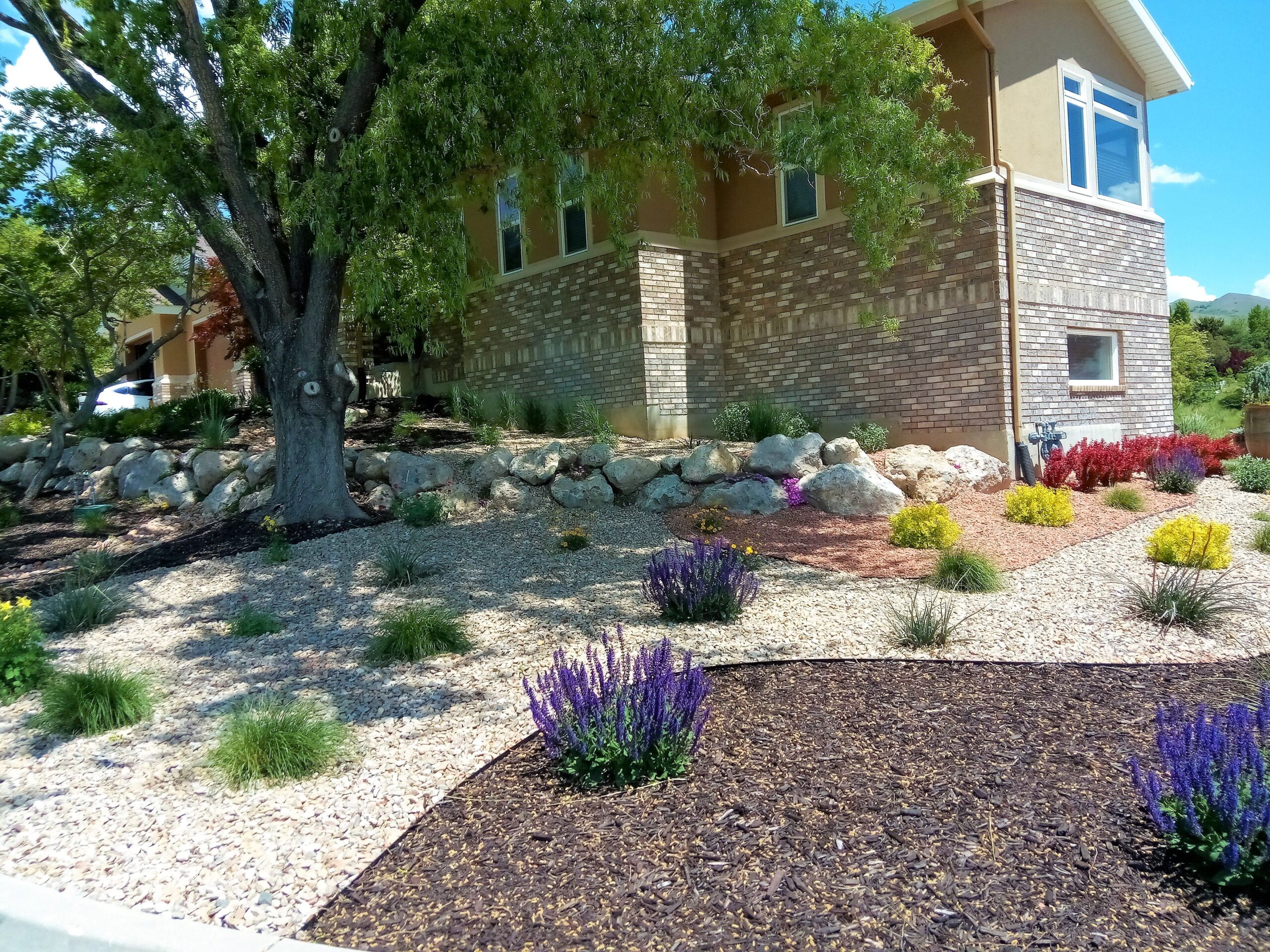
Salvia varieties — particularly May Night, East Friesland, and Caradonna — are excellent for West Jordan gardens. They deliver rich blue-purple summer color, attract hummingbirds and bees, handle alkaline soils well, and rebloom reliably if deadheaded. Completely cold-hardy in zone 7a.
For bold summer color, Rudbeckia (Black-Eyed Susan) is nearly foolproof in West Jordan conditions. It thrives in heat, tolerates drought and clay soils, spreads reliably over time, and provides weeks of bright golden summer flowers beloved by pollinators.
Groundcovers for West Jordan
Creeping Phlox (Phlox subulata) is one of the showiest groundcovers available for West Jordan landscapes. In April and May it smothers itself in pink, lavender, or white flowers, then provides a tidy evergreen mat for the rest of the season. It handles slopes, rock gardens, and dry conditions beautifully.
Ice Plant (Delosperma cooperi) is a surprisingly hardy succulent groundcover that handles West Jordan’s alkaline soils and summer heat with ease. It covers slopes and rock garden areas with a low carpet of fleshy foliage and produces vibrant magenta flowers throughout summer. Ornamental grasses such as Blue Oat Grass and Karl Foerster Feather Reed Grass add year-round texture and movement while requiring almost no care once established.
Ready to Build a Beautiful, Thriving West Jordan Landscape?
Stop guessing and start growing with confidence. Our West Jordan landscape design team knows exactly which plants perform in your soil, your climate, and your neighborhood — and we will help you create a yard that looks great and thrives with minimal effort.
Book Your Free Plant Selection and Landscape Design Consultation Today
Frequently Asked Questions
Q What is the USDA hardiness zone for West Jordan, Utah?
West Jordan falls primarily in USDA Hardiness Zone 7a, with minimum winter temperatures typically reaching 0 to 5 degrees Fahrenheit. Microclimates within your specific yard — sun exposure, wind protection, proximity to structures — can shift effective conditions up or down by a half zone.
Q What are the best drought-tolerant plants for West Jordan, Utah?
Top drought-tolerant choices for West Jordan include Lavender, Russian Sage, Potentilla, Thornless Honeylocust, Gambel Oak, Blue Oat Grass, Creeping Phlox, and Ice Plant. These species are all proven performers in the Salt Lake Valley’s dry conditions and require minimal supplemental irrigation once established.
Q Do I need to amend the soil before planting in West Jordan?
In most cases, yes. West Jordan soils are typically high in clay content and alkaline in pH. For most ornamental plantings, incorporating compost to improve drainage and structure is worthwhile. Alternatively, selecting plants genuinely adapted to alkaline clay soils — which many of the species in this guide are — reduces or eliminates the need for extensive amendment.
Q What trees grow fastest in West Jordan, Utah?
For fast-growing shade trees, Autumn Blaze Maple and Thornless Honeylocust are the top performers in West Jordan, both capable of growing 3 to 5 feet per year under good conditions. Lombardy Poplar grows very quickly but is short-lived and not generally recommended for residential landscapes.
Q Are there any plants I should avoid in West Jordan, Utah?
Several popular plants consistently underperform or fail in West Jordan. These include Rhododendrons and Azaleas (require acid soil), Japanese Maples (struggle in alkaline soil and wind), and many tropical or subtropical annuals used as perennials elsewhere. Always verify a plant’s soil pH tolerance and cold hardiness before purchasing.