The Yard That Stopped Traffic on Olympus Hills Drive
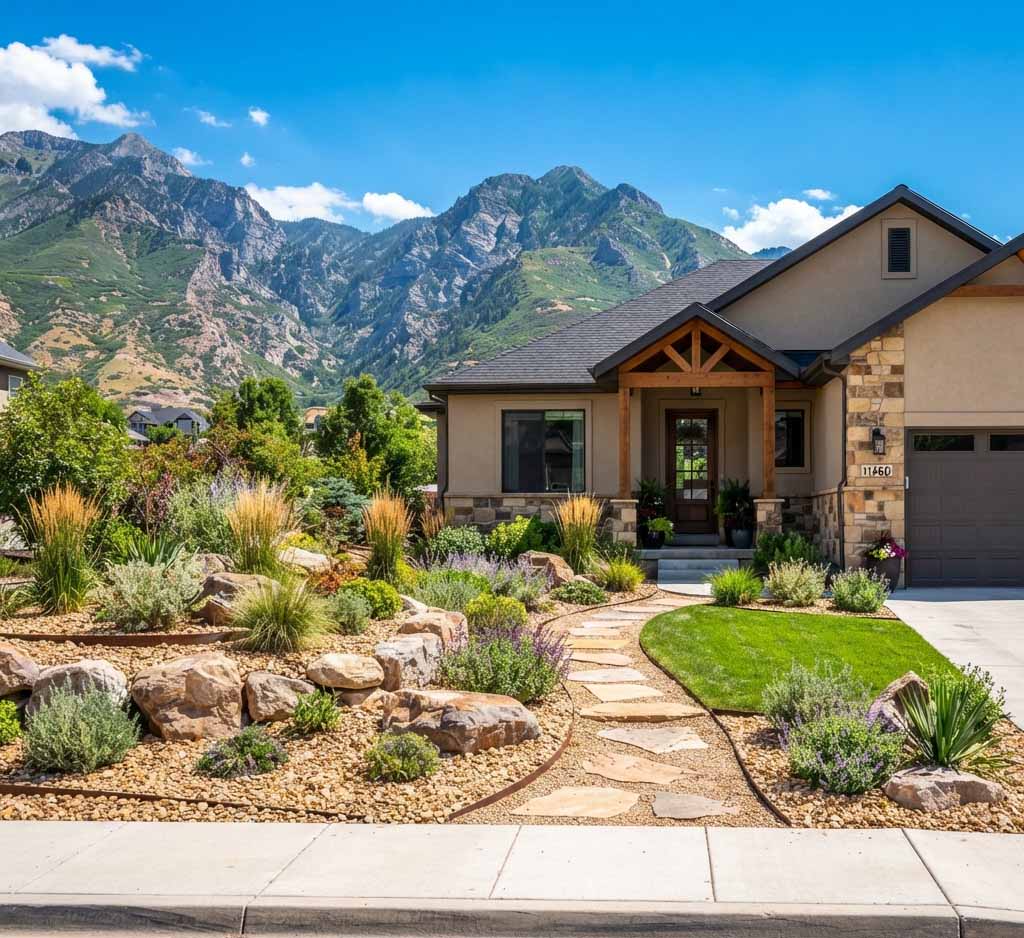
A few years ago, a homeowner on the east side of Holladay did something that made their neighbors slow down when they drove past. They tore out their front lawn entirely — every inch of Kentucky Bluegrass, the sprinkler heads, the monthly fertilizer routine, all of it — and replaced it with something that looked, frankly, like it belonged in a design magazine.
Bands of lavender and Russian sage in deep purple and silver-blue. Clusters of ornamental grass catching the light from the Wasatch Range in the background. A wide flagstone pathway bordered by creeping thyme releasing fragrance underfoot. Not a blade of traditional turf anywhere.
The phone calls to their landscape designer started almost immediately. Neighbors wanted to know: what is that? How does it work? What does it cost? Can you do mine next?
That yard was not a fluke. Across Holladay — in Olympus Hills, along the Cottonwood Creek corridor, in the older established neighborhoods near Fort Union — a quiet but unmistakable shift is happening in landscape design. The most beautiful, most talked-about, most photographed yards in this part of Salt Lake County are using almost no grass at all. And the homeowners who have made the switch are not going back.
Here is what they know — and how you can do the same thing in your Holladay yard.
The Water Math That Is Changing Holladay Landscape Design
The conversation around lawn alternatives in Holladay is not just aesthetic — it is financial. Utah is in a prolonged drought cycle, Salt Lake County water rates have risen steadily over the past decade, and the cultural consensus around “a good yard means green grass” is shifting fast in an informed community like Holladay.
Traditional Kentucky Bluegrass — still the most common lawn grass in Holladay — requires approximately 60 to 75 inches of supplemental irrigation per year in Utah’s semi-arid climate. That is roughly three to four times the region’s annual natural rainfall doing nothing. On a typical Holladay lot with 3,000 square feet of turf, you are running 100,000 or more gallons of water per year just to keep the grass alive at the standard expected by the neighborhood.
A well-designed drought-tolerant landscape using species genuinely adapted to Holladay’s conditions uses 70 to 85 percent less water than that same area in traditional turf. The annual water savings on a typical Holladay property ranges from $800 to $2,000 depending on lot size and current irrigation habits.
That is not a rounding error. Over ten years, homeowners who have replaced traditional lawns with thoughtful drought-tolerant landscape design in Holladay are effectively pocketing $8,000 to $20,000 in water savings — while living in a yard that looks dramatically better.
What These Holladay Yards Actually Look Like — and Why They Work
The first misconception to address is that a lawn-free or low-lawn landscape design means gravel and cacti. It does not — at least not in a Holladay yard designed with the local aesthetic and climate in mind.
The most successful no-lawn and low-lawn landscape designs in Holladay share a consistent design approach: they replace undifferentiated turf with a layered plant palette that provides visual interest at every height, across every season, with a hardscape framework that gives the design structure and definition.
The Plant Palette That Works in Holladay
Holladay sits at approximately 4,400 to 4,900 feet in elevation along the Wasatch Front foothills, falling in USDA Zone 6b to 7a. The successful plants for a Holladay landscape design without grass are drought-tolerant, cold-hardy, and genuinely beautiful — not just utilitarian.
At the lower layer, Creeping Thyme, Ice Plant, and low-growing Sedums create dense, colorful ground cover that suppresses weeds without the water demands of turf. Creeping Phlox provides one of the most spectacular spring displays available in any Holladay landscape, carpeting in pink, lavender, or white before most other plants have even leafed out.
In the mid-layer, Lavender, Russian Sage, Salvia, and Catmint provide season-long color, pollinator activity, and fragrance. These plants are perfectly matched to Holladay’s alkaline soils and dry summers — they actively thrive in conditions that stress traditional turf. Karl Foerster Feather Reed Grass and Blue Oat Grass add movement, texture, and four-season structure that traditional lawns simply cannot provide.
At the upper layer, drought-adapted flowering shrubs like Potentilla and native Serviceberry, combined with strategically placed specimen trees, create the vertical dimension that transforms a flat yard into a composed landscape. Against Holladay’s Wasatch Mountain backdrop, this layered approach looks intentional, sophisticated, and authentically local.
The Hardscape Framework That Makes It Cohere
One of the reasons no-lawn designs in Holladay can look stunning while a neglected lawn looks sad is structural clarity. A well-designed landscape without turf always has a strong hardscape framework — defined pathways, clean planting bed borders, specimen rocks or boulders integrated into the design, and transition elements that connect spaces with visual intentionality.
In Holladay landscape design, flagstone or concrete paver pathways in warm sandstone or charcoal tones complement the natural stone character of the Wasatch foothills above. Decomposed granite or crushed granite in warm earth tones provides a clean, permeable ground surface between planted areas that reads as designed rather than bare. A few large boulders, native to the Wasatch region and placed with considered intentionality, anchor the design and make it look like it belongs to its specific place.
The Holladay Homeowner’s Guide to Making the Switch
Replacing a traditional lawn with drought-tolerant landscape design in Holladay is not a weekend DIY project — it is a meaningful landscape investment that deserves professional design and execution. Here is how the most successful Holladay conversions are approached.
Start with a Design Plan, Not a Shopping Cart
The most common mistake homeowners make when attempting a turf-to-landscape conversion is buying plants first and figuring out the design second. The result is a collection of individually attractive plants that do not work together as a composition.
A professional landscape design for a Holladay property starts with a site analysis — sun exposure throughout the day, existing drainage patterns, soil conditions, views to preserve and sightlines to screen — and translates those site-specific findings into a plan that makes every planting decision purposeful. In Holladay, where views of the Wasatch Range from the back yard and street presence from the front yard both matter, this design intentionality is especially important.
Remove Turf the Right Way
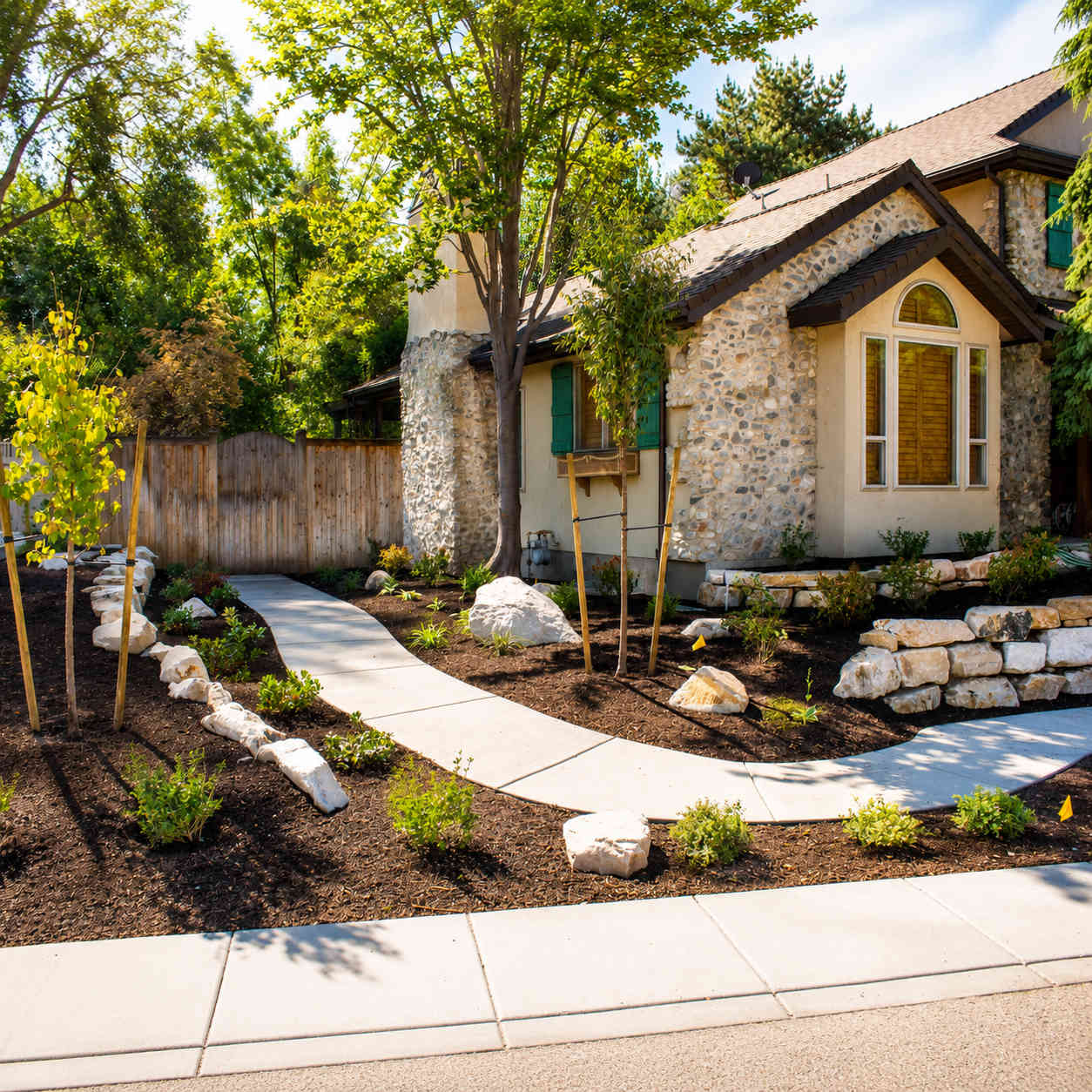
Turf removal in Holladay requires more than pulling grass. To create conditions where drought-tolerant plants will establish successfully, the underlying soil must be prepared. Sod removal (by hand or with a sod cutter) is typically followed by soil amendment across the full planting area, installation of irrigation designed for the new plant palette’s lower water requirements, and a fresh layer of organic mulch to retain moisture during the establishment period.
Some Holladay homeowners choose solarization — covering existing turf with clear plastic during Holladay’s intense summer months to kill grass through heat. Others use targeted herbicide applications. Your landscape designer will recommend the most effective approach for your specific situation.
Plan for a Three-Year Establishment Arc
A drought-tolerant landscape in Holladay looks different at year one, year two, and year three — and the homeowners who are happiest with their conversions are the ones who understood this arc upfront. Year one requires regular establishment irrigation even for drought-tolerant species; year two sees plants filling in and the design beginning to read as intended; year three is when a well-designed Holladay landscape fully reveals itself, and the dramatic improvement over the old turf becomes undeniable.
This is not a project for the impatient — but it is deeply rewarding for the homeowner who commits to it.
Why Now Is the Right Time for Holladay Homeowners
The cultural and economic conditions that make this the right moment for Holladay landscape design to move away from traditional turf are converging in ways that have not existed before. Water rates are rising. Drought conditions are persistent. Water rebate programs are active and funded. The design community in Utah has caught up with the aesthetic possibilities of drought-tolerant planting, so the options available today are genuinely beautiful rather than merely practical. And the Holladay homeowners who have already made the transition are living proof that the result is worth it.
There is also a real estate dimension that cannot be ignored. The Salt Lake Valley luxury real estate market has increasingly identified mature, thoughtfully designed landscapes as a meaningful differentiator between comparable properties. A Holladay yard that tells a design story — that has clearly been planned, invested in, and maintained — commands attention from buyers and appraisers alike.
The yards that are stopping traffic in Holladay right now are not the ones with the most grass. They are the ones with the best design.
Transform Your Holladay Yard Before Your Neighbor Does
The yards that are turning heads in Holladay right now were designed by professionals who understand this specific neighborhood, this specific climate, and what it takes to create something genuinely beautiful without the water bill and maintenance burden of traditional turf. If you are ready to start a conversation about what your Holladay property could become, we would love to hear from you.
Contact us today to schedule your Holladay landscape design consultation before your neighbor gets there first.
Frequently Asked Questions
Q Will a no-lawn yard look good through all four seasons in Holladay?
Yes — when designed correctly. A well-layered Holladay drought-tolerant landscape provides visual interest year-round: spring bloom from Creeping Phlox and bulbs, summer color from Lavender, Salvia, and Russian Sage, fall texture from ornamental grasses and shrub foliage color, and winter structure from evergreen groundcovers, ornamental conifers, and interesting bark on specimen trees. Unlike a dormant brown lawn, a thoughtfully designed Holladay landscape looks actively beautiful in every season.
Q How much does it cost to replace a lawn with drought-tolerant landscaping in Holladay, Utah?
A professional turf-to-landscape conversion in Holladay typically ranges from $8,000 to $30,000 depending on lot size, design complexity, hardscape elements included, and plant selection. Many Holladay homeowners qualify for water rebates from the Jordan Valley Water Conservancy District that offset a meaningful portion of the installation cost. The long-term water savings further reduce the effective net investment over time.
Q Do I need to remove all my lawn, or can I keep some grass?
Many of Holladay’s most successful landscape designs keep a small, strategically placed area of turf — typically in a back yard play area, a defined visual panel in the front, or a specific functional zone — and transition surrounding areas to drought-tolerant planting. The goal is right-sizing the lawn to match actual use, not necessarily eliminating it entirely. Even replacing 60 to 70 percent of existing turf delivers dramatic water savings and design improvement.
Q What happens to my irrigation system if I remove the lawn?
Your existing irrigation infrastructure is typically reconfigured rather than removed. Spray heads designed for turf are converted to drip irrigation appropriate for the new planting areas. This conversion is usually performed during the landscape installation and is factored into the project scope and cost. A properly drip-irrigated drought-tolerant landscape uses significantly less water than a spray-irrigated turf area, and the conversion often reduces irrigation operating costs immediately.
Q Are drought-tolerant plants in Holladay safe for dogs?
Many of the best drought-tolerant plants for Holladay landscapes are completely pet-safe — Lavender, ornamental grasses, Potentilla, Serviceberry, and Creeping Phlox among them. Some common landscape plants do carry toxicity risks for dogs, including certain Salvia species, Catmint in large quantities, and some ornamental bulbs. Always verify the pet safety of specific plant selections with your landscape designer and cross-reference with the ASPCA’s online plant toxicity database.
Q How do I find a landscape designer in Holladay who specializes in water-wise design?
Look for landscape design firms with demonstrated experience in drought-tolerant and xeriscape-style design in the Salt Lake Valley, specifically. Ask to see completed Holladay or Wasatch Front projects that have been through at least two full growing seasons — the best indicator of a design that actually performs in the local climate. References from Holladay homeowners who have completed turf conversions are the most reliable signal of relevant expertise.