You’ve got the vision — a beautiful new patio, a pergola, a privacy fence, maybe even an outdoor kitchen. You’ve done the research, picked the materials, and you’re ready to move forward. But there’s one question you absolutely must answer before a single shovel hits the ground: Will your design meet South Jordan’s local building codes and HOA rules?
Skipping this step is one of the most expensive mistakes a South Jordan homeowner can make. The consequences range from a stop-work order mid-project to being forced to tear down a finished structure at your own expense. The good news? With the right knowledge and a local contractor who understands the landscape, compliance is completely manageable — and it doesn’t have to kill your design vision.
This guide gives you everything you need to navigate South Jordan’s city codes and HOA requirements like a pro.
Understanding South Jordan City Building Codes
South Jordan City falls under Salt Lake County jurisdiction for some regulations while maintaining its own municipal building ordinances. Any outdoor structure that exceeds certain size or attachment thresholds will require a permit from South Jordan City’s Building Services Department. Knowing which projects trigger permits — and which don’t — is your first critical step.
Projects That Typically Require a Permit in South Jordan
- Attached pergolas and patio covers over 200 sq ft (rules vary — always confirm with the city)
- Detached accessory structures such as sheds over 200 sq ft
- Any electrical work, including outdoor lighting circuits and outlet installations
- Plumbing connections for outdoor kitchens or water features
- Retaining walls over 4 feet in height measured from bottom of footing
- Fences in certain locations or exceeding maximum allowed heights
Projects That Generally Don’t Require a Permit
- Freestanding pergolas under 200 sq ft with no electrical or plumbing
- Patio pavers, flagstone, and hardscaping at grade level
- Most landscaping and planting projects
- Replacement fencing that matches existing approved structures
South Jordan Zoning and Setback Rules
Beyond permits, South Jordan’s zoning ordinances govern where structures can be placed on your property. Setback rules dictate how far any structure must sit from your property lines, easements, and the street — and violating them can result in forced removal regardless of permit status.
In most South Jordan residential zones, the general setback guidelines are:
- Rear yard setback: 20 feet from the rear property line for primary structures; typically 5 feet for accessory structures
- Side yard setback: 5 feet from the interior side property line
- Front yard setback: Typically 20–25 feet from the front property line
- Corner lots have additional setback requirements on the street-facing side — these are commonly overlooked
These are general figures — your specific lot’s zoning designation determines the exact requirements. Easements for utilities, drainage, or access can further restrict where you may build, even within the setback area.
Navigating HOA Rules in South Jordan Communities
For homeowners in South Jordan’s planned communities — particularly Daybreak, which is one of Utah’s largest master-planned developments — HOA design review adds a meaningful layer of requirements on top of city codes. The two systems operate independently: you can be city-compliant but HOA non-compliant, and vice versa. You need to satisfy both.
How HOA Design Review Works in South Jordan
Most South Jordan HOAs require you to submit a Design Review Request before beginning any exterior modification. This typically includes a site plan showing the project location relative to property lines, material and color specifications, dimensions and heights, and sometimes photos or 3D renderings.
HOA design review committees typically have 30–45 days to respond. Starting construction before approval is granted — even if approval seems certain — is a violation that can result in fines and required removal of work.
Common HOA Restrictions in South Jordan Neighborhoods
- Fence height limits (commonly 6 feet in rear yards, 4 feet in front yards) and approved materials
- Approved exterior color palettes for structures — often tied to the home’s existing color scheme
- Restrictions on visible storage, equipment, or utility structures from the street
- Limitations on artificial turf — some HOAs prohibit it or restrict it to rear yards only
- Requirements for landscape coverage ratios — minimum percentages of live plant material
- Restrictions on hardscape percentage of rear yard (some HOAs cap this at 50% or less)
How to Get Your Design Approved — A Practical Checklist
Navigating South Jordan’s city codes and HOA requirements doesn’t have to be overwhelming. Follow this practical checklist to move from design concept to approved project efficiently:
- Identify your zoning designation and pull your property plat from the Salt Lake County Recorder Step 1:
- Review South Jordan City’s current permit requirements for your specific project type Step 2:
- Download and thoroughly read your HOA’s CC&Rs and Design Review Guidelines Step 3:
- Work with a local South Jordan contractor or landscape designer to create a compliant design with accurate dimensions, setbacks, and material specs Step 4:
- Submit your HOA design review application — early, before you’re eager to start Step 5:
- Apply for city permits once HOA approval is received (or simultaneously if your HOA allows) Step 6:
- Schedule required inspections at appropriate project milestones Step 7:
Working with a South Jordan-based outdoor design contractor who has navigated this process dozens of times accelerates every step. They know the inspectors, understand the HOA committees’ common feedback, and can head off approval delays before they happen.
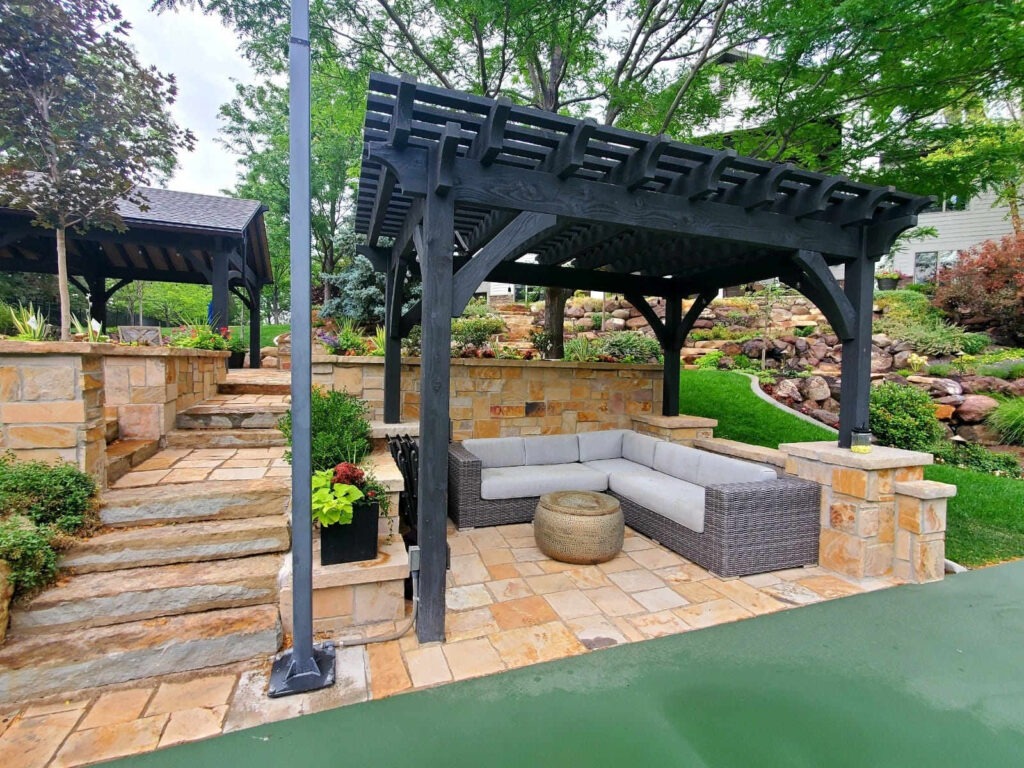
Build with Confidence — Work with a South Jordan Local
Stop guessing at codes and HOA requirements. Our South Jordan outdoor design team knows the city rules, the HOA processes, and how to build beautiful spaces that sail through approval the first time.
Schedule Your Free Compliance & Design Consultation Today.
Frequently Asked Questions
Q: Do I need a permit for a pergola in South Jordan, Utah?
It depends on the size and whether the pergola is attached to your home. Freestanding pergolas under 200 sq ft typically don’t require a permit, while attached structures and those with electrical or plumbing work almost always do. Always confirm with South Jordan City Building Services before starting.
Q: How tall can a fence be in South Jordan?
South Jordan City generally allows fences up to 6 feet tall in rear and side yards, and 4 feet in front yards. HOA rules may be more restrictive. Corner lots have additional sightline restrictions. Always verify with both the city and your HOA before installing.
Q: How long does HOA design review take in South Jordan and Daybreak?
Most South Jordan HOA design review committees respond within 30–45 days. Submitting a complete, detailed application with accurate drawings significantly reduces revision requests and delays. Submit early — don’t wait until you’re ready to break ground.
Q: Can my HOA make me remove a structure that the city approved?
Yes. City approval and HOA approval are separate systems. A permitted structure that violates your HOA’s CC&Rs can still be subject to fines and removal orders from your HOA. You must satisfy both independently.
Q: What happens if I build without a permit or HOA approval in South Jordan?
Building without a required permit can result in a stop-work order, fines, forced removal of the structure, and complications when selling your home. HOA violations can result in daily fines, legal action, and mandatory demolition of non-compliant work. The cost of compliance upfront is always less than the cost of violations.