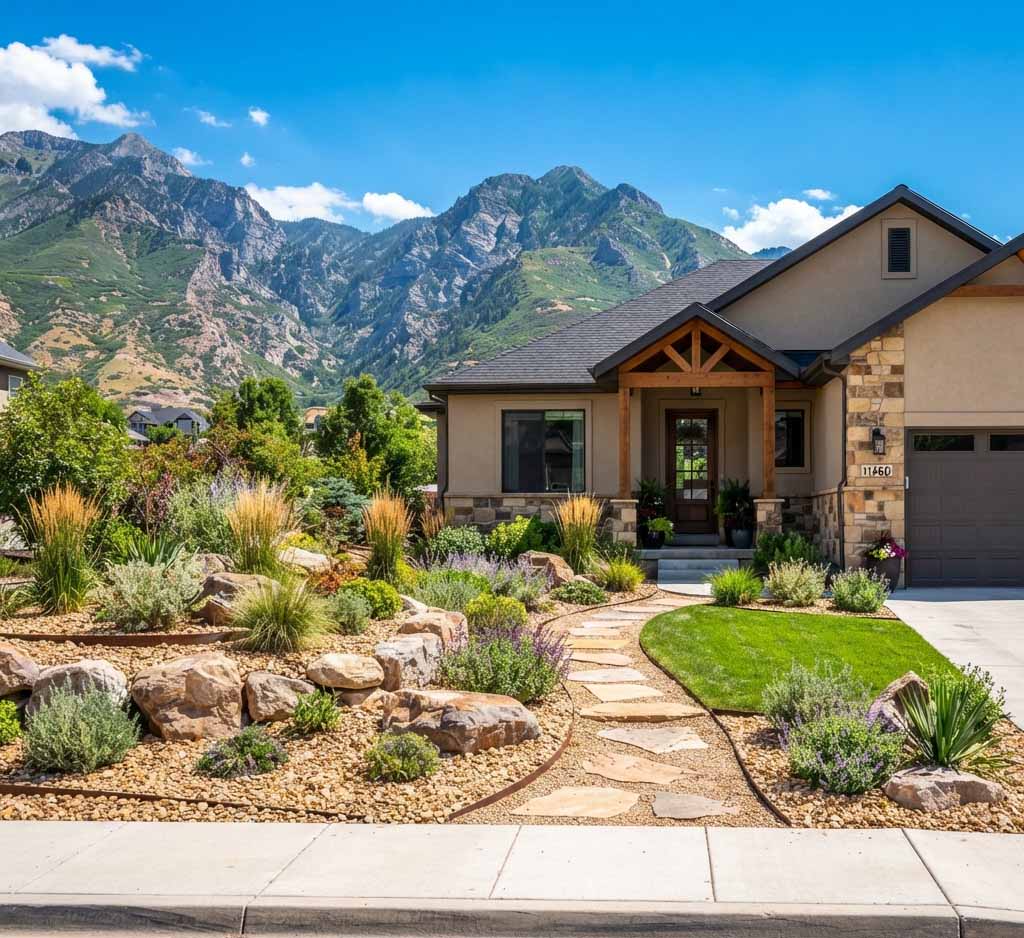
Introduction
If you’ve ever walked through a professionally designed yard and thought, “This just feels right,” there’s a good chance the rule of 3 in landscaping played a role.
The rule of 3 is one of the most foundational principles in landscape design. It’s not about strict math or symmetry. Instead, it’s about how the human eye naturally perceives balance, movement, and harmony in outdoor spaces.
For Salt Lake City homeowners, understanding this rule explains why professionally designed landscapes look cohesive while DIY yards often feel scattered or unfinished.
What Is the Rule of 3 in Landscaping?
The rule of 3 is a design principle that states that objects grouped in odd numbers, especially groups of three, are more visually appealing and natural-looking than even-numbered groupings.
In landscaping, this rule is commonly applied to:
- Plant groupings
- Color repetition
- Height variation
- Material selection
- Hardscape elements
Designers rely on this principle because the human brain prefers patterns that feel dynamic rather than rigid. Groups of three create movement and depth, while pairs often feel static or artificial.
Why the Rule of 3 Works So Well Outdoors
Nature rarely grows in perfect pairs. Trees, shrubs, and grasses appear in uneven clusters, layered heights, and irregular spacing. The rule of 3 mimics these natural patterns.
In Salt Lake City landscapes, where open space, mountain backdrops, and sunlight play a major role, this principle helps outdoor designs feel organic rather than forced.
Key reasons the rule of 3 works:
- It creates visual flow
- It avoids symmetry that feels unnatural outdoors
- It adds depth and dimension
It guides the eye across the landscape
How Landscape Designers Use the Rule of 3
1. Plant Groupings
Instead of planting one shrub or two matching plants, designers often group plants in threes or fives. For example:
- Three ornamental grasses with staggered heights
- Three shrubs of the same species arranged in a triangle
- A trio of perennials with complementary colors
This creates a fuller, more intentional look.
2. Height Variation
Designers often use three height levels:
- Ground cover or low plants
- Mid-height shrubs
- Taller trees or accent plants
This layering is especially important in Utah landscapes, where strong sunlight can flatten designs that lack vertical interest.
3. Color and Texture Balance
The rule of 3 helps prevent color overload. Designers typically limit a space to:
- One dominant color
- One secondary color
- One accent color
The same principle applies to textures, such as combining soft foliage, medium-textured shrubs, and bold architectural plants.
4. Hardscape Design
Even patios and walkways follow the rule of 3. Designers may combine:
- Three complementary materials
- Three seating zones
- Three focal points
This prevents outdoor spaces from feeling cluttered or chaotic.
Common Mistakes When Ignoring the Rule of 3
Homeowners who don’t follow this principle often end up with:
- Too many plant varieties
- Repetitive, flat layouts
- Random “one-off” plants that look misplaced
- Landscapes that feel busy but unfinished
The rule of 3 brings order without making a yard feel rigid.
How the Rule of 3 Applies in Salt Lake City
Because Salt Lake City landscapes must handle:
- Intense sun
- Freeze-thaw cycles
- Water efficiency requirements
Designers use the rule of 3 to limit plant variety, simplify maintenance, and ensure long-term success.
Fewer, well-chosen groupings almost always outperform scattered plantings in Utah’s climate.
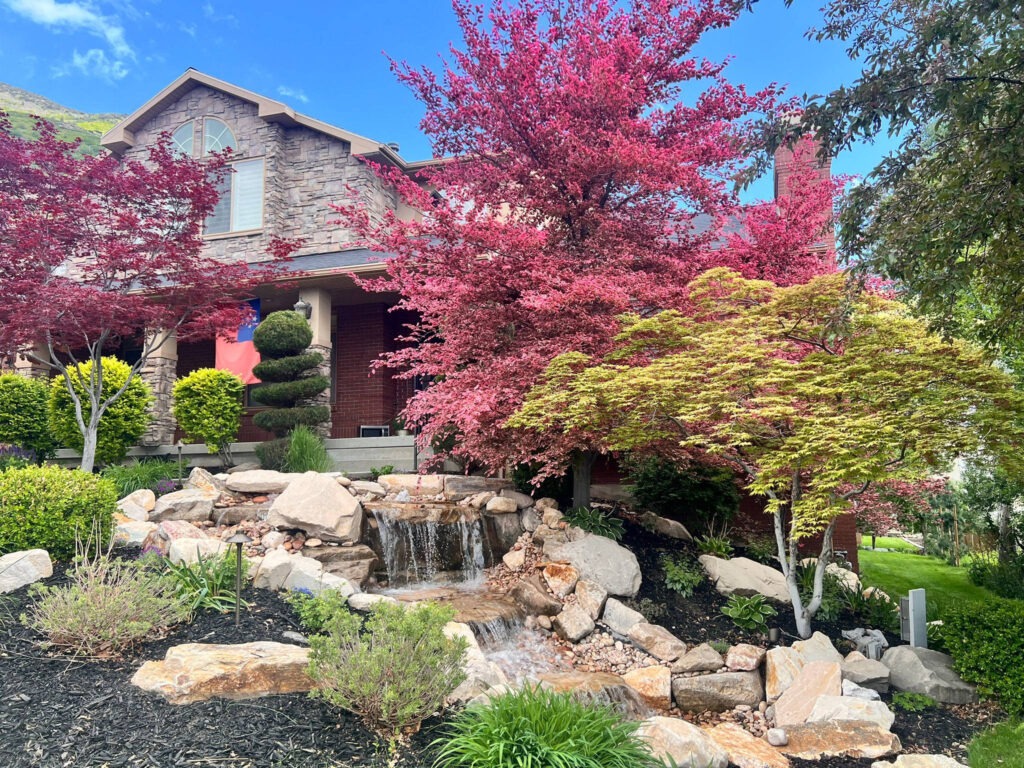
Want a landscape that feels balanced, intentional, and professionally designed?
Millburn Lawn & Landscape uses proven design principles like the rule of 3 to create cohesive outdoor spaces built for Salt Lake City’s climate.
Call (801) 810-5452 or visit
https://millburnlandscape.com/landscape-design/
to schedule a landscape design consultation.
FAQ: Rule of 3 in Landscaping
Is the rule of 3 mandatory?
No, but it’s one of the most reliable design principles for creating visual balance.
Can you use more than three plants?
Yes. Designers often use multiples of three (3, 5, 7) for larger areas.
Does this rule apply to modern landscapes?
Absolutely. It’s used in modern, traditional, and xeriscape designs.