Salt Lake City winters bring heavy snowfall, ice buildup, and hard freezes that can damage a yard that wasn’t designed with them in mind — but with the right materials, plant choices, and layout, a landscape can survive winter intact and still look intentional once it thaws.
Why Snow-Proof Design Matters Here
Salt Lake City’s climate swings between dry summers and genuinely snowy winters, making landscaping a year-round design challenge rather than a warm-weather-only concern. Without proper planning, snow and ice can crack patios and walkways, crush fragile plants and shrubs, and create drainage problems once the snow finally melts and all that water needs somewhere to go.
Durable Hardscaping That Handles Freeze-Thaw Cycles
Material choice matters more in Utah’s freeze-thaw climate than in milder regions. Concrete pavers set with polymeric sand resist the shifting that plain sand-set pavers experience as the ground freezes and thaws repeatedly through winter. Natural stone walkways generally resist cracking better than lower-grade concrete, and proper grading throughout ensures melting snow drains away from the home rather than pooling against a foundation.
Evergreens for Winter Structure and Color
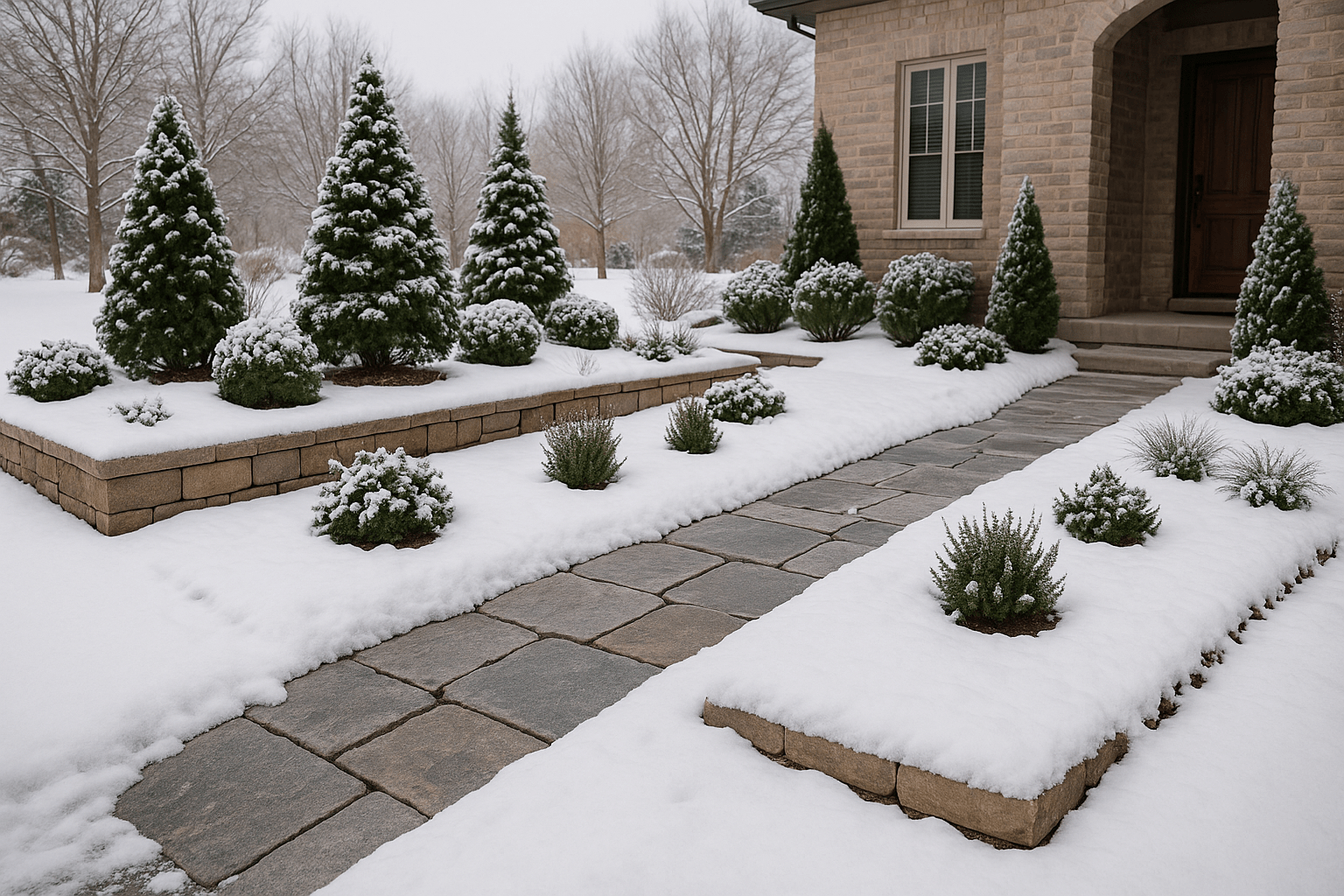
A yard doesn’t have to look barren from November through March. Incorporating evergreens like juniper, spruce, or boxwood maintains real color and structure even when everything else is dormant or buried, giving the landscape a sense of intention through the months when most plants have nothing to offer visually.
Raised Beds and Borders That Protect Plantings
Shrubs and perennials near a driveway or street are vulnerable to snowplow damage and the weight of shoveled or plowed snow piled against them. Elevating vulnerable plantings in raised beds, or adding stone borders that direct plowed snow away from planted areas, protects them through a season that would otherwise damage or bury them entirely.
Choosing Trees That Hold Up Under Snow Load
Not every tree species handles Utah’s snow load well. Weak-wooded species like silver maple are prone to breaking under heavy, wet snow, while hardier species like oak, pine, and serviceberry hold their structure through winter storms far more reliably. Choosing the right species at planting time avoids a problem that only becomes obvious years later, after a tree has grown large enough for a broken limb to matter.
Ground Covers That Survive Being Buried
Traditional turf can struggle under prolonged snow cover, developing matted, damaged patches once it’s finally exposed again. Ground covers like creeping juniper or sedum tolerate being buried far better and bounce back reliably once the snow clears, making them a practical substitute in areas where a heavy snow load routinely sits for weeks at a time.
Designing for Style That Survives the Season
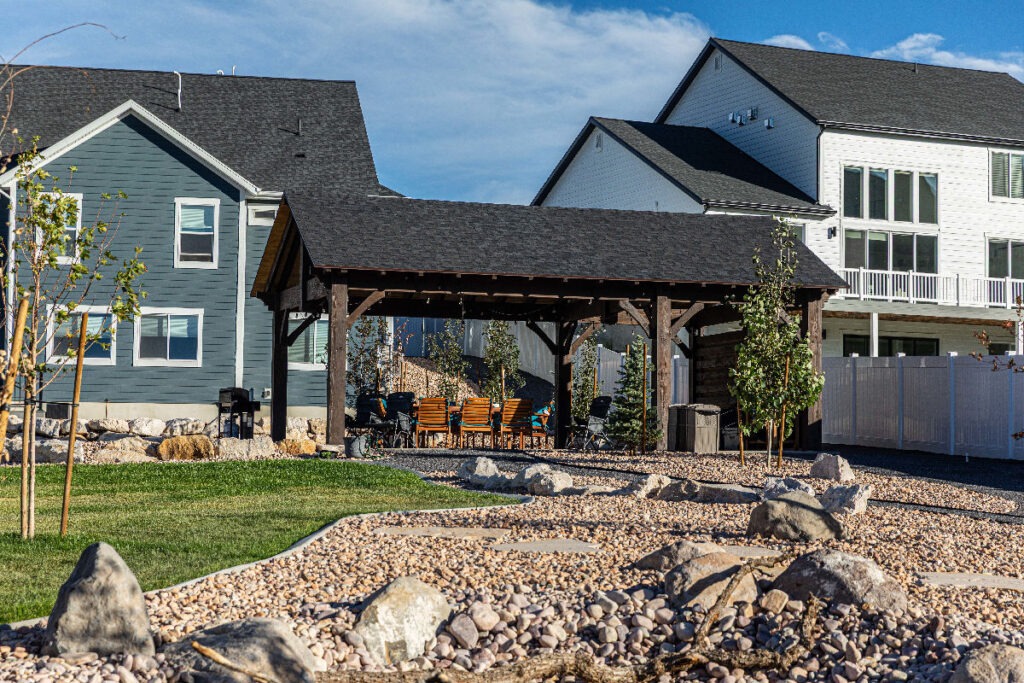
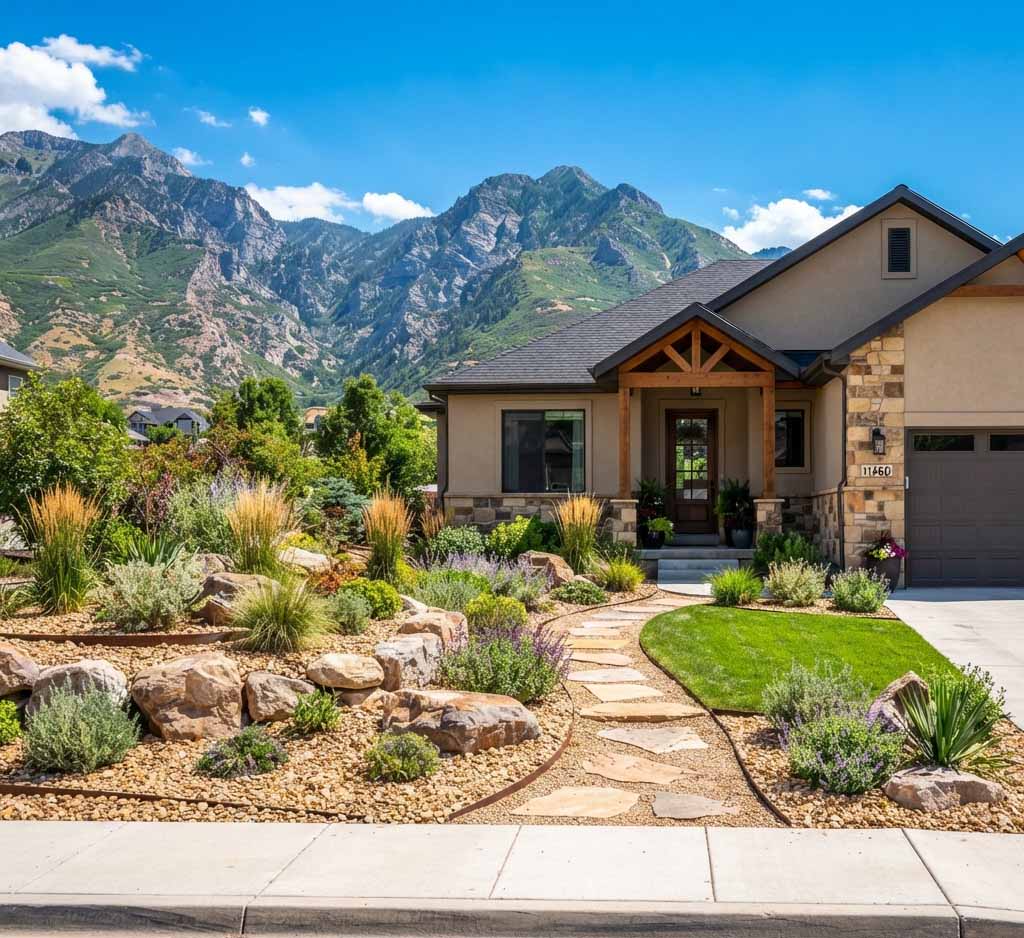
Snow-proof doesn’t have to mean plain. Stone retaining walls, well-placed outdoor lighting, and decorative boulders create a clean, structured look that reads well even under a blanket of snow, and features like a fire pit or pergola keep a yard functional and inviting through the colder months rather than unused until spring.
Frequently Asked Questions
What plants survive winter best in Salt Lake City?
Evergreen shrubs, hardy conifers like pine and juniper, and cold-tolerant perennials such as sedum are reliable choices for a yard that needs to look intentional through winter.
Can hardscape actually crack from snow and ice?
Yes — repeated freeze-thaw cycles are hard on lower-quality materials, but using well-suited materials like polymeric-sand pavers or natural stone significantly reduces the risk of cracking over time.
Do I need to remove all my lawn for a snow-proof yard?
Not necessarily — many homeowners reduce lawn area and mix in durable ground covers and evergreens rather than eliminating grass entirely.
Millburn Lawn & Landscape designs snow-proof yards built for Salt Lake City winters. Call us to start your design consultation.