How to Protect Your Yard During a Home Renovation in Millcreek
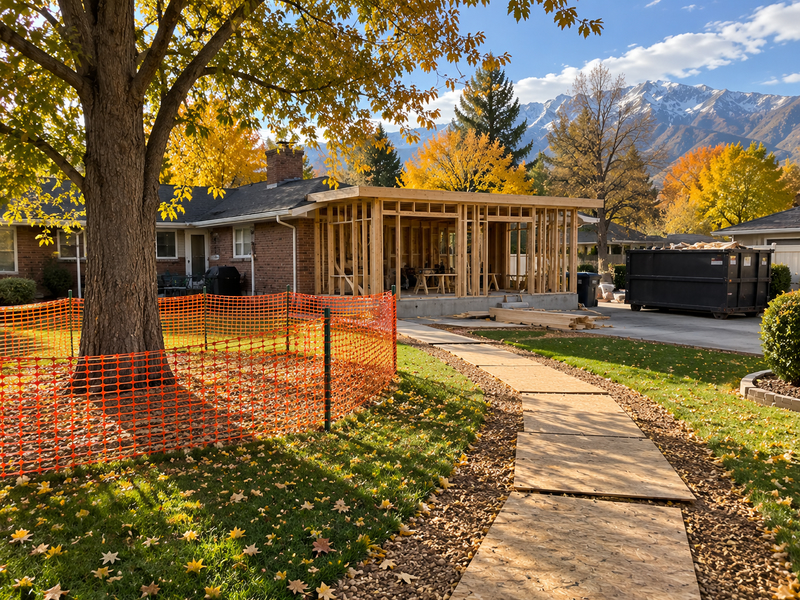
To protect your yard during a home renovation in Millcreek, set up the site before demo day. Fence each tree at its root protection zone, about one foot of radius per inch of trunk diameter. Pick one access route and cover it with thick wood chips or plywood. Keep the dumpster and material piles on the driveway, not the lawn. Flag every sprinkler head and winterize the system before the crew arrives. Afterward, aerate, regrade, and repair sprinklers and sod once the soil can be worked.
If you’re still deciding whether to plan the landscape before the permit is pulled, start with The Millcreek Renovation Trap: Landscape Before the New Kitchen. This guide is the hands-on part: what to set up, what to tell your contractor, and how to recover when the work is done.
Why Millcreek Yards Take a Beating During a Renovation
Millcreek’s established neighborhoods, from Canyon Rim to East Mill Creek and Olympus Cove, are full of mid-century homes with mature trees, decades-old sprinkler systems, and backyards that sit right where an addition would go. A kitchen bump-out or primary suite puts excavators, concrete trucks, and stacked lumber in the same spot as the roots and irrigation lines you’d most like to keep.
The season adds another twist. Millcreek doesn’t issue encroachment permits for materials in the street from October 15 to April 15, because snowplow operations take priority. City guidance already prefers that supplies go on a driveway or elsewhere on the property. For a fall or winter remodel, that means the dumpster, lumber, and gravel will sit on your lot for months. If you don’t decide where, the crew will, and the lawn is usually the flattest open spot.
Soil is the third factor. Utah State University Extension notes that compaction usually comes from repeated foot or vehicle traffic over the same area, that construction traffic is a common cause, and that moist soil compacts more easily. Wet fall and spring weather is exactly when many Millcreek remodels are busiest.
Set Up the Site Before Demo Day
Most yard damage happens in the first week, before anyone has thought about it. Walk the property with your general contractor before work starts and agree on the following, in writing if you can.
- One access route. Choose a single path for workers, wheelbarrows, and equipment, ideally along the driveway or an existing walk. Everything off that path is off limits.
- Dumpster and material drop zones. Put the dumpster on the driveway and stage lumber, block, and gravel on hard surfaces. With street permits off the table from mid-October to mid-April in Millcreek, this decision matters more than it does in summer.
- Utility locates. Whoever digs must call Blue Stakes of Utah at 811 at least two full business days before excavation, then keep digging tools at least 24 inches from the marks. Your own sprinkler lines and landscape lighting wires are private, so mark those yourself.
- Washout and cleanup. Agree on where concrete trucks and painters rinse out. Keep washout off lawns and planting beds, and keep mud and debris out of storm drains, which Millcreek requires.
- Plants that need to move. Dig up small shrubs and perennials in the work zone, wrap the roots in burlap, and keep them moist, or have them moved and heeled in until the job is done.
Protect Your Trees During a Home Renovation
Mature trees are the one thing you can’t replace in a reasonable timeframe. Most of their roots sit in the top foot or so of soil and spread well beyond the trunk, so a skid steer parked under the canopy can do lasting damage that doesn’t show for a season or two.
The standard tool is a root protection zone. Portland’s tree code, for example, uses a radius of one foot from the trunk for every inch of trunk diameter, so a 20-inch trunk gets a 20-foot radius. Another municipal guideline uses tiers: at least 5 feet for trees 10 inches or smaller, 10 feet for trees 10 to 19 inches, and 15 feet for anything larger. Measure the trunk at about 4.5 feet off the ground.
Fence that zone before any equipment arrives and leave the fence up until the last truck leaves. Inside it, there should be no parking, no stockpiled soil or materials, no trenching, and no washout. If the addition has to come closer than the zone allows, talk to your contractor and a certified arborist before the layout is final, not after the roots are cut.
Protect the Lawn and Sprinklers During a Renovation
When traffic has to cross the lawn, spread the load. One municipal standard calls for a maintained six-inch layer of wood chips, or one-inch plywood sheets, wherever equipment crosses a planted area. Wood chips on top of plywood work even better on a route that sees daily wheelbarrow trips. Either way, the goal is to stop wheels from sinking into and sealing the soil.
Sprinklers are next. Before work starts, walk every zone, flag each head, and mark valve boxes and main lines you know about. Take photos with a tape measure in the frame. In Millcreek, a fall remodel overlaps the start of freezing weather, so have the system winterized before the crew arrives. A cracked line under a new patio is far harder to fix than one found in October.
For beds near the house, cover plants with a light, breathable sheet during roofing or painting so debris and drips don’t land on them, and tie back vines on the walls being worked on. Pull back mulch in the work zone so it doesn’t get buried in debris.
Fall and Winter Renovations in Millcreek: What Changes
A fall or winter remodel isn’t worse for the yard, but it’s different. The dumpster stays on site longer, since it can’t move to the street until mid-April. Frozen ground holds up to traffic better than soggy ground, but every thaw softens it again, and the damage from a muddy February week can match a whole summer. Snow also hides the flags and fence lines you set up in October, so use tall stakes and check them after each storm.
Plan your snow storage, too. Shoveled or plowed snow piled inside a tree’s root zone or on a stack of materials adds weight and moisture right where you don’t want it. Pick a spot away from trees and beds before the first storm.
How to Repair Your Yard After a Millcreek Renovation
Even with good protection, expect some repair. Start with compaction, since it drives most of the problems you’ll see next summer: yellow patches, puddles, and stressed trees. USU Extension recommends hollow-tine core aeration that reaches 3 to 4 inches deep, with late summer and early fall as the preferred timing for cool-season lawns. For severely compacted areas where equipment sat for weeks, it recommends deep ripping before new irrigation goes in, then adding organic matter before replanting.
From there, the order matters. Fix grading first so water drains away from the new foundation. Then repair or reroute sprinkler lines, then lay sod or seed. If the work wraps up in winter, plan the repair for spring once the soil dries enough to work, and keep traffic off the lawn until then. USU notes that compacted soil can take a season or more of wetting, drying, freezing, and thawing to recover on its own.
Get a Yard Protection Plan for Your Millcreek Renovation
Millburn Lawn & Landscape is a licensed and insured Utah landscape contractor (License #9608499-5501) that has served Salt Lake County homeowners for more than 20 years. Call us at (801) 810-5452 before your remodel starts and we’ll help you plan how to protect your yard during the home renovation. When the crew leaves, we’ll handle the grading, sprinkler installation, and sod to bring your Millcreek yard back.
Frequently Asked Questions
How far from a tree should I put construction fencing?
A common rule is one foot of radius for every inch of trunk diameter, measured about 4.5 feet off the ground. A 16-inch trunk gets a 16-foot radius. Set the fence before any equipment arrives and keep it up until the job is done.
Can my contractor put the dumpster in the street in Millcreek?
Not from October 15 to April 15. Millcreek doesn’t issue encroachment permits for the right of way during snowplow season. The rest of the year, call Millcreek Public Works at 801-214-2700 to ask whether your setup needs a permit.
Where should the dumpster go so it doesn’t ruin my lawn?
On the driveway or another hard surface. A loaded dumpster on turf crushes the grass, compacts the soil, and can crack sprinkler lines underneath. Agree on the spot with your contractor before delivery.
Do I need to winterize my sprinklers before a fall renovation?
Yes. Winterize before the crew arrives so empty lines aren’t sitting under equipment when temperatures drop. Flag each head and mark valve boxes so the crew can avoid them.
Will Blue Stakes mark my sprinkler lines?
No. Blue Stakes locates utility lines, but your sprinklers and landscape lighting are private, so you have to mark them yourself. Whoever digs must call 811 at least two full business days before excavation.
How do I fix a lawn that was damaged by construction?
Regrade for drainage first, then repair sprinkler lines, then core-aerate and lay sod or seed. Badly compacted spots may need deeper loosening and organic matter before replanting. In Millcreek, plan that work for spring if the job ends in winter.
When should I call a landscaper about my renovation?
Before demo day, ideally while your contractor is still planning access and staging. It’s much easier to fence trees and mark sprinklers before the first truck than to fix them afterward.