Cutting outdoor water use in a Utah landscape comes down to three things: what you plant, how you water it, and where you let water go to waste. Get those three right and a Wasatch Front yard can stay green through summer using meaningfully less water than a traditional lawn-heavy landscape.
Start With What’s Already Planted
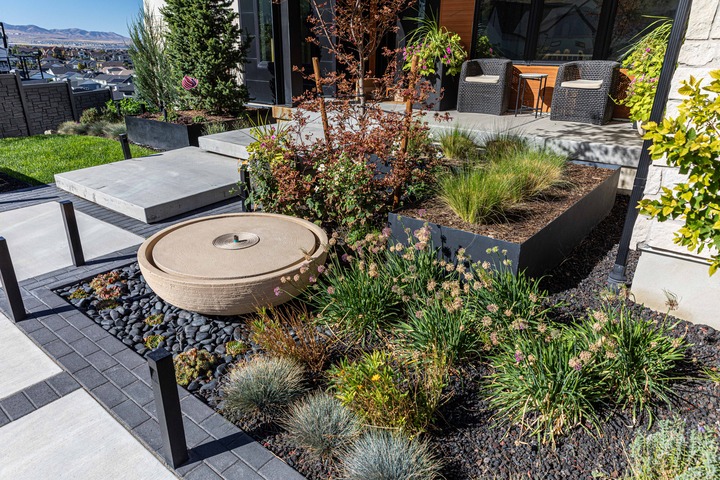
For existing landscapes, the fastest water savings come from replacing the thirstiest plants first, not redoing the whole yard at once. Traditional turf grass is typically the highest water user in a landscape — swapping high-water lawn areas for drought-tolerant groundcover or a lower-water turf variety cuts demand in the areas that use the most water to begin with. For new plantings, choosing species suited to Utah’s dry climate from the start avoids the problem altogether, and spacing plants with enough room between them reduces root competition for the water that is applied. A consistent layer of mulch over planting beds also matters more than most homeowners realize — it slows evaporation from the soil surface, meaning less water is needed to keep roots at the same moisture level.
Hardscaping Where Grass Struggles
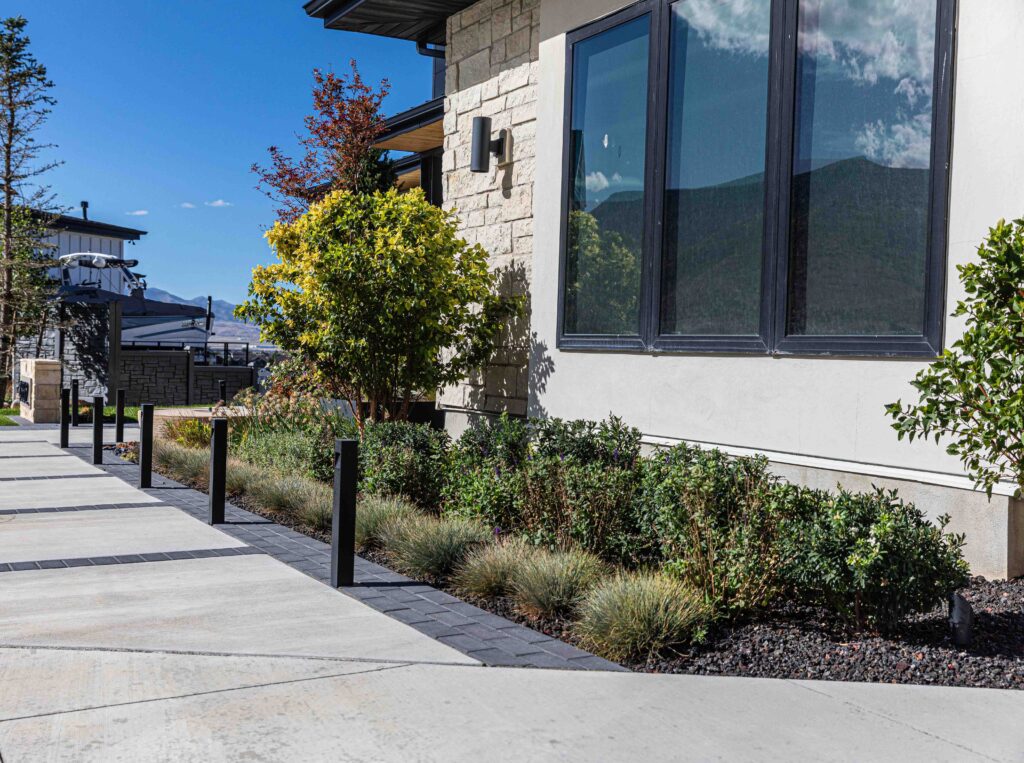
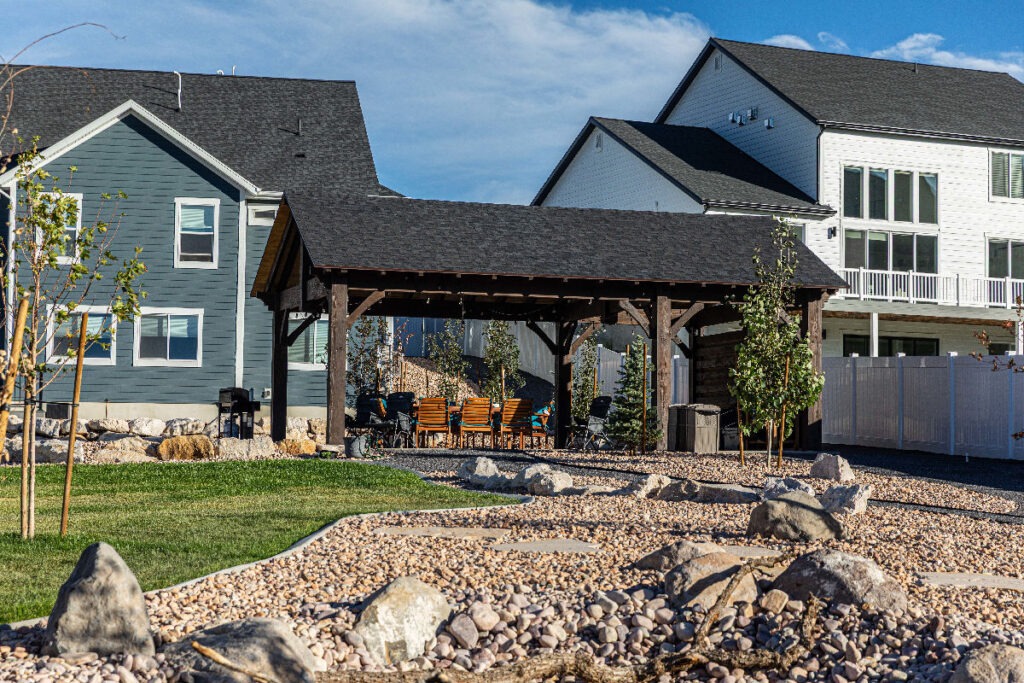
Every yard has spots where grass never quite thrives — deep shade under trees, narrow strips along a driveway, slopes that shed water before it soaks in. These are good candidates for hardscaping instead of continued lawn maintenance: flagstone, pavers, or decorative rock replace an area that was draining water and effort with little payoff. If hardscaping replaces a section near existing irrigation, routine maintenance still matters — keeping pathways clear of leaves and debris prevents buildup that can affect drainage and, over time, irrigation lines running nearby.
Upgrading How Water Actually Gets Delivered
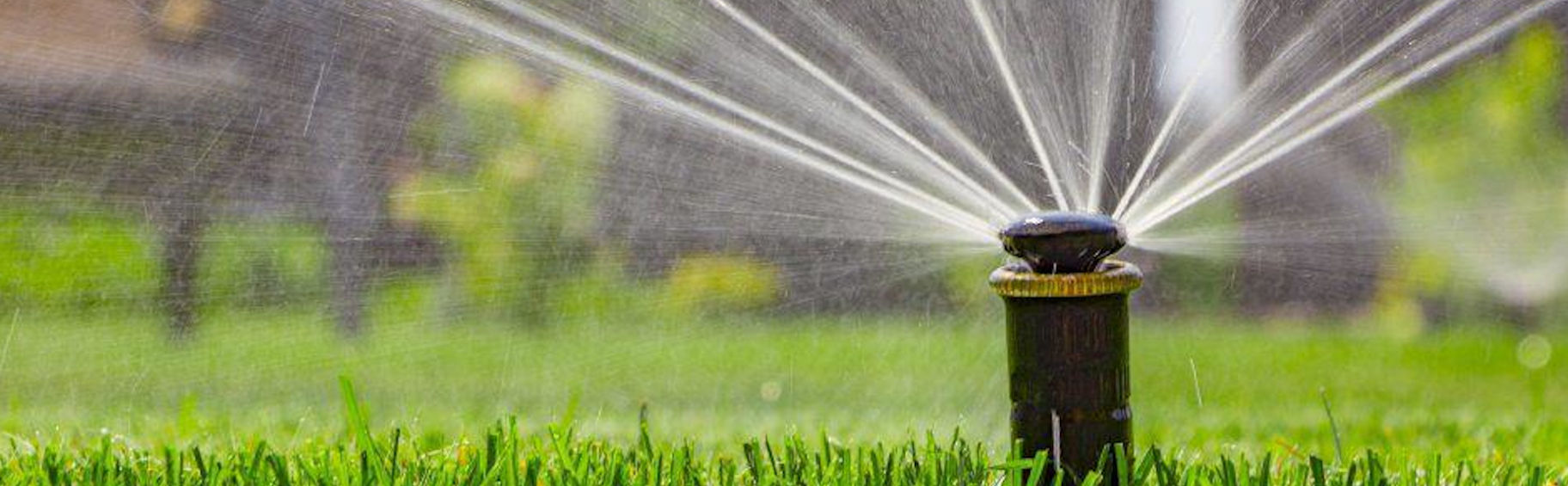
A drip irrigation system delivers water directly to the root zone of each plant rather than spraying it broadly, which is both more efficient and better for plant health, since foliage staying dry reduces certain fungal issues common with overhead watering. Where sprinklers are still the right choice — typically for turf areas — heavy-droplet nozzles focus water at the root zone rather than misting it into the air, where a meaningful percentage is lost to evaporation before it ever reaches the soil, especially during Utah’s hot, dry, and often windy summer afternoons.
Capturing Water You’re Already Using
A simple rain barrel, pond, or drainage collection system can capture water that would otherwise run off a property entirely, making it available to reuse on landscaping during dry stretches. This isn’t a primary water source for most Utah yards, but it reduces reliance on municipal water for supplemental watering, particularly for container plants or smaller garden beds.
Frequently Asked Questions
What’s the single most effective change for reducing landscape water use?
Replacing the highest-water-use plants — typically traditional turf grass — in the areas that use the most water is usually the fastest way to see a measurable reduction, more so than smaller efficiency tweaks elsewhere.
Does mulch actually make a meaningful difference in water use?
Yes — a consistent mulch layer slows evaporation from soil significantly, which means established plants need less frequent watering to maintain the same root-zone moisture.
Is drip irrigation worth switching to for an existing lawn and garden?
For planting beds and gardens, yes — drip irrigation is generally more efficient than spray systems for non-turf areas. For turf itself, upgrading to efficient sprinkler nozzles is usually more practical than converting an entire lawn to drip.
What drought-tolerant plants work well in Utah landscapes?
Species adapted to the Intermountain West’s dry summers and cold winters — ornamental grasses, many native perennials, and low-water shrub varieties — tend to perform reliably without the supplemental watering a traditional landscape requires.
Millburn Lawn & Landscape designs and maintains water-efficient landscapes across Salt Lake City. Call us to talk about reducing your yard’s water use without sacrificing how it looks.